
Brussels doesn’t typically feature on a list of top global financial centres.
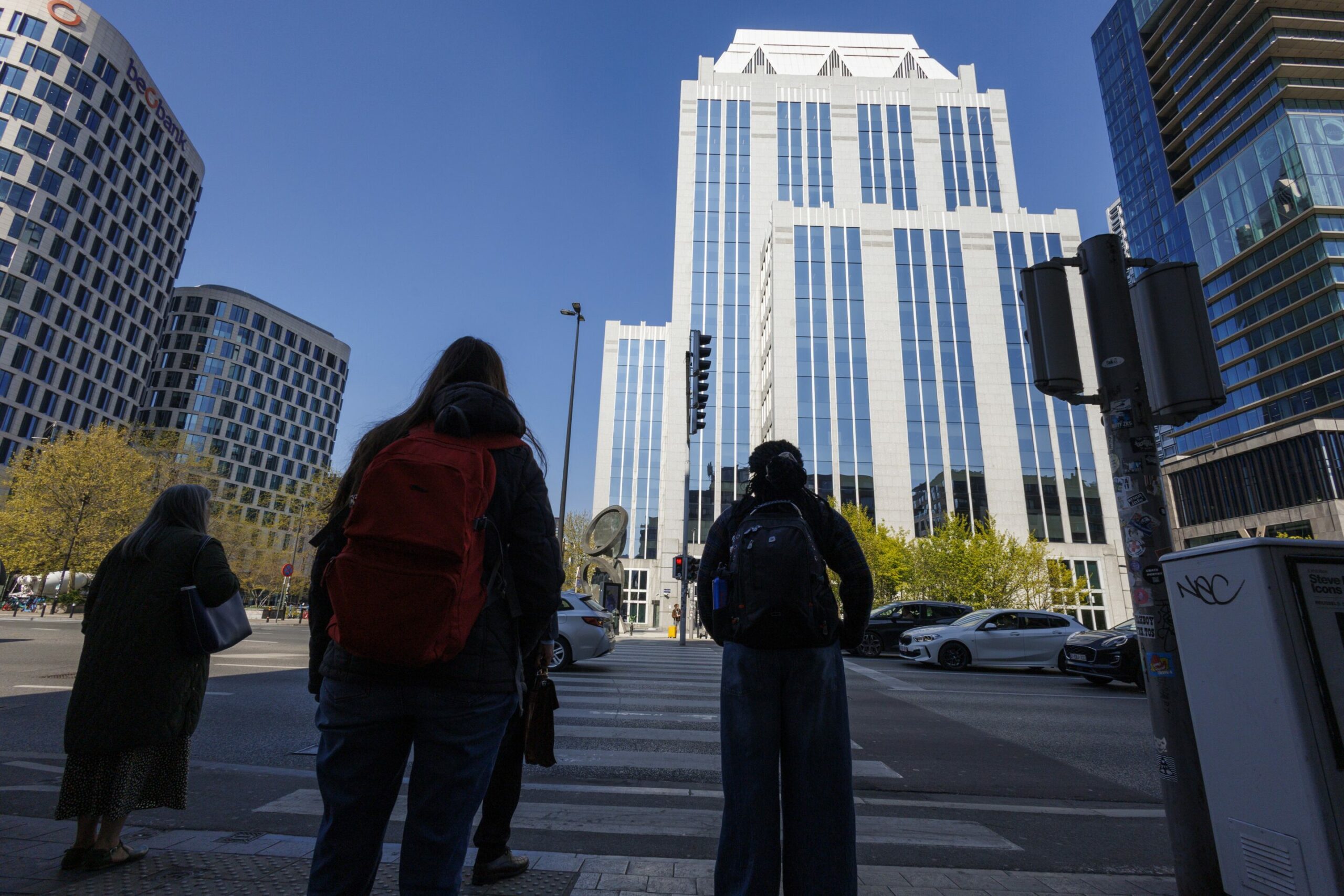
Yet in an anodyne building in the city’s Northern Quarter business district lies the world’s leading international central securities depository – Euroclear Bank – a group that acts as a custodian for €42 trillion in financial assets.
Euroclear has been thrust into the spotlight because it holds some €185 billion of Russian assets that were frozen by the EU after Vladimir Putin’s full-scale invasion of Ukraine in 2022.
Now, with Ukraine set to run out of cash early next year, the EU wants to use those frozen assets to fund a “reparations loan” to Kyiv – in effect, military and financial aid – repayable only if Russia pays Ukraine compensation for its aggression.
But Belgium is blocking the move, fearing that it would be on the hook if EU sanctions on Russia lapsed or if Moscow successfully sued to retrieve the assets.
With EU leaders, led by Germany’s Friedrich Merz, aiming to reach a Ukraine funding deal when they meet in Brussels on 18–19 December, the pressure to find a solution is cranking up.
Life support
The stakes could not be higher. Donald Trump has stopped American aid to Ukraine. Worse, the mercurial US president recently tried to strike a dirty deal with Putin that sought to impose an unjust “peace” on Kyiv.
This would have rewarded Russian aggression, exposed the rest of Europe to further attacks and used those frozen Euroclear assets to fund business deals that would enrich his and Putin’s cronies. While Ukraine and its European allies seem to have forestalled that attempted stitch-up, it is surely only a temporary respite.
The bottom line is that it is now up to Europe to provide the sustained support that Ukraine needs to defend its freedom and the rest of the continent’s security.
Lest we forget, brave Ukrainian soldiers are fighting not just to protect their battered homeland from Putin’s brutal tyranny. They are also the front line of Europe’s defence, because while Russia’s military is mobilised to make tiny territorial gains in Donetsk, it cannot invade other European countries.
The bigger point is that Europe’s credibility is at stake. If the EU cannot even find a way to write cheques with borrowed money to help Ukrainians fight on to keep Europe safe, how reliable are NATO and EU allies’ promises to send their own soldiers into harm’s way if one of them is attacked?
Trump card
There are many ways in which the EU could support Ukraine, including grants, loans and donations in kind. But all the focus in Brussels is on the European Commission’s latest plan to mobilise the €185 billion of frozen Euroclear assets, along with a further €25 billion of Russian assets immobilised around the EU (other countries, notably the UK and Canada, are also willing to chip in assets they have frozen).
The case for using the Russian assets is clear.
It would be morally right, because Ukraine is the victim of an unprovoked and devastating aggression.
It would be legally justified. After all, the interest on the frozen assets is already being funnelled to Ukraine, and the plan stops short of confiscating them, even though this would arguably be justified under international law as a “countermeasure” to Russia’s invasion.
Above all, it would be politically expedient. It could provide a credible medium-term commitment to Ukraine, raising the costs to Putin of continuing with the conflict. It would prevent Trump earmarking the assets for his own ends. And it would all but guarantee the EU a seat at the table in any future peace negotiations.
How, though, to overcome Belgium’s objections?
Belgium has two big fears. The first – that Russia might sue Belgium to reclaim the assets using their 1989 bilateral investment treaty – is easily addressed. Belgium could simply withdraw from that treaty. When Putin is seizing EU assets in Russia with impunity, why should Belgium remain bound by such a pact?
The second – that EU sanctions freezing Russia’s assets, which require renewal by unanimous agreement of all 27 member states every six months, could fall victim to a veto by Hungary’s pro-Putin premier, Viktor Orbán – is better-grounded.
The Commission’s proposed solution is to bypass the need for unanimity by invoking emergency powers, on the grounds that the need to suddenly repay the Russian assets would destabilise the EU economy. That is a legal stretch, but worth trying.
An alternative would be for EU governments to share the potential risks and provide Belgium with the legal guarantees that it seeks.
Better still, Martin Sandbu of the Financial Times has suggested that EU authorities could use prudential banking regulations to hive off the Russian assets into a separate entity outside Belgium – as if they were creating a bad bank – ridding Euroclear and the Belgian government of any legal liability.
Actions speak louder than words
There is a compelling case for using Russia’s frozen assets. But the overriding priority is to sustain Ukraine come what may. If all else fails, the EU should simply borrow the money. That is what the Commission is proposing as a stopgap measure, and it could also be a viable longer-term solution.
While some countries, notably France, have strained public finances, the EU has ample capacity to borrow more collectively – as it did in response to the Covid crisis.
Providing, say, €80 billion a year to Ukraine would entail borrowing some 0.4% of EU GDP a year – a total of only 2% of GDP over five years. To bypass a potential Hungarian veto, a coalition of willing governments could, if necessary, establish a separate entity for that purpose, as they did during the eurozone crisis in 2010–12.
EU leaders are quick to tweet that they “stand with Ukraine”. But talk is cheap. Unless they are willing to follow words with action, Putin will rightly conclude that they are all mouth and no trousers. That would invite further Russian aggression – and ultimately a much greater cost to the EU.
