

US technology companies are lobbying the European Commission to ensure EU citizens stay addicted to social media, according to a new report released on Thursday.
Big Tech companies, including Meta, Google, TikTok and Snap, have mounted a fierce campaign to block or water down measures to fight against specially-designed addictive algorithms for social media platforms, according to Corporate Europe Observatory (CEO), which authored the report.
It comes in the context of the European Commission considering ambitious measures to stop addictive social media designs. Over the last year, it has held important talks on implementing a new Digital Fairness Act (DFA), while US tech giants have spent over €150 million to push their agenda in Brussels.
"Keeping people on the apps for as long as possible is a central part of their business model, and restrictions on addictive features would hurt their profits and power," Olivier Hoedeman, coordinator at CEO and author of the report, told The Brussels Times on Wednesday.

Illustration picture of the Charlemagne building of the European Commission.
Last October, the European Commission filed a complaint against Meta and TikTok for not providing enough data to allow researchers to assess whether the company was doing enough to protect users (particularly children) from illegal or harmful content.
According to the EU’s own research, excessive social media use (more than three hours per day) is associated with negative mental health outcomes, specifically depression and anxiety. The effects of social media on youth development are still unknown.
On the other side, tech companies have also relaxed their content moderation during US President Donald Trump's second term. Several European countries, including France and Spain, are now discussing an under-16 social media ban.
Access to power
Despite this, US tech giants and their extensive lobbying networks have enjoyed privileged access to the European Commission for talks on the Digital Fairness Act, CEO's research reveals.
Since December 2024, Big Tech lobbyists met with the European Commission hundreds of times, with a wide imbalance in the groups that the European Commission meets.
According to the report, 83% of meetings by top Commission officials on the Digital Fairness Act were with industry representatives.
This included 47 meetings with individual companies and 28 with business lobby groups. By contrast, less than 14% of meetings were held with NGOs and trade unions.
The report also notes various recent surveys which suggest European citizens in several countries want stricter regulation of tech companies and social media.
'Taking responsibilities seriously'
In their talks with the Commission, Big Tech companies are accused of promoting "dubious" arguments. These range from calls for self-regulation to claims that new rules would undermine the EU's competitiveness – a central aspect of the EU's current economic plans, used by US tech companies.
The CEO of Snap Inc, owner of Snapchat, Evan Spiegel, wrote to the European Commission in May 2025, wrongly claiming that addictive designs of social media platforms "are already comprehensively regulated under the existing EU's [Digital Services Act]".
He also claimed in another letter that the EU’s "excessive regulatory burden" is one of the key root causes of its "lagging" in digital innovations, and that the EU ban on targeted advertising to minors on online platforms, included in the Digital Services Act, was an "extreme measure".
TikTok, which met with top Commission officials on at least two occasions last year, argued that the company always took responsibilities for protecting online harms "very seriously".
However, the report notes that the company is currently facing two EU investigations over harmful content and minors, as well as disinformation relating to the cancelled Romanian presidential elections.
Despite this, TikTok advocates for a "risk-based" approach to minors' safety and "persuasive design" (the euphemism it prefers over "addictive design"), rather than blanket bans on features, the report notes.
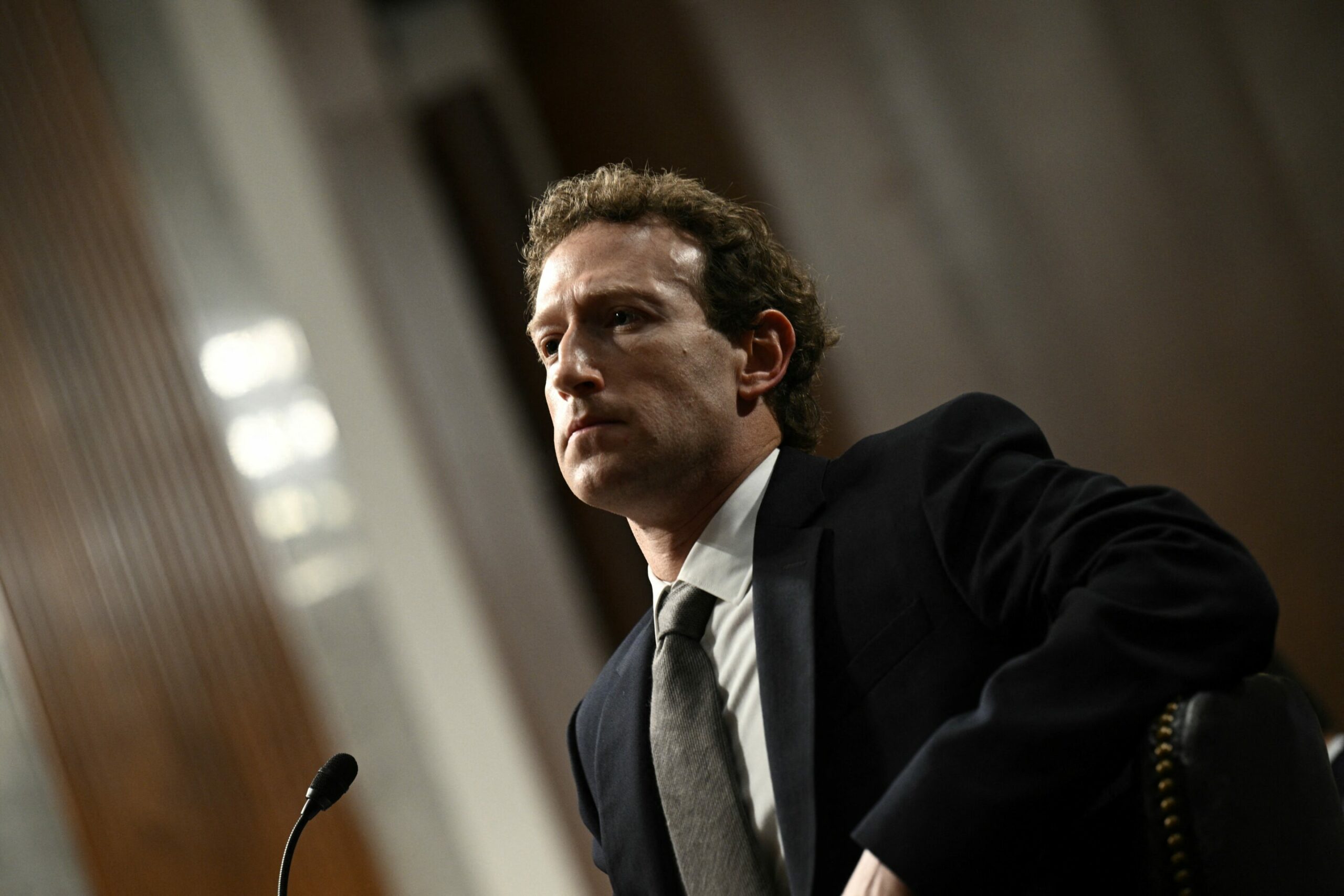
Mark Zuckerberg, CEO of Meta, testifies during the US Senate Judiciary Committee hearing "Big Tech and the Online Child Sexual Exploitation Crisis" in Washington, DC, on January 31, 2024. Credit: Belga / AFP
Meta, which has the largest lobbying budget of any individual company, only met once with the European Commission’s Justice Department about the Digital Fairness Act. It told the Commission that it had brought in age-specific restrictions, but Meta's claims are viewed as mostly "unreliable".
Researchers believe that the low profile kept by Mark Zuckerberg's company suggests its demands were promoted by other lobbying groups.
What are the effects?
With this report, campaigners at Corporate Observatory Europe are keen to highlight the real-world effects of the abuses of US social media companies.
For example, Meta was also exposed to have buried an internal research report which found that quitting Facebook reduced anxiety and depression among users.
"Weakening these regulations would mean a continuation and deepening of the social media addiction crisis, with ever-worsening attention span decline, anxiety, depression, and mental health issues, particularly among youth," CEO's Hoedeman explains.
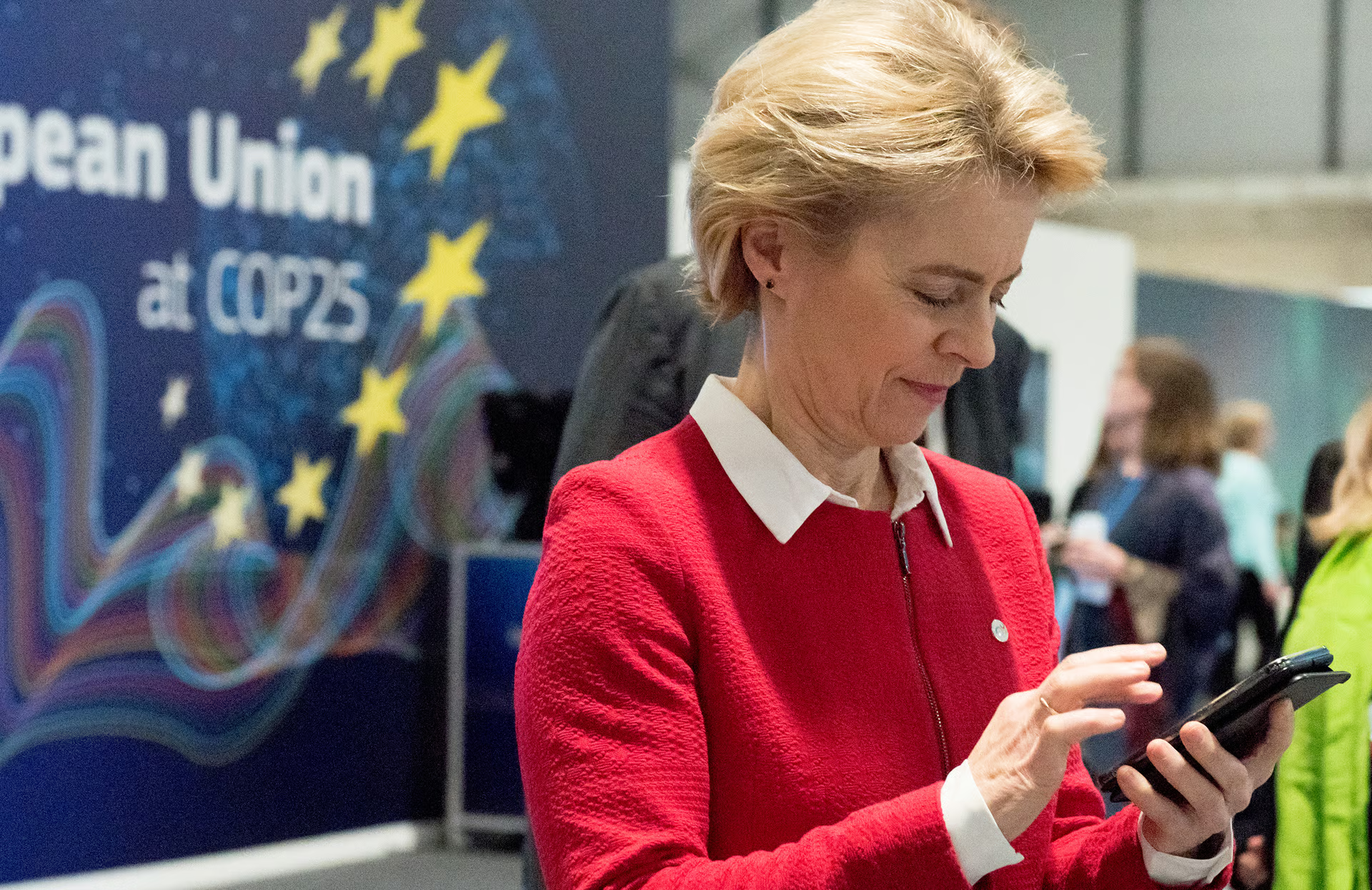
European Commission President Ursula von der Leyen on her phone. Credit: EU
Amid unprecedented tensions between Europe and the Trump administration, he also believes that not reducing these addictive models will increase the economic and political power of US tech giants, as well as society's "harmful" dependence on them.
"These companies are closely aligned with the Trump administration, because they share strong ideological common ground – Elon Musk, Peter Thiel and others," Hoedeman underlines.
"They can leverage the Trump administration's America First trade policies, framing EU digital laws as ‘foreign extortion’, ‘censorship’ or ‘discrimination’."
Uncompetitiveness
By keeping users hooked, these addictive designs allow Big Tech companies to crowd out alternative forms of communication. This comes at the expense of potential new competitors in social media markets, traditional media, and others, according to Hoedeman.
Addictive designs can also "accelerate dependency" on a few giant platforms, with "excessive" levels of power and control over digital interaction and information flows.
Furthermore, these models have an effect of pushing societies towards more political extremes, the CEO's coordinator further explained.
"In other words, it means boosting support for far-right, anti-democratic political forces. It’s for all of these reasons that we conclude that the future of democracy in Europe is at stake if EU decision-makers fail to rein in the addictive design of social media," Hoedeman concluded.
The Brussels Times put in a request for comment from the European Commission but did not receive a response before publication.
