
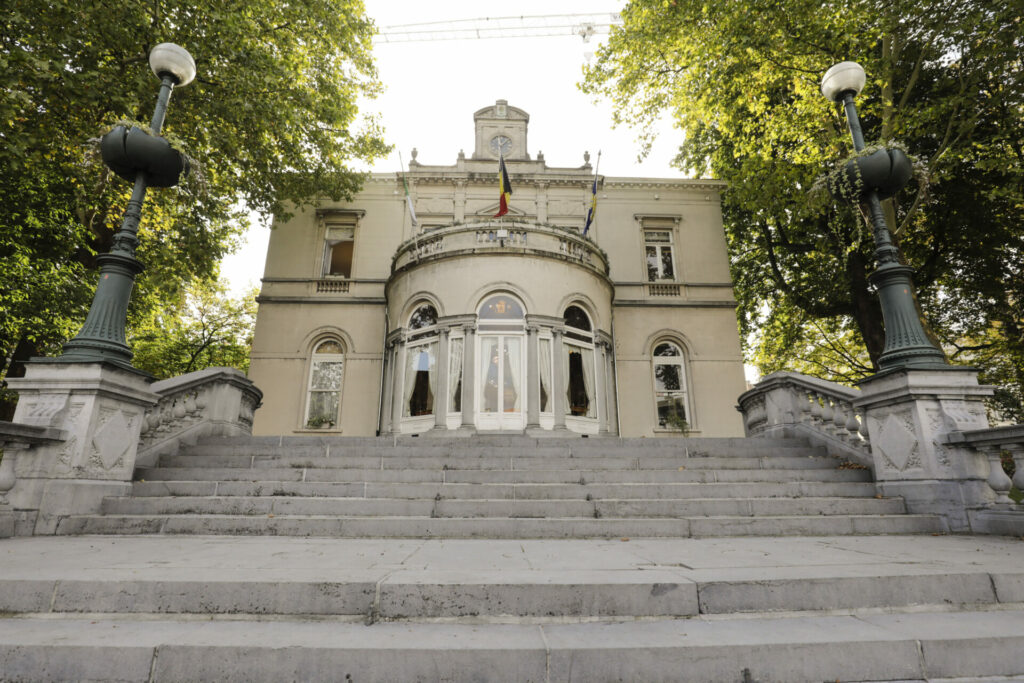
Ixelles was the only Brussels municipality that has seen a drop in the median price of houses, with a decline of 5.1%.
Last year, the property market in Brussels saw a moderate increase in transactions compared to the steeper surges in Flanders and Wallonia.
Sales in the Brussels Region rose by 7.1% compared to 2024, while Flanders recorded a 14.1% increase and Wallonia saw growth of 16.7%, based on figures from the notary sector barometer covering all property transactions in Belgium.
A notary and spokesperson for the Federation of Belgian Notaries, Jean Martroye, explained that reduced registration fees – 3% in Wallonia and 2% in Flanders – for first-time buyers likely influenced their choice to invest outside the capital.
In 2025, the median price of a house in Brussels reached €510,000, representing a 2% year-on-year rise. Prices varied significantly across communes, with Molenbeek-Saint-Jean at €345,000 and the affluent Woluwe-Saint-Pierre at €746,500.
Despite experiencing a drop in the median price of houses, Ixelles remains among the region's most expensive areas, where houses cost €700,000. Other nearby communes, Auderghem and Etterbeek, saw house prices stagnate over the same period, which the notary federation argues reflects a loss of value when factoring in inflation.
In contrast, Forest showed substantial growth, with house prices increasing by 26% in five years to a median price of €553,500.
Apartments make up 70.3% of the Brussels property market. Their prices rose by 3.3% in 2025, reaching a median of €265,000.
The average property buyer in Brussels is 39.8 years old. Younger buyers aged 18 to 30 often choose more affordable areas such as Saint-Josse-ten-Noode and Molenbeek-Saint-Jean. Older buyers, including seniors, prefer neighbourhoods like Watermael-Boitsfort.
