
Major earthquakes do not follow predictable cycles, according to a decade-long study conducted in western Nepal by a researcher affiliated with the Université libre de Bruxelles (ULB).
The research, led by Zakaria Ghazoui-Schaus, who is seconded to ULB by the British Antarctic Survey, was published in the journal Science Advances. It draws on the analysis of sediment cores extracted from the bottom of Nepalese lakes, reconstructing 6,000 years of seismic activity, the university said on Friday.
The method focuses on turbidites, layers of debris deposited at the bottom of lakes by underwater landslides triggered by powerful nearby earthquakes. By examining these sediment layers, researchers can accurately date and identify past seismic events.
The findings show that even major earthquakes above magnitude 6.5 occur randomly. While periods of heightened activity may cluster over several centuries, followed by calmer intervals, the researchers found no reliable recurring cycle.
For the 50 million people living along the Himalayan arc, and more broadly for seismic regions worldwide, the study suggests that risk management strategies need to be reconsidered.
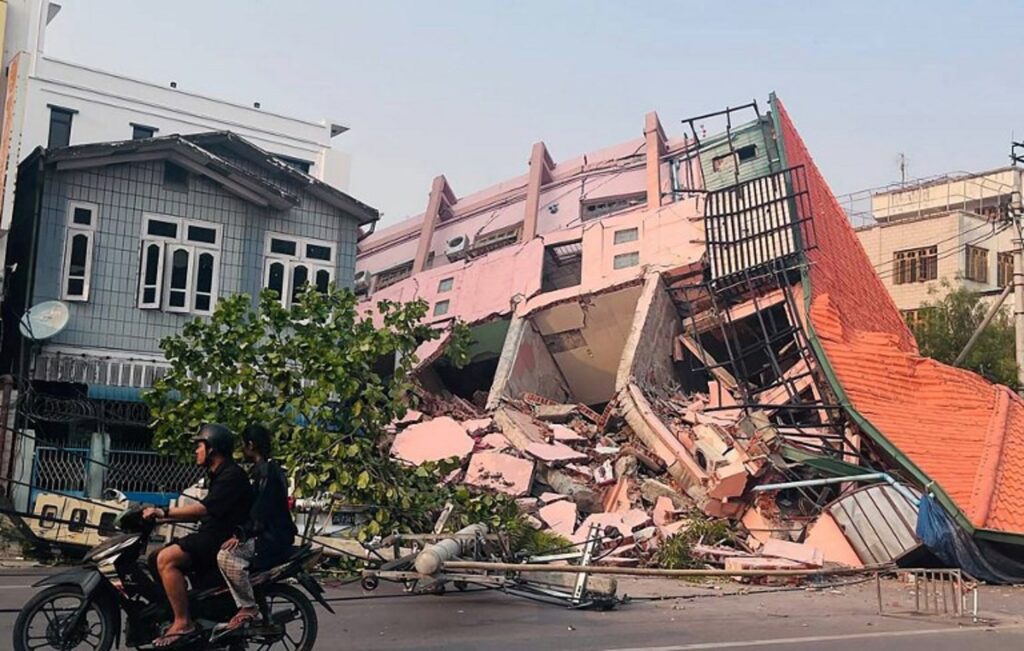
Nepal's devastating 2015 earthquake highlighted the vulnerability of infrastructure in densely populated cities. According to the study, the scale of human losses depends largely on building standards, emergency response systems, access to information and social inequalities.
Risk maps will need to take this fundamental unpredictability into account, the researchers argue, stressing that prevention depends as much on governance and transparency as on geology.
Although Europe does not face the same seismic risks as the Himalayas, it encompasses a wide range of seismic contexts requiring coordinated action, the statement added.
Belgium, while only marginally exposed to major earthquakes, is embedded in European infrastructure, civil protection and international aid networks, making it part of a broader collective response. European countries would benefit from sharing expertise, data and cross-border emergency protocols, the study concludes.
