
Following weeks of uncertainty over Belgium's controversial VAT increase, the Federal Government definitively decided to postpone the planned reform, which would lead to a nationwide price hike for culture, sport, leisure and takeaway meals.
Belgium's VAT reform – which was an essential part of the budget agreement concluded by Prime Minister Bart De Wever (N-VA) and brought his government dangerously close to collapse at the end of 2025 – is being postponed. The Council of State rejected the complex scheme in early February.
"We saw this coming. I had a racehorse in mind, but we ended up with a very ugly camel. If it cannot reach the oasis, we will have to talk about it again," De Wever told the Belgian press in several television interviews on the occasion of his government being in power for one year.
After the Council of Ministers on Friday afternoon, the Federal Government announced that it would go back to the drawing board to rethink the scheme for certain sectors.
The VAT reform is part of De Wever's budget plan, with which he plans to save €9.2 billion by the end of his Federal Government's legislature, in 2029. As a result of a bric-à-brac of exemptions and allowances, however, the scheme became increasingly Kafkaesque over the last couple of weeks.
An ugly beast in daylight
The tangle arose as a result of the French-speaking liberal MR party's opposition to a simple general increase in VAT rates. MR leader Georges-Louis Bouchez wanted to avoid prices in supermarkets going up, at all costs.
The strong opposition to the planned scheme led to the specific targeting of takeaway meals, fitness and festivals, explained Budget Minister Vincent Van Peteghem (CD&V) on Flemish television at the start of the year.
In the same breath, he admitted that he understood people who felt as if the government had blindly thrown a few darts at a board to decide which products and services would be affected and which would not.
De Wever also sees their point. "At 5 o'clock in the morning, it all seems to make sense. But when you see it in the daylight, you realise it is a very ugly beast," he said, reverting back to his camel metaphor.
The image of an Arabian thoroughbred being chased by political negotiations to end up as a camel does not come from De Wever himself. It was former Belgian Prime Minister Gaston Eyskens who used it first, wanting to demonstrate the contrast between economic theory and political practice (although he spoke of a dromedary instead of a camel).
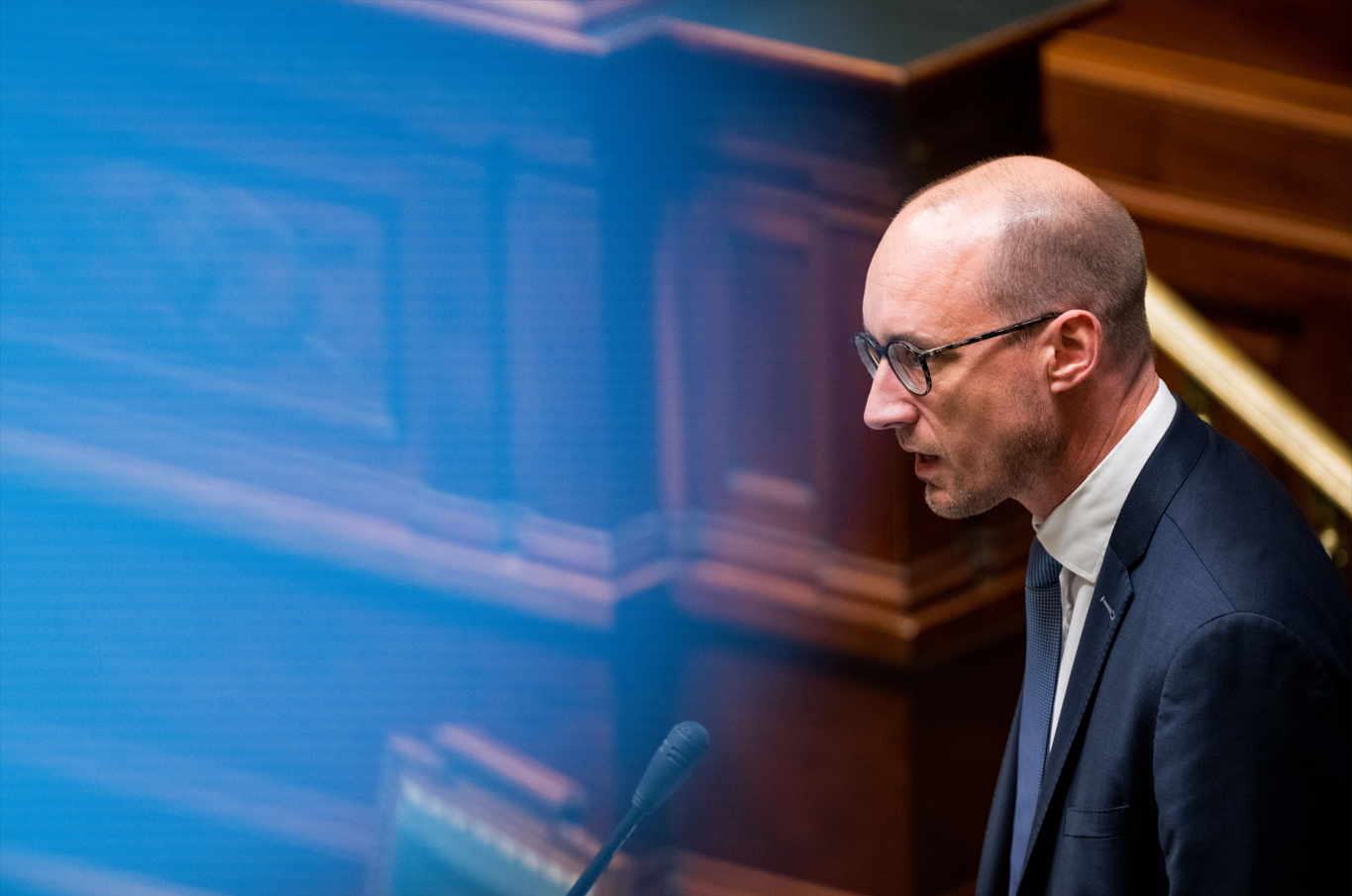
Budget Minister Vincent Van Peteghem (CD&V) in Parliament. Credit: Belga
The death blow to the reform came last week, when the Council of State rejected parts of it, stating that some distinctions between what was included and what was not were "very unclear" and "not always objective."
Concerning culture, for example, tickets for live classical music would be taxed at the regular 6% VAT rate, while a pop concert would be subjected to the increased 12% rate – a difference that the Council of State considered unjustifiable.
The new VAT rules for takeaway meals also proved to be legally unstable. Discussions about whether the takeaway label also applies to food such as takeaway sushi, sandwiches or cold pasta meals/salads in the supermarket (which would make them more expensive) led nowhere.
As a result, the parts of the VAT reform that concern culture and takeaway meals are being postponed, as are the reforms for the sport and leisure sectors.
At the same time, the planned reduction in VAT on non-alcoholic beverages in bars and restaurants – from 21% to 12% – is also being postponed. This is not because of any legal issues, but in an attempt to limit the damage to the budget.
Cooling-off period
The other planned VAT increases will still take effect on 1 March. These include overnight stays in hotels and campsites (from 6% to 12%) and pesticides (from 12% to 21%).
At the next budget review in March, Prime Minister Bart De Wever (N-VA) wants to revisit the VAT issue with the aim of incorporating everything into a broader budgetary deal.
However, this will prove difficult as the governing parties have so far not been able to agree on how to untangle this knot.
One possible solution was proposed by Van Peteghem: merging the 6% and 12% rates to an in-between rate of 9%, but it is unclear if there is sufficient support for that. Increasing the 21% VAT rate to 22% would also be a possibility.
With no widely accepted solution in sight, however, the increases are being put on hold for the time being, with various ministers implying that the "cooling-off period" between now and March is much-needed.
