
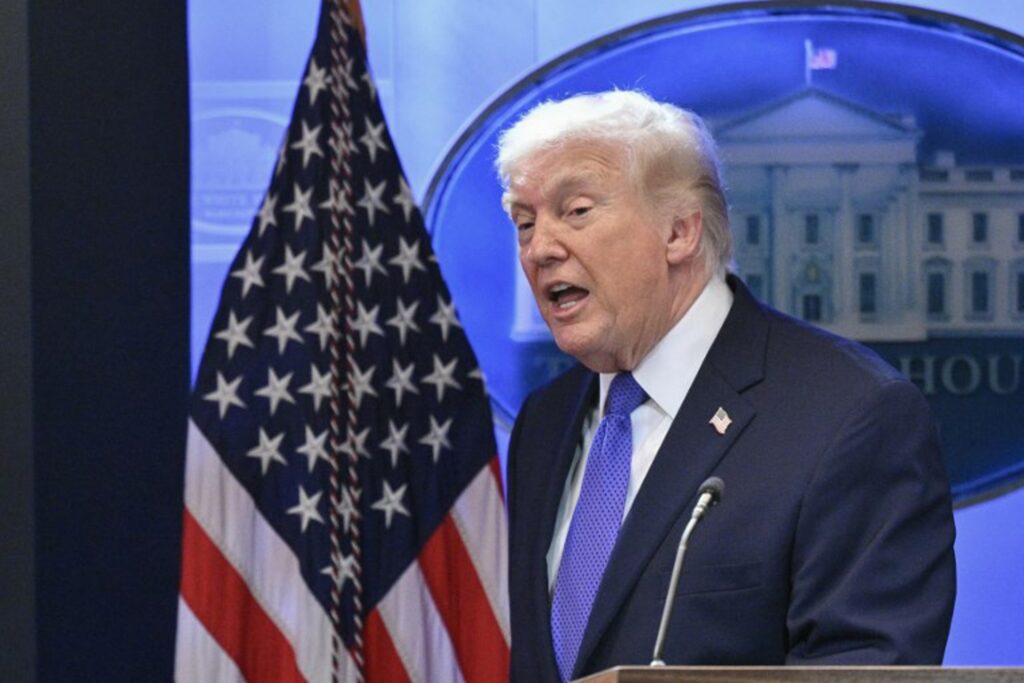
Former US President Donald Trump announced on Friday that he had signed a decree imposing a global 10% tariff following a major setback from the Supreme Court ruling against his trade policies.
Trump stated on Truth Social that the tariff would apply to all countries and take effect almost immediately, calling it a “great honour” to sign the measure from the Oval Office.
Initially, Trump had justified his previous large-scale tariffs on imports using the International Emergency Economic Powers Act (IEEPA). However, the Supreme Court ruled that the law does not grant the President authority to act without Congressional approval.
The newly announced tariff will instead be based on Section 122 of the Trade Act of 1974, a provision that has never been used before. It allows the President to impose up to 15% tariffs for a maximum period of 150 days, after which Congressional approval is required for continuation—a vote that seems uncertain given bipartisan support for the Supreme Court’s decision.
The decree sets the implementation date as 24 February. Certain industries, such as pharmaceuticals, are exempt, as are goods imported under the United States-Mexico-Canada Agreement (USMCA), according to a White House statement.
Countries that recently signed trade agreements with the US will have their tariffs capped at 10%. This includes nations and blocs such as the European Union, Japan, South Korea, and Taiwan, which had previously been subjected to 15% tariffs, a White House official confirmed to AFP.
