
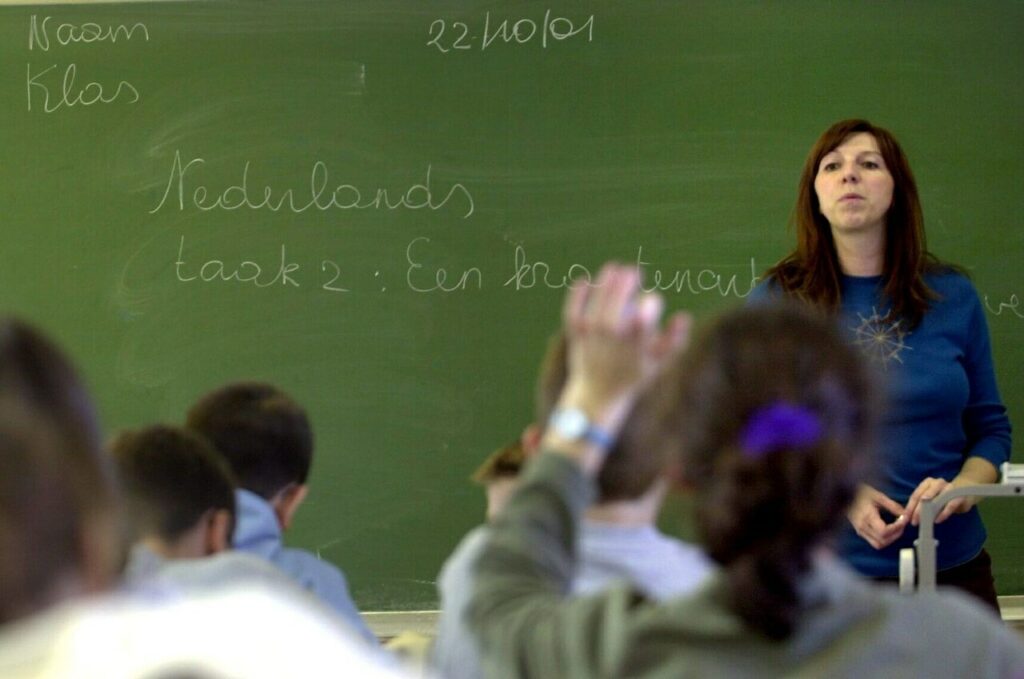
Dutch will become compulsory for all children in Belgium's French-speaking education system from their third year of primary school from 2027, Francophone Education Minister Valérie Glatigny (MR) has announced.
In French-speaking schools in the (officially bilingual) Brussels-Capital Region, Dutch is taught from the third year of primary school (pupils aged 8-9 years old). Now, this measure will be extended to Wallonia.
"We live in Belgium. Mastering a second national language of the country is essential for our young people," Glatigny said on her social media, stressing that this would give pupils better opportunities on the labour market.
In secondary education, Dutch will automatically become pupils' second language. Those who want to learn a language other than Dutch will have to request special permission from their school.
Then, from the second year of secondary school (pupils aged 13-14), a third language will be added: either English or German.
What is the system now?
Currently, pupils in the country's French-speaking education system (all schools in Wallonia and the French-speaking ones in Brussels) can choose which second language they want to learn from the fifth year of primary school (pupils aged 10-11). The options are Dutch, English or German.
Dutch is the least popular choice: currently, 70% of pupils choose English as their second language. This means that many pupils in Wallonia finish secondary school without ever having studied Dutch – one of the country's official languages.
In Flanders, meanwhile, French is compulsory as a second language for pupils from the fifth year of primary school (but schools are also allowed to start teaching it from the third year).
In Brussels' Dutch-speaking education system, pupils can even start learning French from their first year (aged 6-7), provided that they have sufficient knowledge of Dutch.
What is the issue?
The debate about whether or not to make Dutch lessons compulsory in the French-speaking parts of Belgium has been raging for years: the previous Education Minister in the French Community Caroline Désir (PS) came up with a similar plan in 2022.
However, the plan encountered many practical challenges, the biggest of which was a shortage of Dutch teachers. At the time, the teacher shortage even led to the plan being scrapped completely.
After decades of neglect and lacklustre attempts to give Dutch a more prominent role in French-speaking pupils' education, there now seems to be "a political consensus" about the importance of children learning Dutch, according to Belgian philosopher and defender of linguistic justice Philippe Van Parijs.
"On the Francophone side, there is a really strong will to improve their pupils' Dutch skills for the first time in a long time," he told The Brussels Times on the occasion of Multilingualism Week, where the issue of teaching Dutch in Brussels featured heavily.
"The issue is: where do we find the teachers? This is a major challenge in Wallonia, but also in Brussels," Van Parijs said.
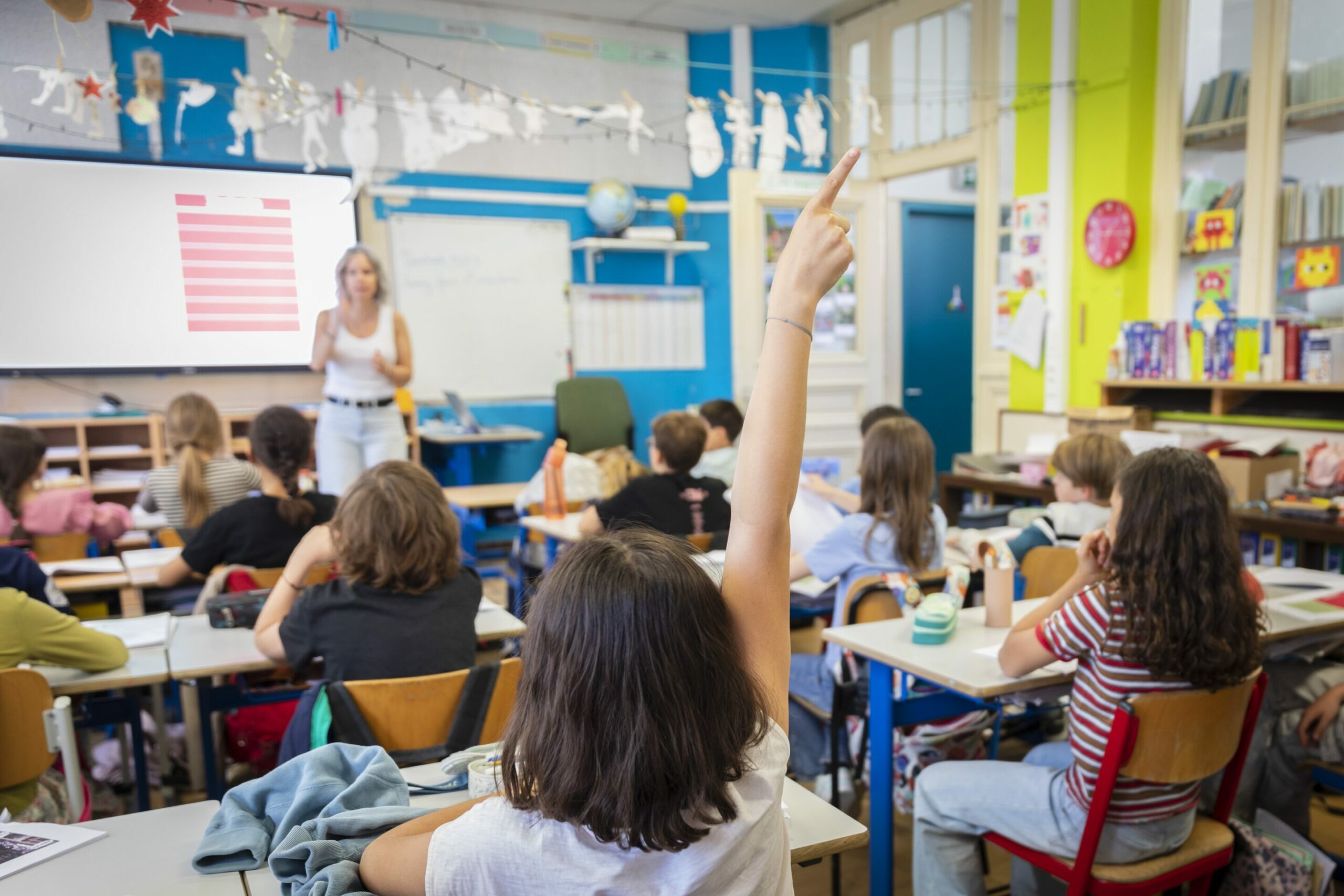
A class of pupils in primary school. Credit: Belga/Nicolas Landemard/Le Pictorium
Currently, many Dutch-speaking schools in Brussels are only open four days a week; there are not enough teachers for full five-day school weeks.
"It is very difficult to recruit more native Dutch speakers in Brussels, because they can usually have better jobs in Flanders," he said. "French-speaking schools need Dutch language teachers, but they often do not manage to recruit enough people."
Once Dutch becomes compulsory in Wallonia, Van Parijs believes it will become even more difficult to keep those teachers in Brussels. "It is already difficult enough to get and keep them now, but when Wallonia needs them, they will be incentivised to leave."
Is it feasible?
Previously, current Minister Glatigny herself also questioned the feasibility of compulsory Dutch lessons by 2027 for these reasons, but MR leader Georges-Louis Bouchez – whose Dutch skills are notably very poor – refused to give ground.
In 2022, Bouchez stated that he blamed the fact that he only speaks one of Belgium's official languages on the Walloon school system, adding that he wanted to make Dutch compulsory from a young age.
In recent weeks, the issue of Dutch proficiency in Belgium's French-speaking parts of the country – and specifically in Brussels – was brought to the fore again, as a result of the poor Dutch skills of the Capital Region's new Minister-President Boris Dilliès (MR).
The reform is scheduled to take effect on 1 September 2027.
