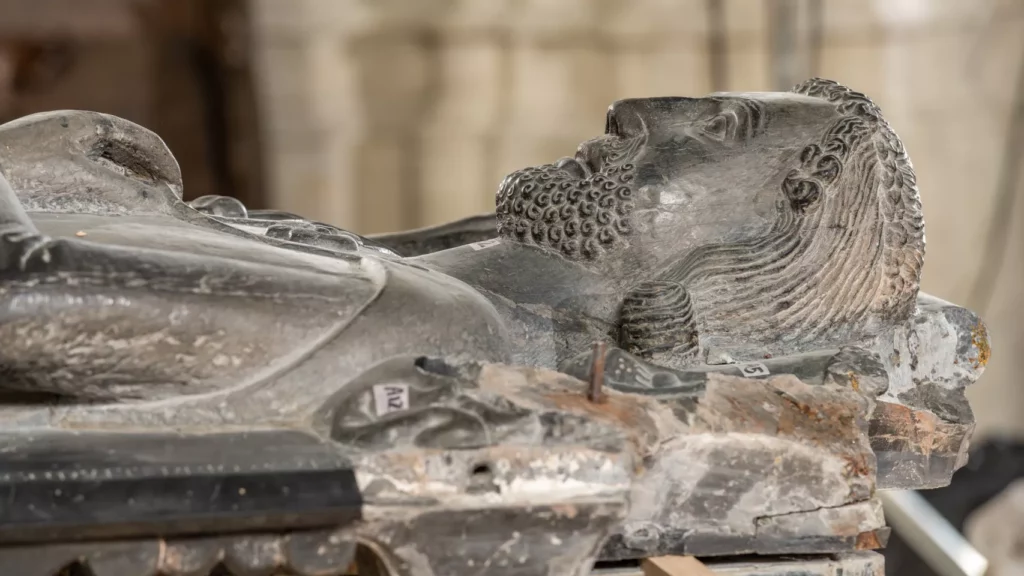
At Saint Peter’s Church in Leuven, DNA testing will determine whether four Brabançon dukes from the 12th and 13th centuries are truly buried there.
The human remains, in poor condition, have been removed from the crypt and carefully preserved for analysis. These genetic tests aim to confirm their origins, familial connections, and biological traits.
The dukes ruled over the Duchy of Brabant, a state of the Holy Roman Empire, which was established in 1183. It was considered the heart of the Low Countries, with the territory today divided between Belgium and the Dutch province of North Brabant.
Traditionally, the remains buried inside Saint Peter’s Church in Leuven are believed to belong to dukes Godfrey II, Godfrey III, Henry I, and Henry II.
Among them, Henry I (circa 1165–1235) is particularly renowned, having ruled Brabant for over fifty years. His tomb is still visible in the church today.
The project, led by KU Leuven, has two goals: improving the preservation of the remains and confirming their identity through genetic research. Similar analysis had previously been conducted on the skeleton of William II of Holland, a grandson of Henry I and a Roman Emperor.
This prior study provides an important reference for identifying the Brabançon dukes, explained Professor Maarten Larmuseau, coordinator of the project.
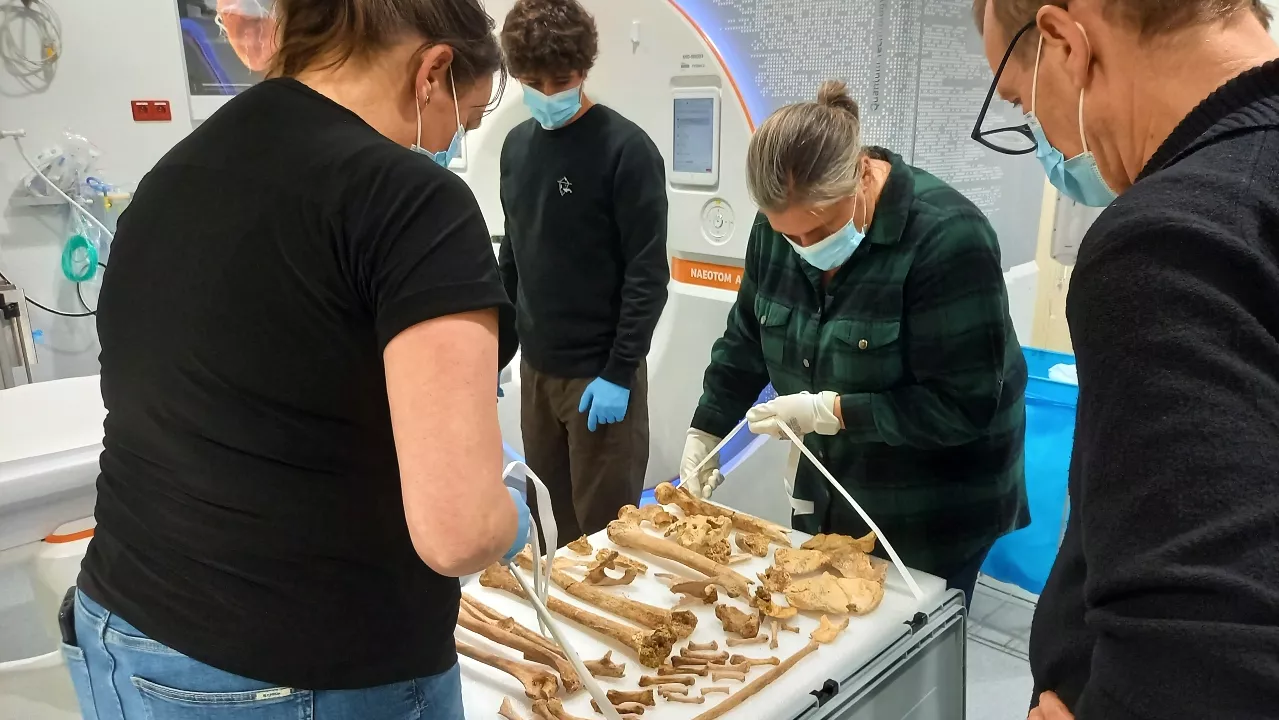
DNA analysis on the remains of the Dukes of Brabant. Credit: KU Leuven
The research involves collaboration between KU Leuven, M Leuven museum, the Leuven aan de Dijle pastoral zone, as well as local government support.
There are plans for digital facial reconstructions to bring the dukes’ appearances to life, alongside efforts to share their historical narratives within and beyond the church.
DNA test results are expected in approximately two years. "This is a rare opportunity to gather insights into successive generations of a medieval elite family. We hope to confirm the ducal identities by the end of 2027," Professor Larmuseau concluded.
"The Dukes of Brabant are illustrious ancestors of the Leuven past, who helped shape the beginnings of the history of our city and our region", declared Dirk Vansina, councillor for Real Estate Heritage in Leuven.
"It is remarkable that this research allows us to reconnect with them. Thanks to the collaboration of leading Leuven partners, we demonstrate our ambition to better understand and restore our heritage and our past. Together, we revive a forgotten chapter, with scientific rigour and respect."
