
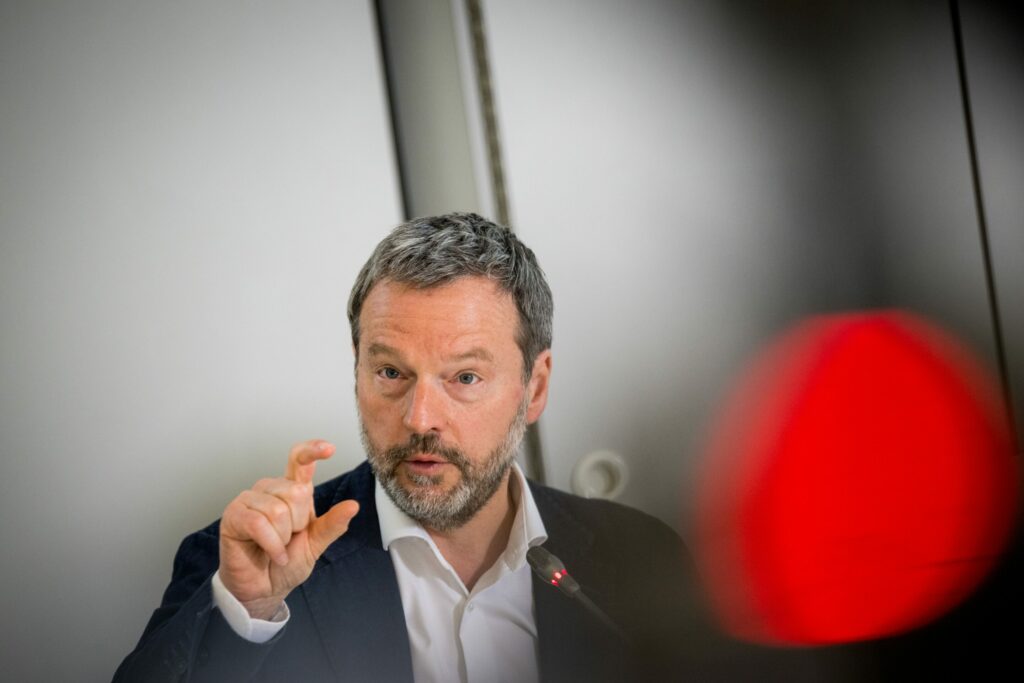
Additional savings of three to four billion euros per year will not be enough to stabilise Belgium's debt ratio, according to Pierre Wunsch, Governor of the National Bank of Belgium (BNB).
"More certainly needs to be done; we must aim for a deficit of 3%," he explained on Thursday during the presentation of the institution's annual report.
The budget deficit and public debt widened further last year, reaching 5.3% and some 107% of GDP. According to the latest estimates, only France has a larger deficit within the eurozone.
The effect of the Federal Government's reforms and consolidation measures remained limited in 2025 and will only be fully felt in the coming years, according to the NBB report.
"Even if policy interventions will lead to a clear and significant slowdown in primary public expenditure growth, both the budget deficit and public debt will remain on an unsustainable path," adds the National Bank. "The Belgian economy is therefore all the more vulnerable to a possible economic downturn."
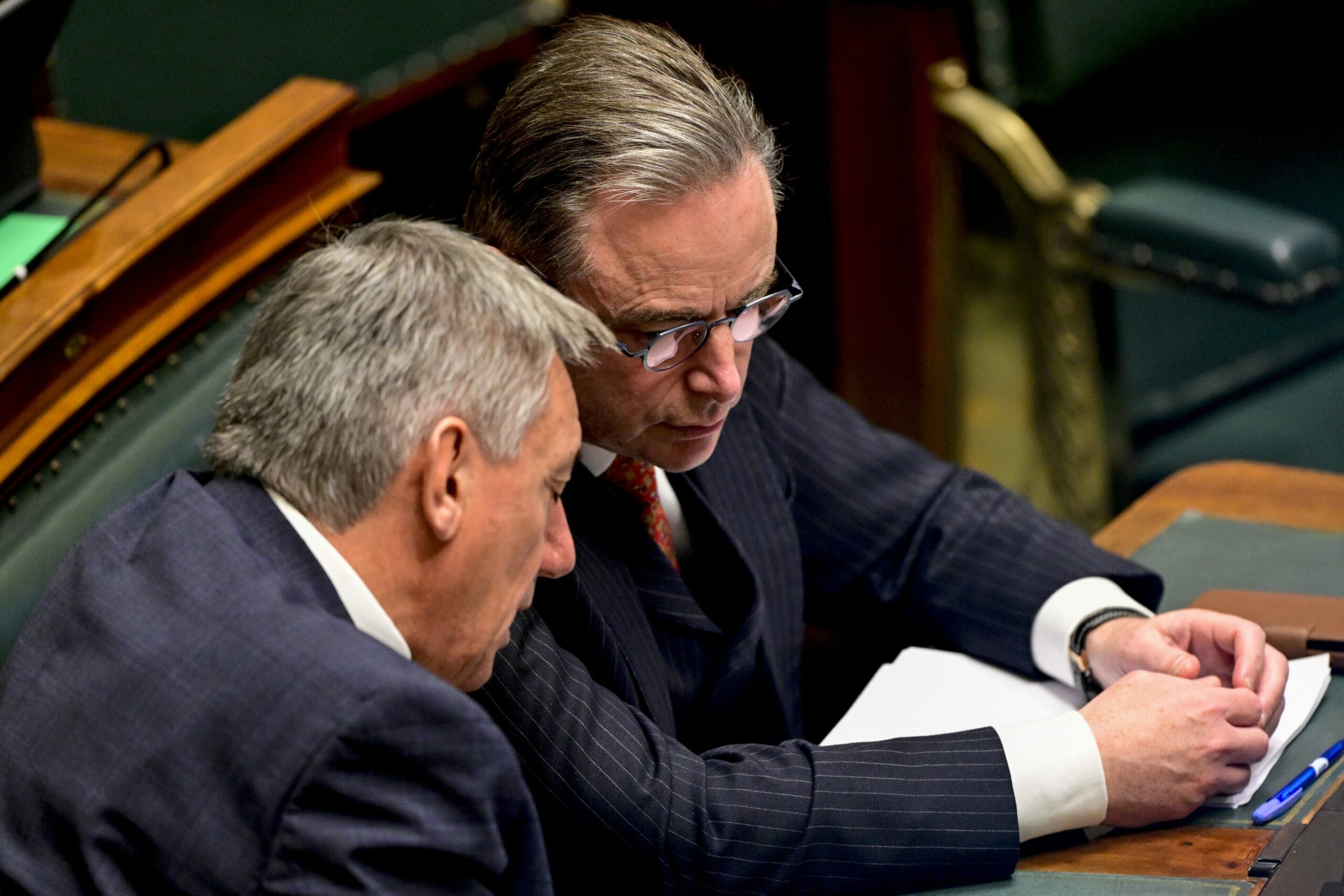
Vice-Prime Minister and Minister of Finance Jan Jambon and Prime Minister Bart De Wever at the federal parliament, in Brussels, Thursday 27 November 2025. Credit: Belga / Dirk Waem
Faced with this situation, Prime Minister Bart De Wever has announced his intention to make a further three to four billion euros in structural savings each year. Last November, the Arizona majority had already agreed on budgetary consolidation measures worth €8.1 billion per year.
However, this new effort will not be enough to stabilise the debt ratio, warns the governor of the NBB.
"It may be enough for a year, but we will then have to hope that the government continues its efforts. And ideally, we should have a reserve, because we are sometimes faced with a recession. The deficit then increases again and it takes time to bring it back to a sustainable level."
Corporate tax down
The report explains that the worsening of the budget deficit by nearly 1% of GDP compared to 2024 is mainly due to a decline in revenue. Corporate tax revenue fell sharply, and indirect taxes declined, while social security contributions also fell slightly.
Public expenditure growth was once again higher than GDP growth. In 2025, the increase in the expenditure ratio is largely attributable to spending on healthcare and long-term care. These have risen by nearly €3 billion.
According to the NBB, this development cannot be explained solely by the ageing of the population, but is partly due to higher costs resulting from new technologies and innovative medicines.

National Bank (BNB-NBB) governor Pierre Wunsch pictured during a press conference of the Belgian national bank BNB / NBB, to present the 2025 year report, Monday 02 March 2026 in Brussels. Credit: Belga
Overall, total public expenditure exceeded 54% of GDP in 2025, the highest level since the pandemic, but the funding issues in the justice system and healthcare also present a need for investment in state infrastructure.
Union anger
The National Bank's annual report has sparked criticism from trade unions for its perceived bias against public interests.
The socialist union FGTB expressed concern that key progress in social protection, ecological transition, human rights, and consumer protection is labelled as obstacles to competitiveness in the report.
The Christian union CSC accused the BNB of aligning too readily with the Arizona government coalition's narrative, which it believes targets workers unfairly.
The report allegedly supports government policies on unemployment, pensions, and long-term illnesses "without nuance," according to the FGTB. It argued these reforms exacerbate social inequalities and criticised the pension reform as a social regression lacking transitional measures.
Meanwhile, the FGTB noted the BNB's hesitance to address measures like reducing excessive corporate subsidies or introducing a capital gains tax.
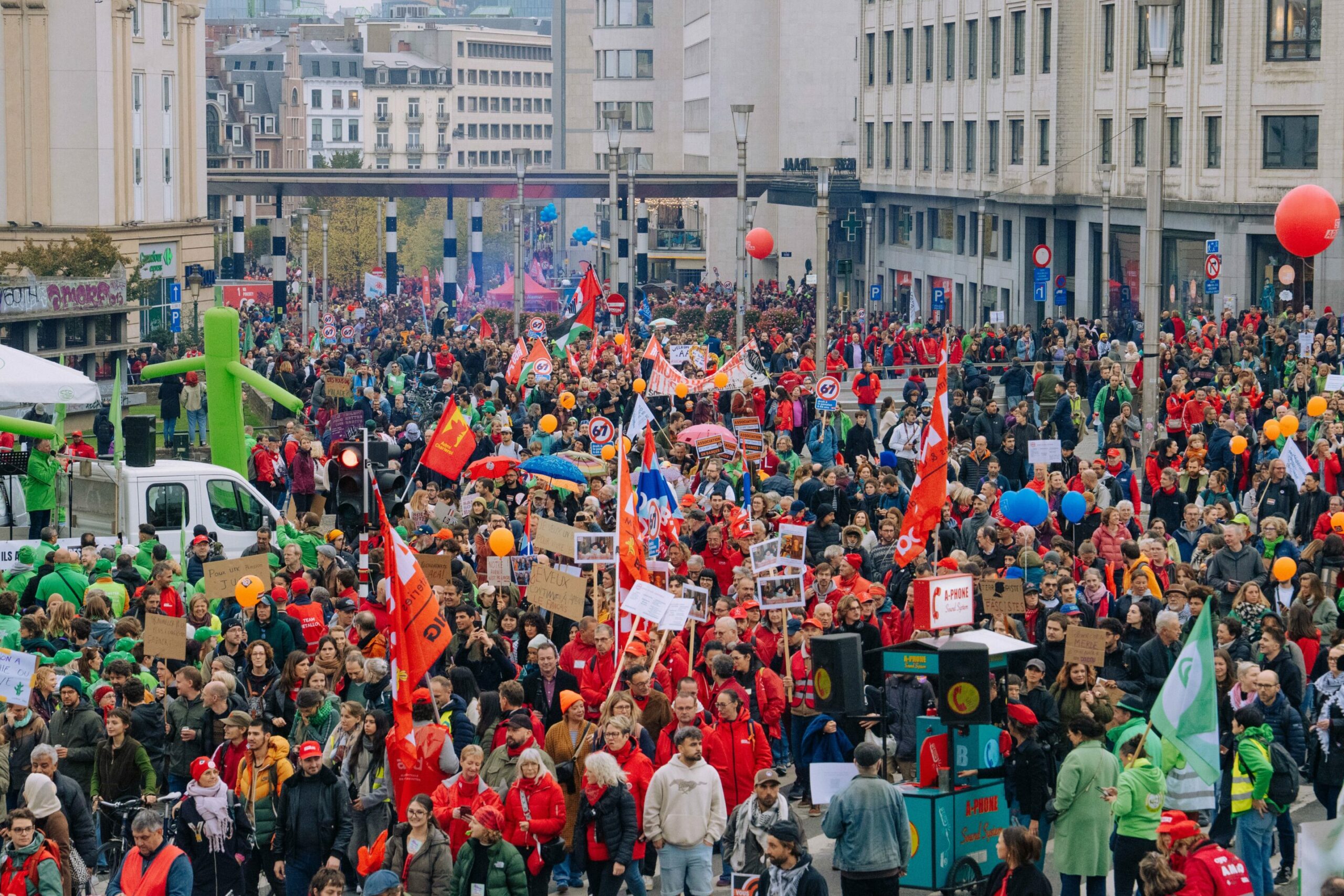
Protesters pictured during a joint demonstration in Brussels against Arizona government cuts on Tuesday 14 October 2025. Credit: Belga
The CSC warned against the risks of deregulation and emphasised the importance of maintaining a sustainable regulatory framework and clear social conditions in public procurement processes.
Both unions called for an economic analysis rooted in social realities, advocating for fair wealth redistribution and sustainable growth.
In February, the Court of Audit's annual report was published, with the watchdog questioning the expected returns from a number of the De Wever government's measures.
Specifically, the Court of Audit fears that the reform to the unemployment benefits, the fight against fraud, and the activation of the long-term sick may not yield the amounts the government is hoping for.
As a result, they conclude that the sustainability of public finances in the medium term is not guaranteed.
