
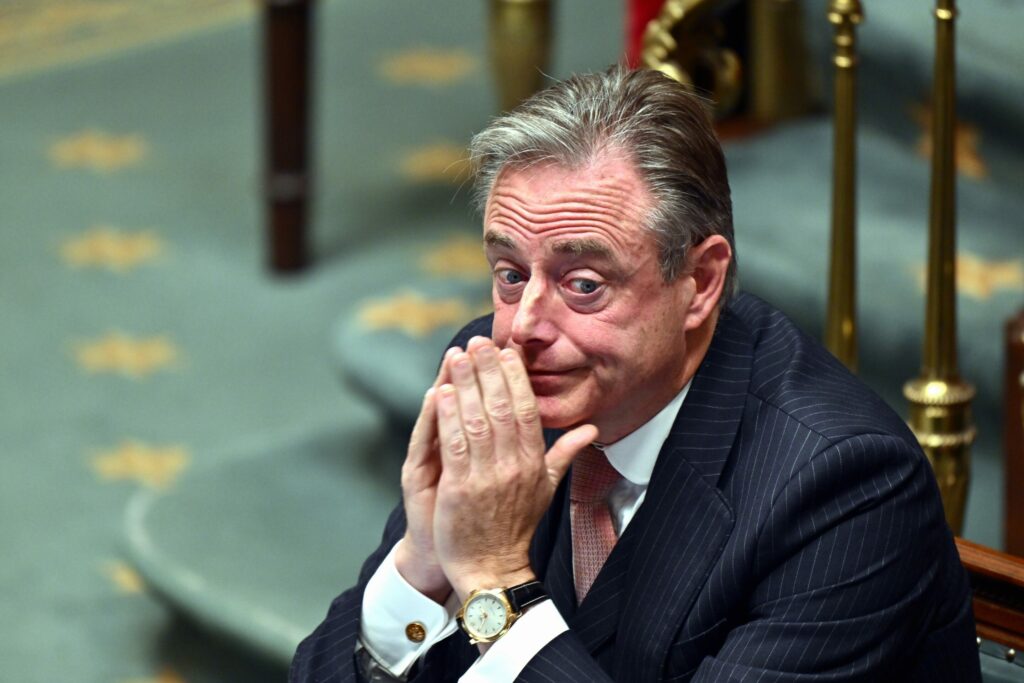
Belgium's Federal Government struggled through weeks of debates and a 20-hour marathon negotiation session to finally agree on a multi-year budget plan in November last year. Now, the country's figures watchdog is questioning its feasibility.
Led by Prime Minister Bart De Wever (N-VA) and his emphasis on getting Belgium's budget back on track, the Federal Government announced a series of measures aimed at finding €9.2 billion by the end of this legislature, in 2029.
However, in the Court of Audit's annual report published in February, the watchdog questions the expected returns from a number of these announced measures.
Specifically, the Court of Audit fears that the reform to the unemployment benefits, the fight against fraud, and the activation of the long-term sick may not yield the amounts the government is hoping for.
As a result, they conclude that the sustainability of public finances in the medium term is not guaranteed.
'Clear pattern'
"When we add up all the Court of Audit's comments, we arrive at a figure of around €1 billion that is up in the air," said Alexia Bertrand, group leader of Flemish liberals Anders in the Federal Parliament last week.
In theory, Belgium should be able to meet the European Commission's spending standard until 2029 with the plan currently on the table. However, the Court of Audit is questioning whether what's on the page can be translated to real life.
This is a "clear pattern," said Bertrand. "Time and again, almost all institutions have been highly critical of the Federal Government's budgetary exercises. The method is flawed, the figures are incorrect, and the necessary legislation is not being submitted to parliament, or is being submitted too late."
The Court of Audit questioned the Federal Government's forecasts that a third of the unemployed people who lose their benefits will find work, another third will apply for a living wage, and the last third will disappear from the statistics.
"Most measures to get the long-term sick back to work – which could save €1.9 billion by 2029 – still need to be worked out," the report said.
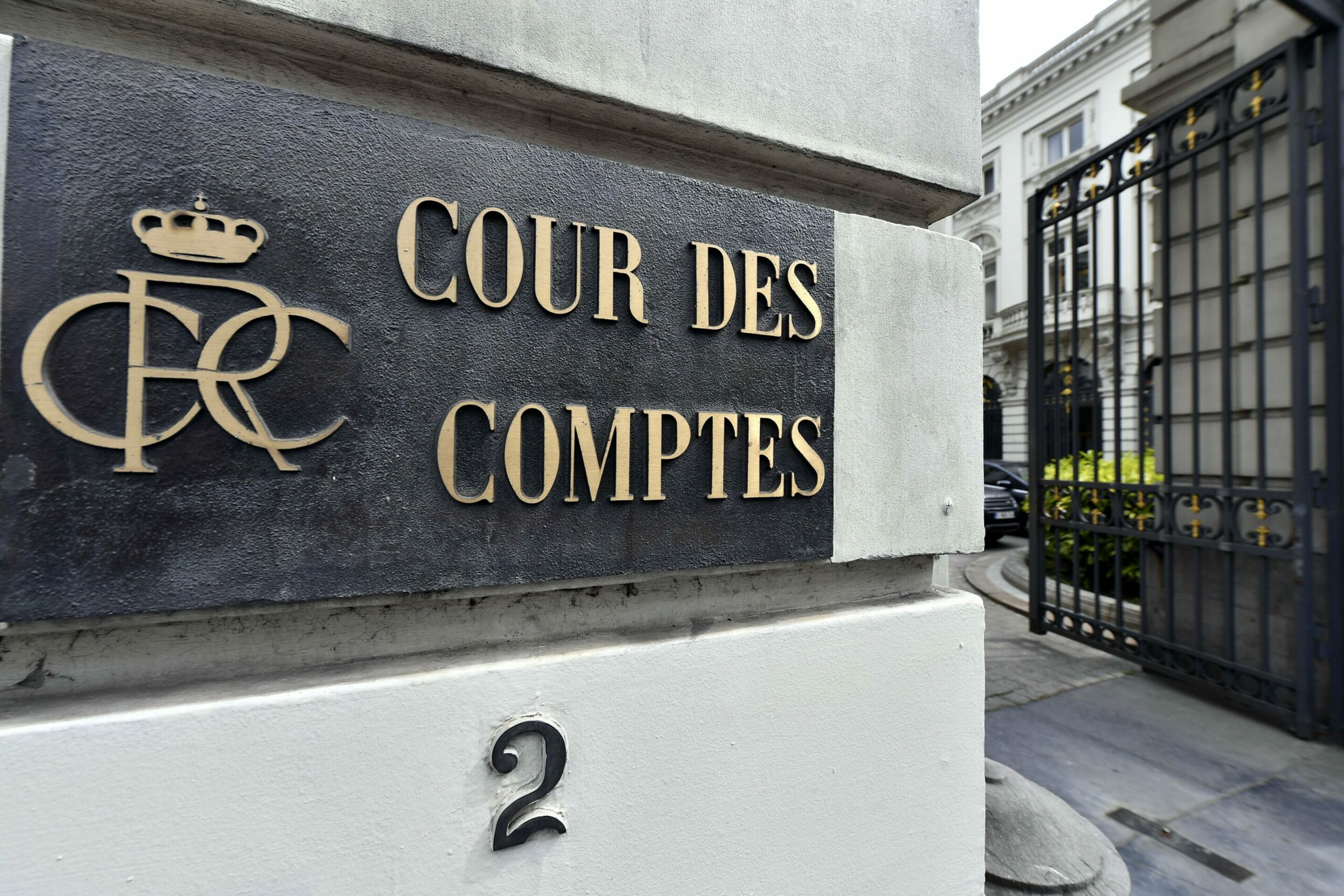
The Court of Audit (Rekenhof/Cour des Comptes) in Brussels. Credit: Belga/Eric Lalmand
These findings are based on calculations by the Social Integration Department, whose estimates of the additional costs for the public social welfare centres (CPAS/OCMW) in 2027 and 2028 are half a billion higher than the estimates by the Federal Government.
"The social breakdown and militarisation of the government are not leading to a healthy budget," said Sofie Merckx, group leader for the radical left PTB/PVDA in the Federal Parliament. "There are alternatives. There is a great deal of wealth in our country. It is a matter of political choices."
Regarding the government's 'Back to Work' plan, which is expected to yield savings of €1.9 billion by activating the long-term sick, the Court of Auditors notes that various measures still need to be worked out.
This also applies to the government's ambitious targets (€1.2 billion) in the area of fraud prevention, considering that there is still no anti-fraud plan, De Tijd reports.
Instead, the auditors pointed out that the government gave priority to establishing a financial prosecutor's office and the recruitment of 377 additional inspectors. This is a major challenge for the Finance Ministry, as it is only allowed to recruit two new people for every five people leaving.
Gaps in the budget
Additionally, due to the near-collapse of the government over the budget last autumn, most measures will only start in April, and some even later – leaving many gaps in the 2026 budget.
For example, that is the case for the €600 million in revenue from the controversial VAT increase on leisure and takeaway services. However, that was postponed indefinitely, as the Federal Government still has to find an alternative after the Council of State issued a negative opinion.
The report also stated that the revenue from the index cap in 2026 has been overestimated, because the measure will only start to yield results from 2027 onwards. Meanwhile, the revenue from the parcel tax is uncertain because Belgium decided to participate in a European initiative.
The announced rate increase for dividend payments to company directors has, in turn, led to so many payments in December 2025 that the Court of Audit believes that the revenues in 2026 will be disappointing.
On the capital gains tax, they issued the same advice as last year: the revenue is too uncertain to be recorded as structural income.
Illustration picture shows the skyline of Brussels. Credit: Belga
Meanwhile, the Planning Bureau has already downgraded the economic outlook, making additional restructuring necessary – something that De Wever also indicated.
The Court of Auditors also warned the Federal Government that postponing part of the tax reform until 2030 does not change the overall effort required to remain in line with European spending standards in the long term.
There is still no inter-federal agreement on the transfer of €500 million in expenditure for the European budget to the federal states.
According to the latest figures from the Federal Planning Bureau, the federal budget deficit will continue to rise to €36.5 billion in 2029, and even to almost €43 billion in 2031.
As a result, the Court of Audit concludes that the Federal Government's focus on complying with the European spending standard "will not be sufficient to guarantee the sustainability of public finances in the medium term."
