
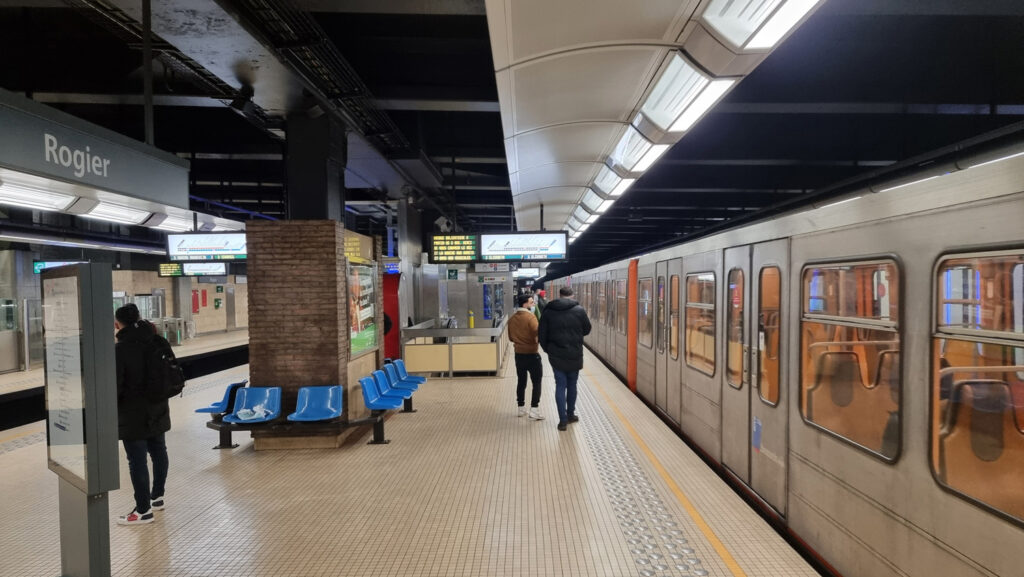
Travel habits in Brussels differ significantly between women and men, according to a gender inequality report published on Monday by the city’s urban planning agency.perspective.brussels.
Women generally travel shorter distances, rely more on public transport and walking, and are less likely to use cars than men, data from the Brussels Mobility Observatory shows.
"This diagnosis helps us understand how certain inequalities are reflected in the city," said Antoine de Borman, director-general of perspective.brussels. "It provides an essential foundation for evolving our practices and ensuring these issues are addressed in spatial planning policies."
Women's journeys tend to be more fragmented, often involving multiple trips linked to daily activities, such as taking children to school, shopping, or other caregiving responsibilities.
Gender mainstreaming public spaces
These differences are partly attributed to the unequal distribution of family and domestic responsibilities, the report notes. Concerns about safety in public spaces or on transport may also influence women's travel choices.
The study highlights that these patterns are often overlooked in urban planning. Transport policies have traditionally been designed around linear commute routes, whereas trips linked to daily activities tend to be more varied and complex.
To address these disparities, the report advises incorporating gender-specific data into mobility analyses and adapting the location of services and amenities to better meet daily needs.
The study marks the first step in a "gender mainstreaming" initiative, aimed at integrating gender considerations into the design, implementation, and evaluation of public policies to reduce inequalities between women and men.
Related News
- Belgium in Brief: It's not a women's world (yet)
- Women and LGBTQ+ community change habits over safety in Brussels
- How safe is Brussels for women and girls?
- ‘Women for women’: Bolt launches new women-only ride option in Brussels
- 'Dancefloor is not safe': Sexual assault claims in techno scene exposed by whistleblower
