
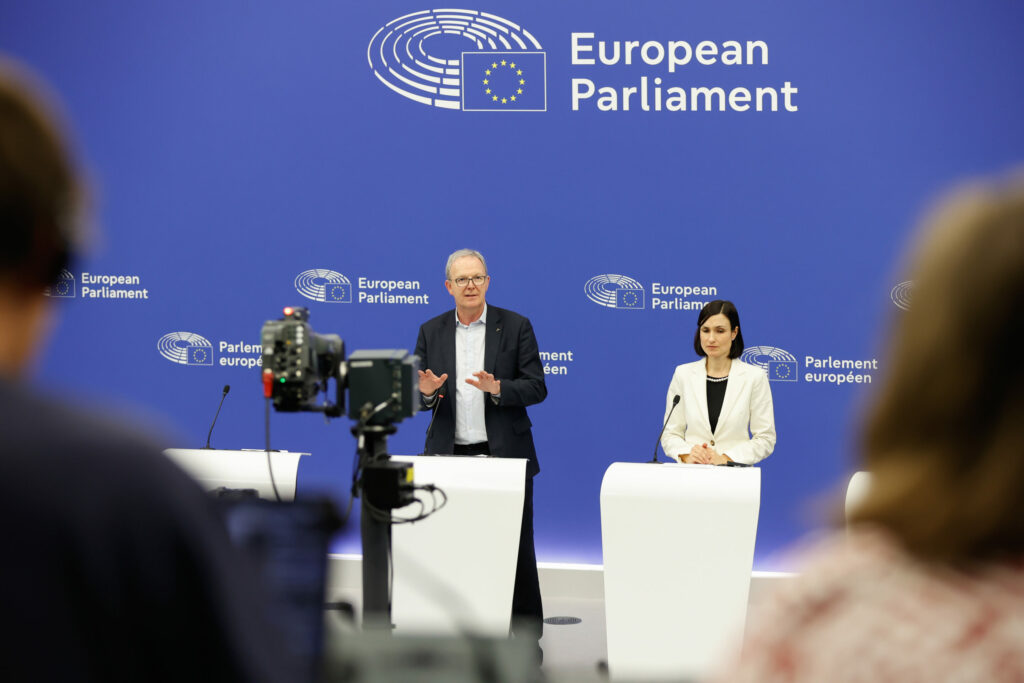
The European Parliament called on the EU to ensure that companies using copyrighted work for generative AI will have to pay for it in a bid to protect its creative sector, particularly news media.
Members of the European Parliament (MEPs) adopted a series of recommendations to protect copyrighted creative work from being taken and used by artificial intelligence (AI). They were adopted with 460 votes to 71, with 88 abstentions.
They urged the Commission to protect the press and news media sector, whose work is regularly exploited by AI, with an increase in reports of news media outlets losing revenue and traffic due to this new phenomenon.
AI systems steal content from media companies’ websites and redirect key information onto their own platforms, significantly impacting traffic revenues. This has also impacted independent media organisations like The Brussels Times.
Protect creative sector
On Tuesday, MEPs insisted that the aggregation of news content must ensure media pluralism and diversity of information, avoiding the selective processing of information or self-preferential practices by gatekeepers favouring their AI services.
"Generative AI tools are undermining the business model of many news media organisations, by diverting click traffic away from their websites and social media channels," MEP Barry Andrews (Renew Europe, Ireland) said in a statement after the vote. He is urging the Commission to enforce the digital law to save media pluralism.
"However, most tech platforms have started to use generative AI to answer queries directly, so-called ‘zero-click searches’, without directing users to the providers of the news articles. People even talk about ‘Google Zero’, with Google becoming an answer engine instead of a search engine."
No copyright for AI
In the recommendations, MEPs are urging the European Commission to introduce new licensing rules to address potential infringements of copyright law. These include voluntary collective licensing agreements per sector, which would include individual creators and small and medium-sized enterprises.
They also want to make sure rights-holders can exclude their work from being used in AI training, and they suggest that the European Union Intellectual Property Office (EUIPO) could manage such an opt-out list.
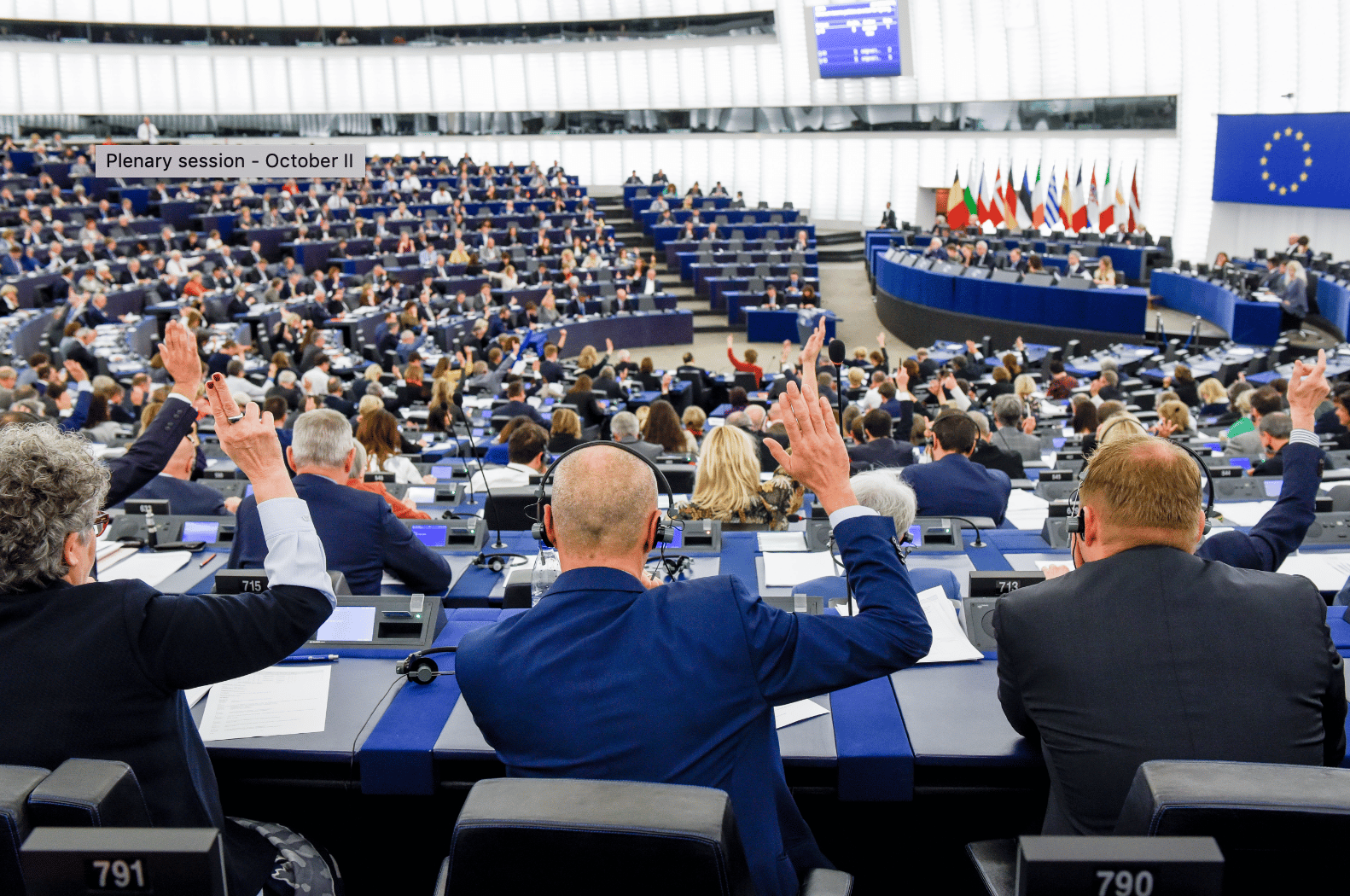
The European Parliament in Brussels. Credit: EU
Content fully generated by AI should not be protected by copyright, MEPs added, while also making sure individuals are protected from the dissemination of manipulated and AI-generated content and stress the obligation of digital service providers to act against such illegal use.
"We need clear rules for the use of copyright-protected content for AI training. Legal certainty would let AI developers know which content can be used and how licences can be obtained," said rapporteur Axel Voss (EPP, Germany) after the vote.
"On the other hand, rightsholders would be protected against unauthorised use of their content and receive remuneration. If we want to promote and develop AI in Europe while also protecting our creators, then these provisions are absolutely indispensable."
Lobby organisation, Computer and Communications Industry Association (CCIA Europe), responded to the move by saying the European Parliament has "created legal uncertainty", which could restrict Europe’s access to cutting-edge technologies.
"Today’s non-binding report sends the wrong signal to innovators, and risks holding back Europe’s digital competitiveness on the global stage," said CCIA Europe’s AI Policy Lead, Boniface de Champris.
