
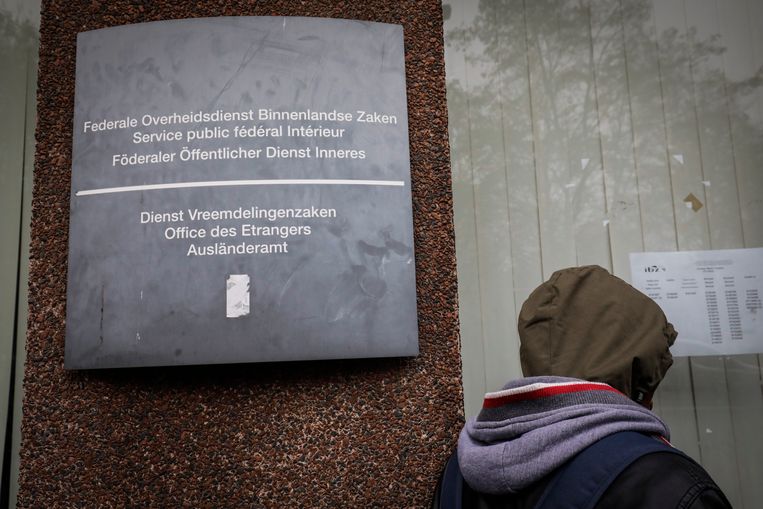
The Belgian Parliament’s Interior Committee has approved a draft law allowing the Immigration Office to impose lifelong entry bans on individuals.
The law targets illegal residents listed in the T.E.R. database, which tracks terrorism, extremism, and radicalisation. Specific categories include terrorists, potentially violent extremists, and hate preachers.
Currently, the Immigration Office can issue fixed-duration bans, with around 6,000 issued in 2025, only 42 of which exceeded 20 years. The government coalition aims to expand this by introducing lifetime bans.
Belgium has not yet implemented any lifelong entry bans, citing unclear legal frameworks and weak political commitment in the past, according to Asylum Minister Anneleen Van Bossuyt.
The new law is intended to address perceived gaps in immigration policy, with Deputy Denis Ducarme calling it a measure to stop Belgium from being a “refuge or dumping ground” for radicals in Europe.
Opposition parties, however, question the added value of such a law, arguing that long-term bans already exist. Sarah Schlitz of Ecolo-Groen suggested the proposal is politically driven rather than addressing a real need.
Concerns have also been raised about transparency and legal rights, as individuals listed in the T.E.R. database cannot access the classified information used against them. Khalil Aouasti of PS warned this could lead to legal challenges and threaten the rule of law.
Another point of contention involves minors. Starting from age 12, children can be added to the T.E.R. database, prompting calls for input from children’s rights commissioners, which were dismissed. Maaike De Vreese of N-VA defended this stance, citing instances where groups like ISIS recruit children for terrorism. Opposing views, such as those of Matti Vandemaele, argue that minors involved in such acts are manipulated rather than responsible decision-makers.
The European Court of Justice is currently reviewing a case that could impact the law. Despite this, Minister Van Bossuyt remains confident, citing an opinion from the court’s advocate general favouring the legislation.
Critics expressed frustration with the minister’s refusal to implement a recent Constitutional Court ruling, urging respect for judicial decisions. Benoît Lutgen of Les Engagés stressed that adherence to court rulings is fundamental to upholding the rule of law.
