
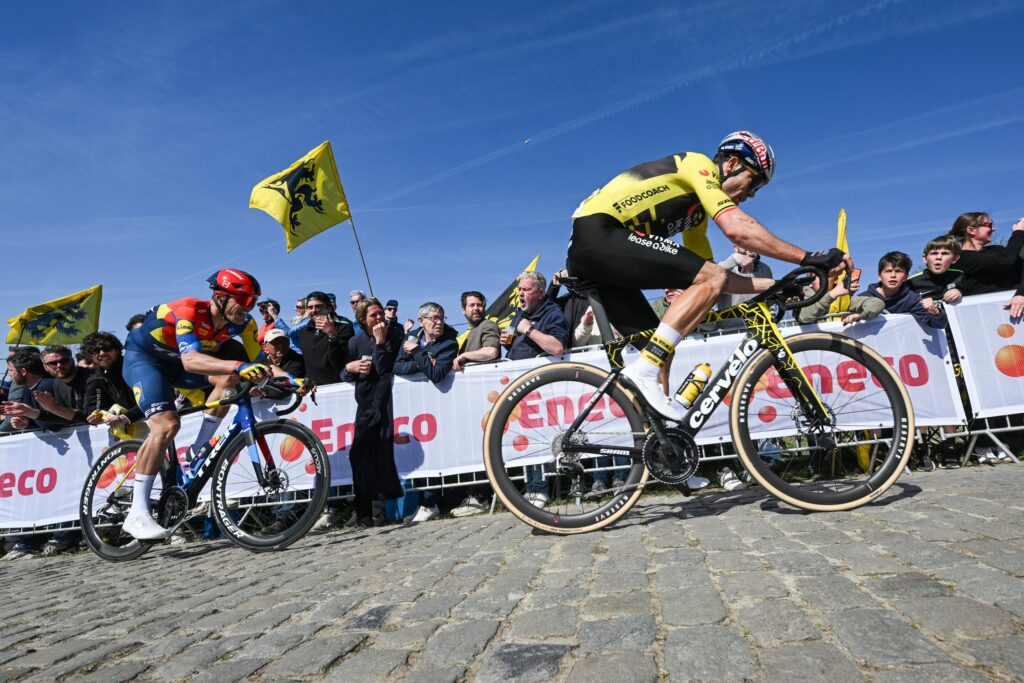
Arguably the national sport of Belgium, cycling is particularly ubiquitous in the north of the country. Such is the popularity of bike racing in Flanders, not least when the springtime 'Cobbled Classics' are held, that the sport is often described as a 'religion' in the Dutch-speaking region.
Overall, nearly a third of the races on the Union Cycliste Internationale's current calendar take place in Belgium. The European campaign's curtain-raiser, the Omloop Het Nieuwsblad, for instance, took place at the end of last month. Held in East Flanders, its route starts in Ghent and loops around the Flemish Ardennes several times before finishing up in Ninove.
A month on, the stars of professional road cycling are returning to Flanders for a tightly-packed schedule of races. The highly-anticipated Vlaamse Wielerweek (Flemish Cycling Week), which in reality is held over ten days, will see thousands of fans line the region's cobblestone roads for five separate events.
What is Flemish Cycling Week?
"Cycling is such a big part of the Flemish identity," said Frederik Backelandt, a historian and journalist who is editor-in-chief of the cycling magazine Grinta.
The Tour of Flanders, which was first held in 1913, attracts around 750,000 spectators each year. "There will be a lot of build-up to the race in the media," Backelandt told The Brussels Times. "Amateur cyclists will go out and test the cobblestones, and the local bakeries might have a special cake for the race. It's a big, big thing."
Backelandt explained that the race was initially created as part of an effort to boost regional pride. "The founder of the Tour of Flanders, Léon van den Haute, was the editor of a newspaper called Sportwereld, and one of his aims was to pay tribute to the great achievements of Flemish sports. He wanted to create this myth around the Flemish cycling champion who battles both the weather and his opponents."
"It's like the Super Bowl, or the FA Cup final of Flemish cycling," adds Andy McGrath, a cycling journalist who has covered the Ronde and written a biography of two-time winner Tadej Pogačar. Speaking to The Brussels Times, McGrath recounted his first Tour of Flanders: "I wasn't ready for the atmosphere. I remember walking from the train station in Oudenaarde, and there was a sea of people walking towards the course hours beforehand. People were drinking, waving flags — it was a real celebration."
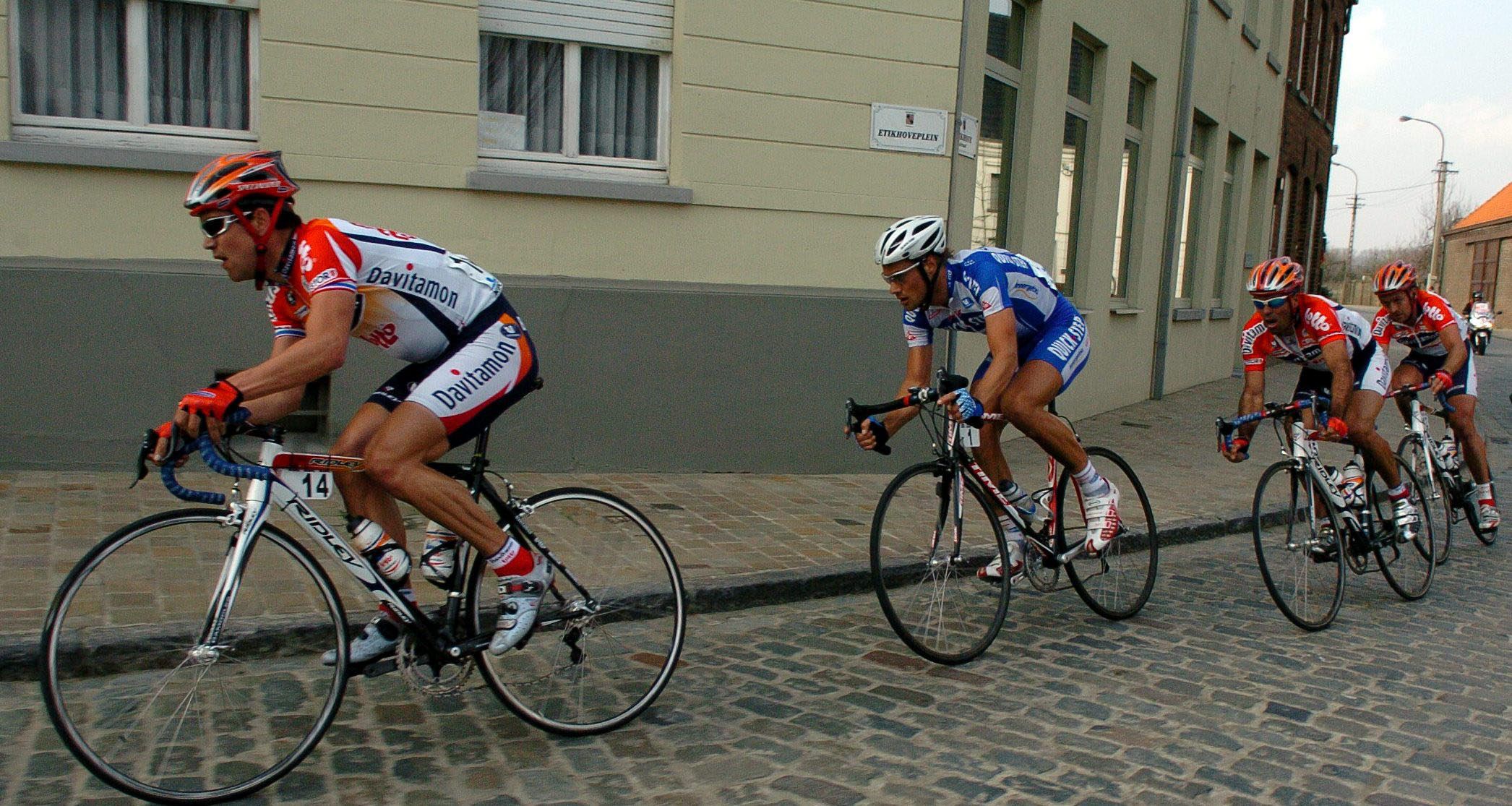
Cyclists Leon Van Bon, Tom Boonen, Peter Van Petegem and Nico Mattan ride the 48th E3 Grand Prix, the opening race of the Flemish Cycling Week, in 2005. Credit: Yves Boucau/Belga
"A lot of people will stop and watch, even those who don't necessarily care about cycling. If you're a Belgian and you've taken part in one of these races, you'll probably be the most popular guy in your hometown. People always say that bike racing is like a religion in Belgium, and when you go over there you realise that it really is a part of the fabric of society."
McGrath points out that the Tour of Flanders is a particularly demanding outing for the riders, not least given the surprisingly hilly nature of the route it takes. "You need to be a well-rounded, versatile rider to get over those hills," he explained, citing some of the race's iconic stretches such as the Koppenberg hill in Oudenaarde and the Oude Kwaremont climb in the Flemish Ardennes.
Where and when will the Flemish Cycling Week races take place?
The Ronde van Brugge (Tour of Bruges), a one-day race founded in 1977 which starts and ends in the West-Flemish capital, will kick off on Wednesday. The men's race will start just after midday, while the women's race sets off in the early afternoon the following day.
Next up in the calendar is Friday's E3 Saxo Classic, a one-day race which starts and ends in Harelbeke, near Kortrijk, which has been running since 1958. A women's race was first held in 2022 but was cancelled two years ago, with organisers citing financial issues as the reason for their decision.
The remaining three events in the Flemish Cycling Week all have both men's and women's races. The relatively flat In Flanders Fields race, previously known as Ghent-Wevelgem-Ghent before a route change, takes place on Sunday and will notably pass under the Menin Gate in Ypres. A fixture of the cycling calendar since 1934, the event was notably won three times by Belgium's cycling icon Eddy Merckx.
On the following Wednesday, the Dwars door Vlaanderen ('Across Flanders') sees riders trek 200 kilometres across East Flanders, between Roselaere and Waregem. The two-week festival of cycling then culminates with the Tour of Flanders, the Ronde van Vlaanderen, on Sunday, 5 April. Starting in Antwerp, the century-old event also covers the provinces of West and East Flanders and is considered one of the five 'monuments' of the global cycling season.
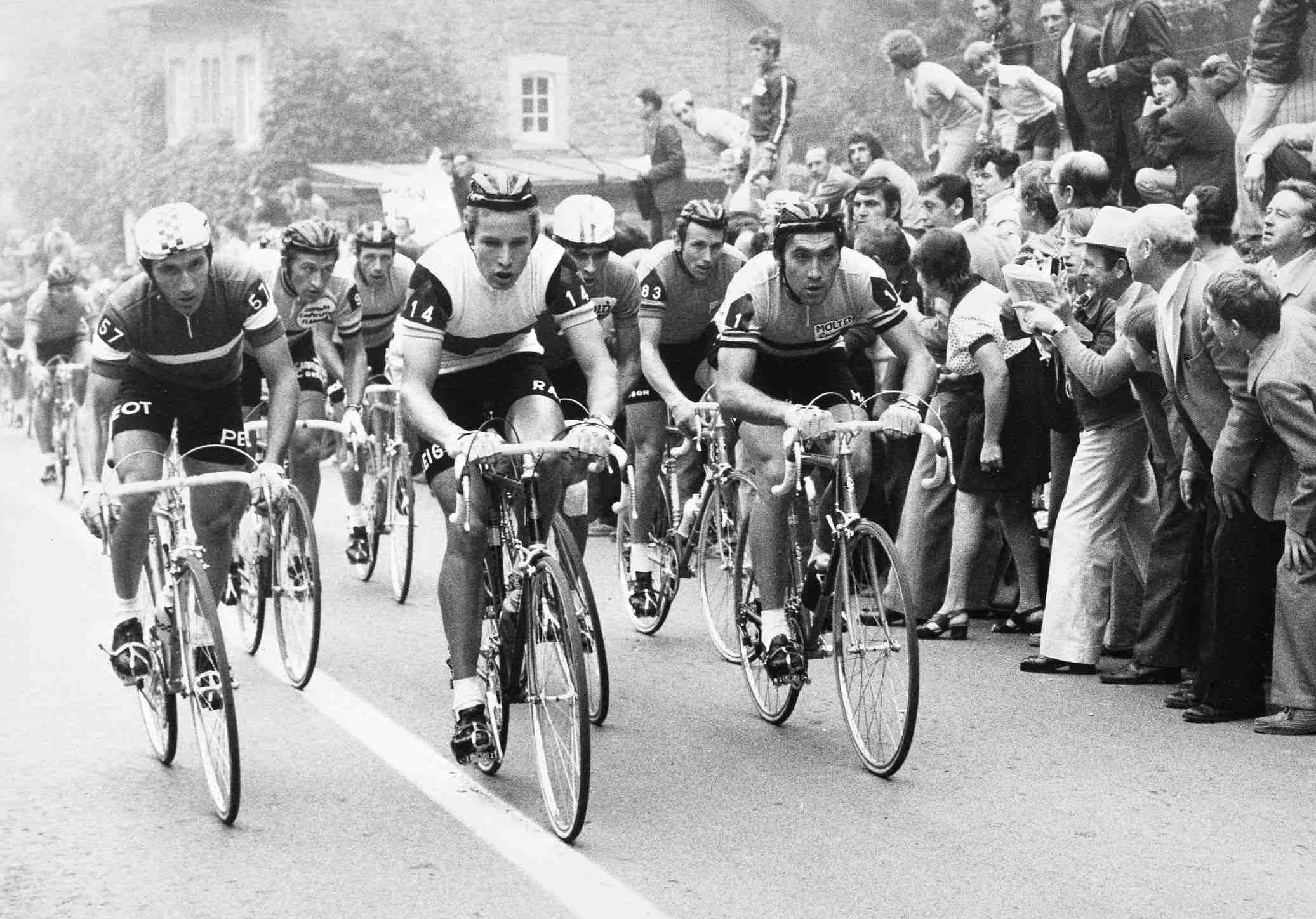
Eddy Merckx (R) in action during a race in 1973. Credit: Belga Archives
Are there any races in Brussels or Wallonia?
Beyond Flemish Cycling Week, the rest of the country also hosts some of the fixtures of the road cycling calendar. The one-day Flèche brabançonne/Brabantse Pijl (Flemish Arrow), held in mid-April, consists of a course extending across Walloon and Flemish Brabant. While its route does not enter Brussels proper, the race does go through nearby Waterloo, Sint-Genesius-Rode, and Beersel before finishing in Overijse.
The Flèche Wallonne, which goes from Charleroi to Huy, is the first of the major Walloon races taking place later in the month. The Belgian season then closes with Liège-Bastogne-Liège, nicknamed la La Doyenne (The Old Lady), which has run since 1892 and is the oldest race in the calendar.
