
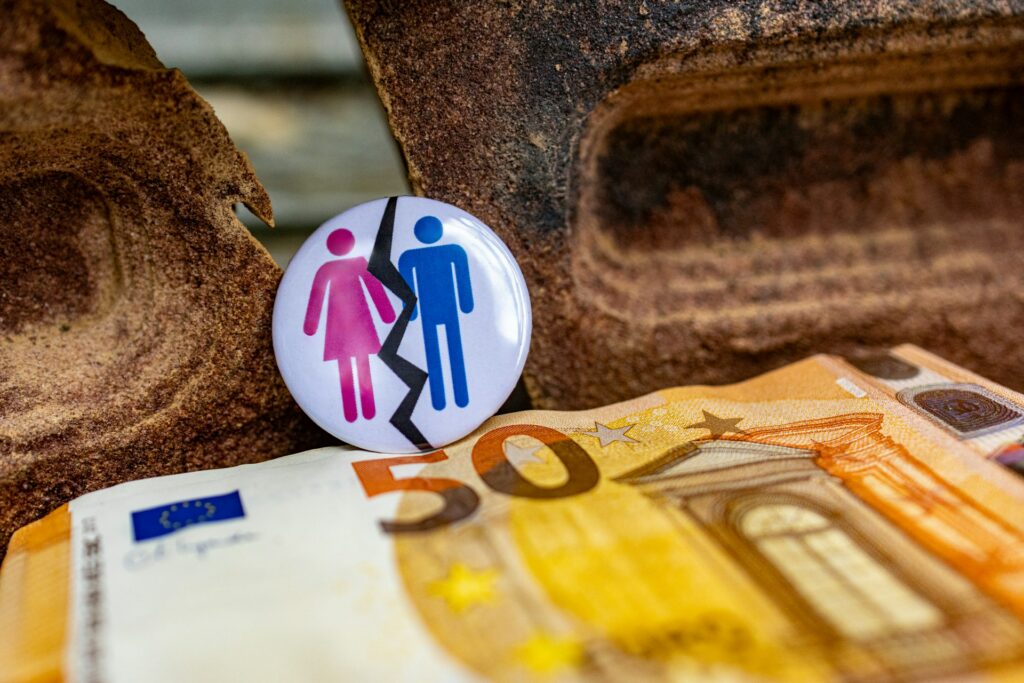
All companies in the European Union – including in Belgium – will be required to be fully transparent about their employees' wages from this summer. This way, the EU is aiming to reduce the pay gap that still exists in many workplaces.
The new EU rules on pay transparency will come into force in Belgium on 7 June 2026. The rules stem from European Directive 2023/970, which aims to promote equal pay through greater transparency regarding wages.
"Belgium is currently working on transposing this into national legislation. Although not all the practical details have been finalised yet, the broad outlines are clear," said social insurance fund Liantis.

Credit: Pixabay
Earlier this week, Flemish Minister for Equal Opportunity Caroline Gennez (Vooruit) announced that it will be possible for companies to be penalised for wage discrimination from June, as the Flemish Government approved the transposition of the European directive on pay transparency.
"Pay transparency is important, and employers who refuse to provide access to this information and deliberately discriminate must be punished with fines," she stressed. "The aim is for employers to change their behaviour and guarantee equal pay for equal work."
Figures from late February showed that nearly half of employees in Belgium feel they are not being paid fairly compared to their colleagues – an increase of 5.5 percentage points compared to 2025.
The study found a notable difference in how men and women perceive salary fairness. While men tend to perceive their salary as fair, women are more likely to feel neutral or negative about their remuneration.
How does the new legislation work?
From June 2026, companies will have to be fully transparent about their employees' wages.
Importantly, this does not mean that everyone's salary will be made public. Transparency applies at a group level, which means an average is calculated for employees in similar roles. Then, that average is adjusted for certain variables, such as age – giving people a clear picture of an employer’s pay policy.
This means that employees will not be able to compare their individual salaries with those of their colleagues. What they will receive, however, is a broad overview of the salary distribution, which protects employees' privacy while still highlighting the differences.
Additionally, employees will have the right to ask about the average salaries of colleagues in similar roles and the criteria the employer uses to determine those salaries.
What happens if there is a pay gap?
If a pay gap is identified, the employer must assess whether this gap can be objectively justified – for example, through factors such as performance, relevant length of service, labour market shortages or other pre-defined criteria.
In case the pay gap is bigger than 5% without an objective explanation, the employer must rectify the pay difference. Employees who are victims of discrimination will be fully compensated for the missed pay.
Potential extras – such as missed bonuses, promotions or training – must also be paid out. Compensation for non-material damage (such as reputational or psychological damage), and legal costs (if the employer is found liable) should also be covered.

Credit: Canva
This may relate to gender inequality, but also other forms of discrimination based on, for example, attractiveness, dress style or personality.
How often employers must report on their pay policy depends on the size of the company.
- Companies with more than 250 employees are expected to disclose their pay details annually from June 2026. Usually, they have more employees in similar roles, which makes reporting easier.
- Companies with between 100 and 250 employees are required to report every three years.
- Companies with fewer than 100 employees are not required to report, but can still choose to. However, individual EU Member States may choose to tighten these requirements.
For job seekers, the new legislation also brings about the necessary changes. Most importantly, every job advertisement will have to state the starting salary or a pay scale, so applicants can immediately have a clear picture of the expected pay.
What now?
While some sort of prior transparency will be mandatory, lawmakers have yet to determine exactly how and when this pay information must be disclosed, for example, in the job advertisement or in an invitation to an interview.
Additionally, recruiters are no longer allowed to ask about someone's previous salary. These changes ensure that the job search becomes much clearer and that someone's previous salary has no impact on their future pay.
In practical terms, this legislation could be a positive development for employees: they gain more rights and clarity, resulting in a fairer distribution of wages.
The burden of proof also falls on the employer, meaning they will have to demonstrate that wages were determined fairly, without discrimination. This also makes it easier for employees to stand up for themselves, as it is sometimes difficult to gather evidence of discrimination.
Employers have until June 2026 to prepare for the new legislation and refine their HR and pay policies.
