
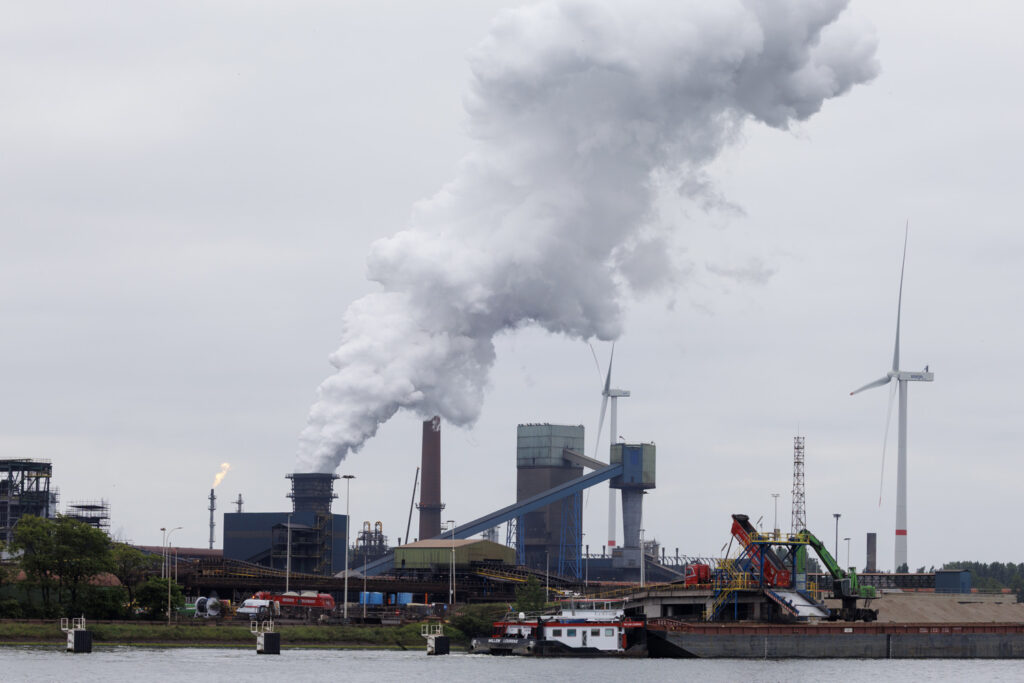
Belgium’s greenhouse gas emissions increased slightly in 2024, marking the first rise since 2021, driven mainly by certain industrial sectors in Flanders.
In 2024, total emissions reached 98.012 million tonnes of CO2 equivalent, up 0.20% from 2023 levels. This followed a reduction of 4.69% in 2023 compared to 2022.
The increase breaks a trend of declining emissions since 2021, a year marked by economic recovery following the Covid-19 lockdowns of 2020.
It remains uncertain whether 2024 represents a temporary plateau or whether emissions will resume their downward trajectory in 2025.
Since 1990, Belgian greenhouse gas emissions have decreased by 32.6%. Despite progress, the current pace of reduction falls short of Belgium’s target to cut emissions by 47% in non-ETS sectors—such as transport, buildings, agriculture, and waste—by 2030 compared to 2005 levels.
The transport sector stands out as a major contributor to emissions, accounting for 25.4% of Belgium’s climate footprint. It is also the only sector where emissions have markedly risen since 1990, with an increase of 19%.
This rise is largely attributed to the slow adoption of electric vehicles and delays in shifting to greener modes of transport.
