
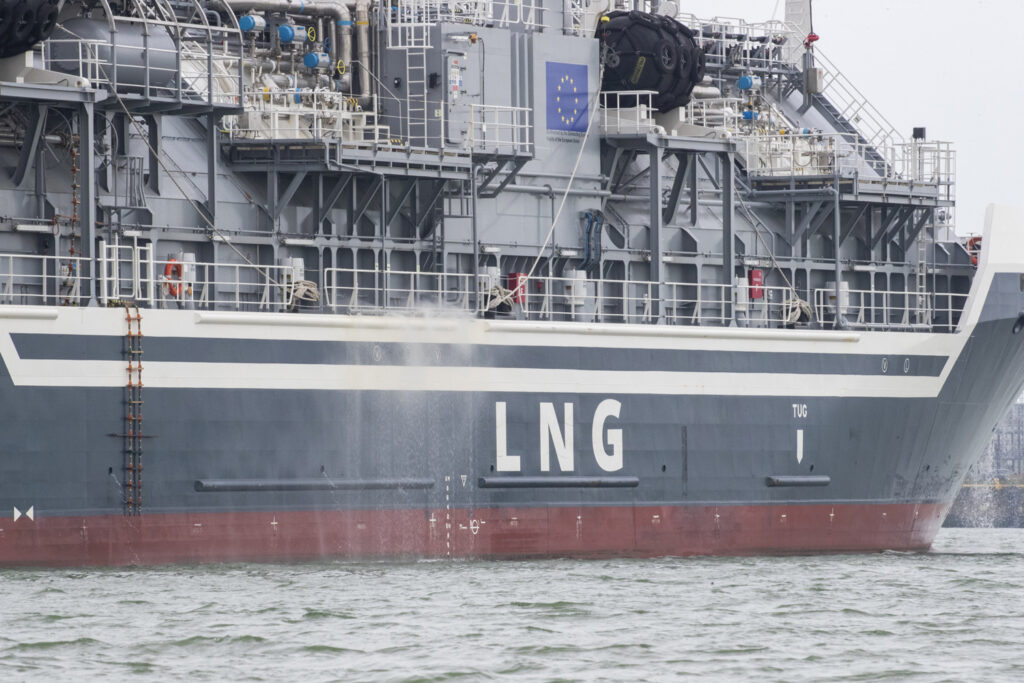
A liquefied natural gas (LNG) tanker carrying gas from Qatar is scheduled to arrive at the port of Zeebrugge on 22 March – the last such shipment currently planned from the Gulf nation, according to Fluxys, Belgium’s gas grid operator.
The tanker began its journey before the recent outbreak of conflict in the Middle East, which has led to Iran effectively closing the Strait of Hormuz, halting LNG exports from Qatar. “This is the last vessel from Qatar currently on the schedule,” a Fluxys spokesperson stated.
Qatar’s LNG accounts for approximately 8% of the imports at Zeebrugge in recent months, and LNG itself only represents 30% of Belgium’s total gas imports.
The largest share of gas comes via pipelines from Norway (35%) and from France and the United Kingdom combined (another 35%). Additionally, much of the gas entering Zeebrugge ends up being re-exported to neighbouring countries like Germany.
Other suppliers are partially filling the void left by absent Qatari shipments. In April, five slots will become available on the secondary market, and at least one has already been filled by another provider, according to Fluxys.
Tankers are expected to arrive from the United States, Russia, and Nigeria. However, a European Union ban will completely halt imports of Russian gas, including LNG, after 2027.
While the absence of Qatari gas is manageable for Belgium’s supply, it has significant financial implications for Europe as a whole. The continent competes with Asia for LNG, driving up market prices.
