

How do we truly measure an industry’s contribution to society? Typically, we look at the balance sheet — the revenues and costs that form a standard financial account.
Yet for many sectors, the real impact lies “off the books.” Consider a carmaker’s carbon footprint or the profound social value provided by the home care sector. To capture this, environmental economists use “full-cost accounting,” a method that extends the balance sheet to include an industry’s total contribution — both visible and unseen.
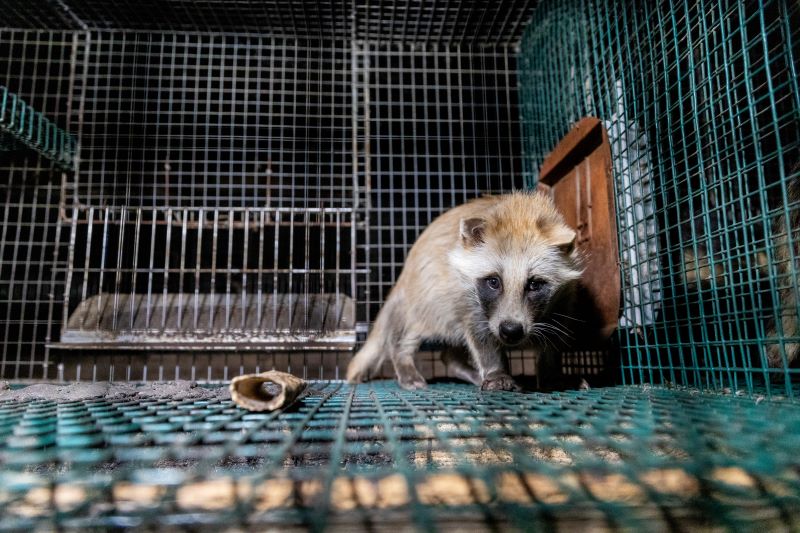
As the European Union considers a ban on fur production in response to a European Citizen’s Initiative surpassing the 1 million threshold for policy action, I calculated the full-cost account of the EU fur industry. What would be gained or lost if the industry was banned?
The main story is off the balance sheet
Typically, in full-cost accounting, a positive economic contribution is partially offset by negative environmental or health externalities. Fur farming, however, is an anomaly. It is the most extreme case I have encountered where the "off-balance sheet" costs aren't just an adjustment — they are the main story.
Three of these off-balance sheet impacts jump out. First, it’s an ecological havoc. American mink, the main species in fur farming, are among Europe's most destructive invasive species. Despite decades of containment efforts, escapes are a constant. If you have fur farming, you have invasive mink, and the resulting eradication and control programs are staggeringly expensive.
Secondly, the ammonia generated from the huge amounts of waste created by fur farms mixes with atmospheric gases to form air pollution, with a huge impact on air quality. One study of Danish fur farms estimated that air pollution from these facilities contributes to 63 premature deaths annually. Because pollution respects no borders, many of these deaths occur in neighbouring countries – some of which have already banned the practice.
Thirdly, the risk to public health. Mink are highly efficient transmitters of zoonotic pathogens. During the COVID-19 pandemic, Denmark made headlines around the world as it was forced to cull 17 million mink to prevent viral mutations.
A recent meta-review categorised fur farming as a high-risk practice on par with the bushmeat trade and live animal markets. There are prevention measures including closing the sides of sheds, spacing out cages, and implementing a vaccination and monitoring programme, but these costs actually exceed the actual value of fur pelts produced.
When we aggregate these factors, the "off-balance sheet" costs reach €437 million, dwarfing the industry’s €183 million in revenue. Notably, this doesn't even account for animal welfare; including that metric would tip the scales even further into the red.
The balance sheet way out of balance
But it actually gets much worse. It turns out that the industry is unprofitable even in a basic sense. Producing a single mink pelt costs roughly €36, yet auction prices average just €28. It is little wonder why the industry has shrunk by 90% over the last decade as farmers face bankruptcy or forced retirement.
In fact, the economics of fur farming are so skewed that its gross value added is actually negative (-€9 million), meaning the sector’s net contribution to society is negative even before accounting for "off-balance-sheet" externalities. It is a rare case of an industry that effectively erodes the EU’s GDP rather than building it.
What kind of end for the EU fur industry
These surprising results from my study point to a zombie industry that is commercially unviable but is limping along as hopes of higher prices remain. It may seem then that the EU discussion of a ban is redundant. This free-market logic is tempting, but again consider that the whole point of full-cost accounting is that the market isn’t always right. There are huge public costs the longer this industry carries on. Furthermore, fashion trends are notoriously fickle; we cannot rely on a market dip to solve a permanent ecological threat.
The free-market logic is also not particularly compassionate. The remaining fur farms are in a bad financial state and need a just transition. With the industry at a historical nadir, there has never been a more cost-effective time for an exit package. For an industry famously criticised for its cruelty, a state-supported exit offers something unexpected: a compassionate end.
