
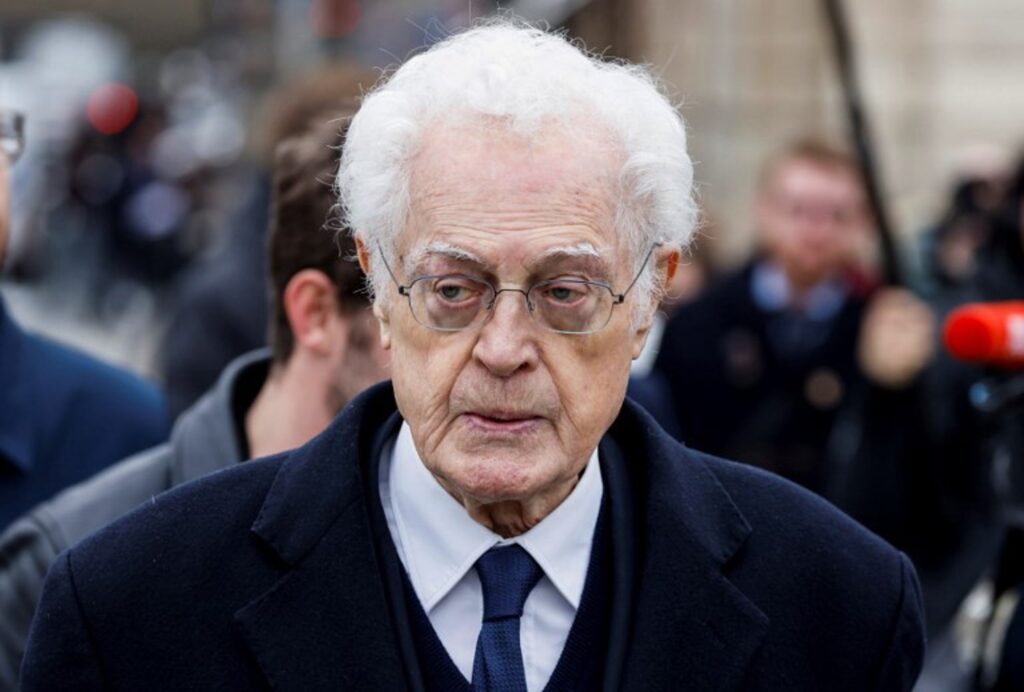
Lionel Jospin, former French Prime Minister and leader of the "plural left" coalition from 1997 to 2002, has died at the age of 88, his family announced on Monday.
In January, Jospin revealed he had undergone "serious surgery" but did not disclose further details.
A prominent unifying figure of the French left, Jospin served as Education Minister under François Mitterrand from 1988 to 1992, as Socialist Party First Secretary from 1981 to 1988 and again from 1995 to 1997.
Jean-Luc Mélenchon, whom Jospin appointed as a minister between 2000 and 2002, expressed sorrow over his passing and described him as "a model of rigour and hard work."
Mélenchon hailed Jospin as "the architect of the 35-hour workweek, the red-green-socialist alliance, and a defender of early retirement ages," lauding his intellectual presence during tumultuous times.
Jospin is remembered for bringing together socialists, ecologists, and communists under the "plural left," enabling significant governance and several landmark reforms.
He led this alliance to an unexpected victory in the 1997 parliamentary elections, prompted by President Jacques Chirac’s decision to dissolve the National Assembly in hopes of strengthening his position.
Taking advantage of favourable economic conditions, Jospin implemented a 35-hour workweek, universal healthcare coverage, and the civil union known as the PACS. He also upheld the principle that any minister facing indictment must resign—a stance that has since been diluted.
However, Jospin’s leadership faced a crushing blow in the 2002 presidential election. On 21 April, far-right leader Jean-Marie Le Pen advanced to the runoff against Jacques Chirac, stunning the nation.
That evening, Jospin announced his withdrawal from political life, a moment etched in French political memory.
'Integrity, clarity, and responsibility'
Martine Aubry, who was Jospin’s deputy Prime Minister, praised him as a "true statesman" and expressed deep admiration for his “intellectual depth” and commitment to leftist values.
Former French President François Hollande, closely linked to Jospin during his tenure as Prime Minister, saluted his "high conception of public service" rooted in "integrity, clarity, and responsibility."
Political leaders across the spectrum commemorated Jospin’s legacy, with Marine Tondelier of the Greens calling him a "towering figure of the left" and Manuel Bompard of La France Insoumise recognising Jospin as the last truly radical leftist in power.
Olivier Faure, the current head of the Socialist Party, honoured Jospin as a mentor to generations of political leaders and referred to him as an enduring "reference."
The causes of his 2002 defeat—disunity on the left, a lacklustre campaign, and the rise of the far-right—have been extensively analysed. Following this loss, Jospin largely withdrew from public life.
During François Hollande’s presidency, Jospin chaired a commission on political ethics and later joined the Constitutional Council in 2014. On occasion, he criticised Socialist Party alliances with La France Insoumise.
Figures from the right and centre also paid tribute to Jospin’s moral stature. President Emmanuel Macron hailed his "great French destiny" while lauding his "rigour, courage, and ideal of progress."
Senate President Gérard Larcher emphasised Jospin’s attachment to secular and universal Republican values, while National Assembly President Yaël Braun-Pivet commended his "integrity and sense of statecraft."
Even Marine Le Pen, leader of the far-right, acknowledged him as "an opponent" but one who was "an honourable man of the left."
