
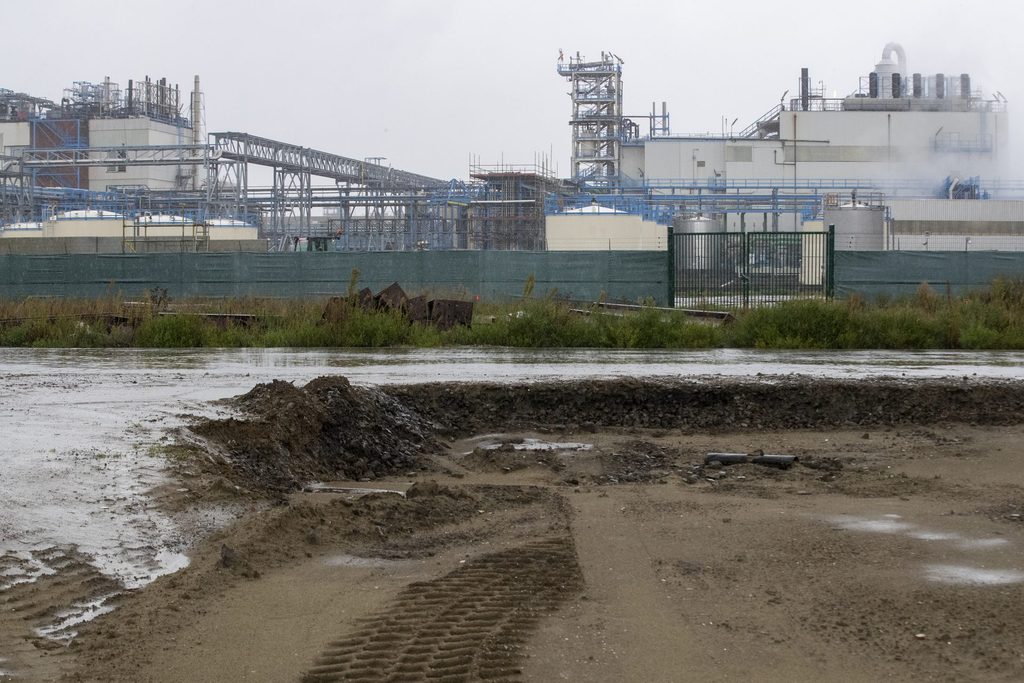
A consortium of Flemish companies has developed a new technique aimed at preventing the spread of PFAS, particularly at heavily contaminated or hard-to-reach sites where soil cannot be excavated.
A pilot project has already been launched in the Port of Antwerp, consortium leader Jan De Nul announced on Tuesday.
PFAS, or per- and polyfluoroalkyl substances, are man-made chemicals used in a wide range of industrial applications and consumer products.
Often referred to as "forever chemicals", they do not break down in the natural environment and can accumulate in ecosystems and the human body, potentially causing a range of health problems.
Belgian company Jan De Nul, which specialises in cleaning up contaminated soil, has developed an additive designed to trap PFAS in the soil and prevent further spread.
The substance can be mixed into contaminated soil or injected directly into the ground.
"We have found that 98% of the PFAS remains immobilised after mixing in the additive," said Emma Vanderveken, an engineer at Jan De Nul. "We have not yet been able to test long-term effectiveness in the field, but we are confident that this technique holds great potential," she said.
Vanderveken added that the method could be particularly useful at PFAS hotspots near groundwater sources. "At the very least, it prevents PFAS from entering our drinking water in those areas," she said.
"The technique can also help make contaminated sites ready for construction very quickly."
The technique is being tested as part of the PFAS Immobilisation for Soil and Groundwater Remediation and Screening (PIGGS) project.
A pilot has already been carried out in the Port of Antwerp at a former fire brigade training site with high levels of contamination.
The PIGGS project brings together Jan De Nul, Ghent University, Antea Group, Port of Antwerp-Bruges and Soetaert. It receives financial support from the Flemish government, the Public Waste Agency of Flanders and the Knowledge Centre for Innovative Remediation Techniques.
Public awareness of PFAS pollution in Flanders surged in 2021 during excavation work for the Oosterweel connection. Soil near a plant operated by 3M was found to be contaminated. The company has since launched a soil remediation operation in the area.
