
Arlon has the strange magic of border towns. You arrive expecting a waypoint and find a weekend. Sliding into Belgium’s southeastern corner, almost without warning, the mood changes – the air feels a touch clearer, the streets a touch calmer.
Luxembourg is close by, France and Germany lurk not far beyond. Yet Arlon doesn’t feel like a place that’s merely passed through. It behaves like a place that has been here a long time – because it has.
Start in the centre and you can walk, in minutes, between centuries. There’s a Roman heartbeat under the paving stones, a provincial grandeur around Place Léopold, and a gentle green thread running through it all – Arlon’s quietly proud “ville fleurie” identity, with parks, planting and a centre that keeps being nudged into brightness.
And then there’s the food. With a population of around 33,000, Arlon has no obvious reason to be this good at feeding people – and yet it is. One minute you’re in a casual neighbourhood favourite; the next you’re eyeing a serious table, the kind that features in Gault&Millau or Michelin listings.
History in brief
Dating back 2,000 years to Gallo-Roman times, Arlon is one of Belgium’s three oldest cities along with Tongeren and Tournai. Then called Orolaunum vicus, it was the intersection of two major Roman roads. Part of the Duchy of Luxembourg until 1839, the Treaty of London ceded the western part of the Grand Duchy, including Arlon, to the newly independent Belgium, forming what is now the province of Luxembourg.
Arlon historically had a Luxembourgish-speaking population but over time, this almost entirely switched to French. But many residents still work in Luxembourg.
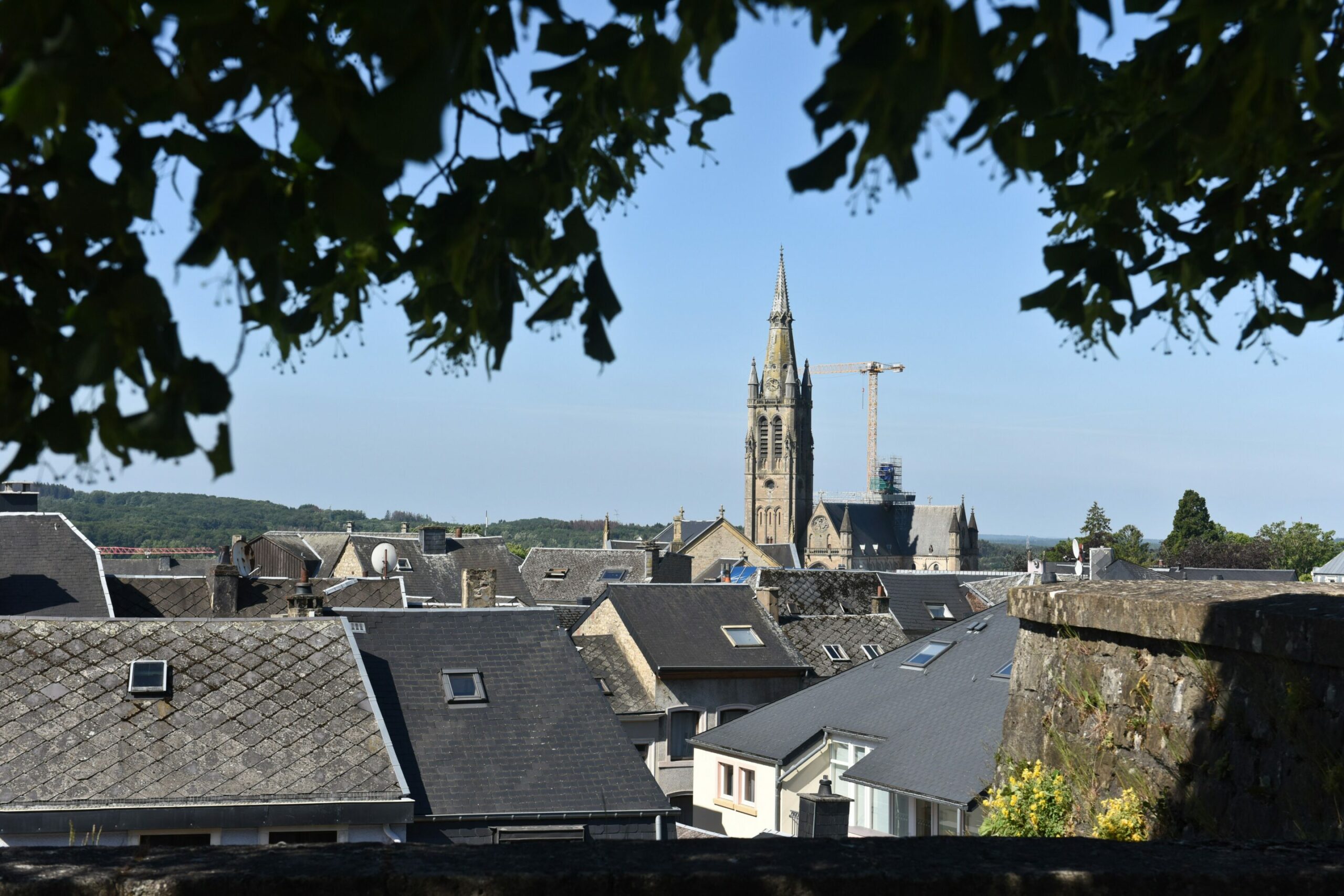
Illustration picture shows the Saint-Martin church in Arlon, Thursday 28 May 2020. Credit: Belga . Jean Luc Flemalle
Gallo-Roman heritage
The best-preserved artefacts from the town’s Gallo-Roman past are in the Musée Archéologique d'Arlon. Its lapidary (engraved stone) collection is among the most important in Europe, including 425 sculptures from funerary monuments and civilian buildings, which provide insights into the daily life of ancient people.
The museum also displays ceramics, glassware, Roman coins, weapons, jewellery, sarcophagi and temporary exhibitions. Housed in a former convent, the museum was renovated with interactive technologies, reopening in 2025.
At the end of the third century, Orolaunum was fortified with defensive walls, including 20 watch towers. The remains of two still exist: Tour Jupiter and Tour Neptune, which are named after carved stones within them resembling these Roman gods.
In a weird mash-up of ancient-meets-modern worlds, the Jupiter Tower is visible in a parking garage window and accessible via a tour guide, while the Neptune Tower, trapped within a residential complex, is currently inaccessible.
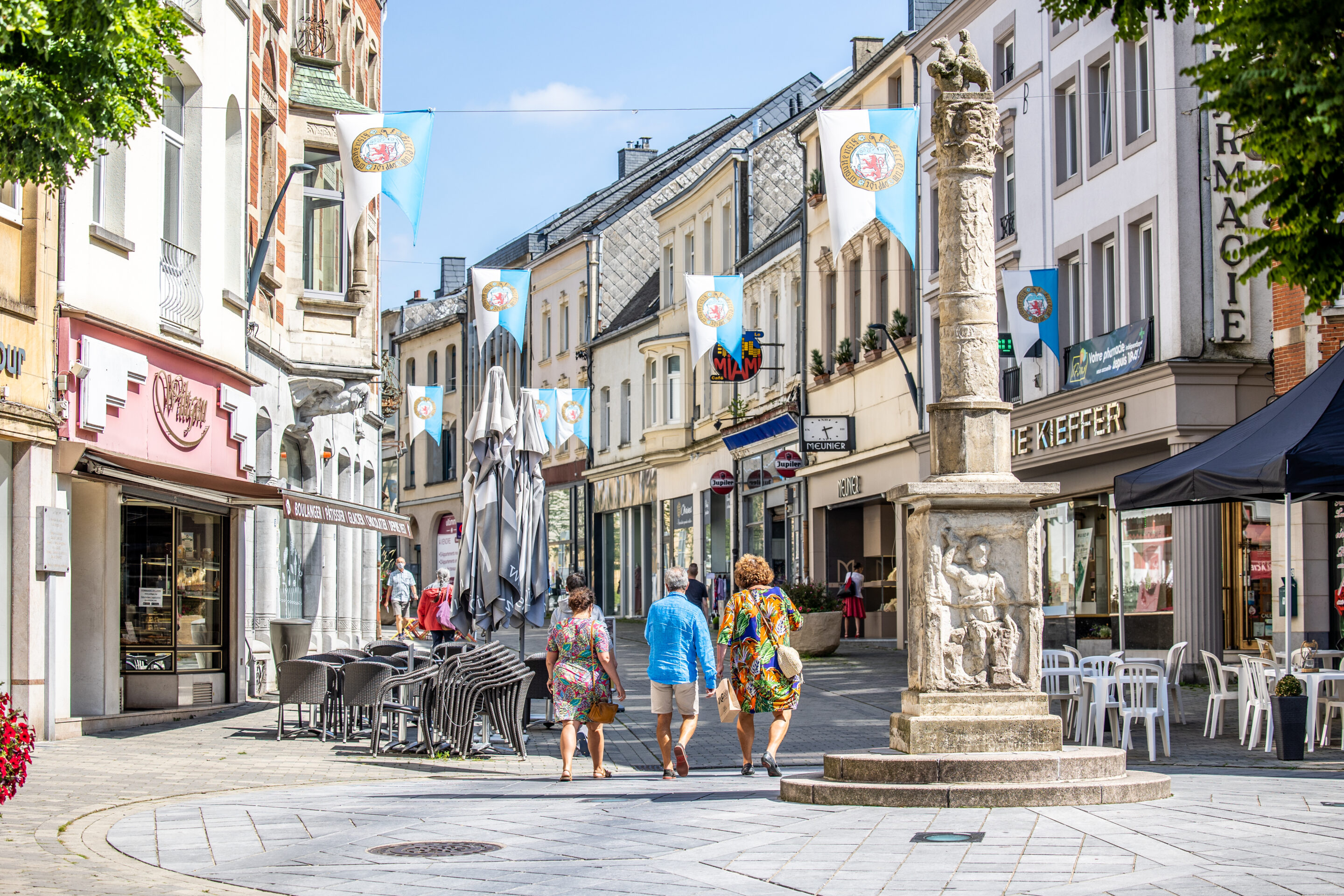
The Gallo-Roman column of Jupiter in the middle of the Grand Rue shopping street is a reconstructed monument symbolising the city’s ancient past. It stands in the historical heart of an old Roman road network. Gallor bike routes follow this network to trace sights of Gallo-Roman interest.
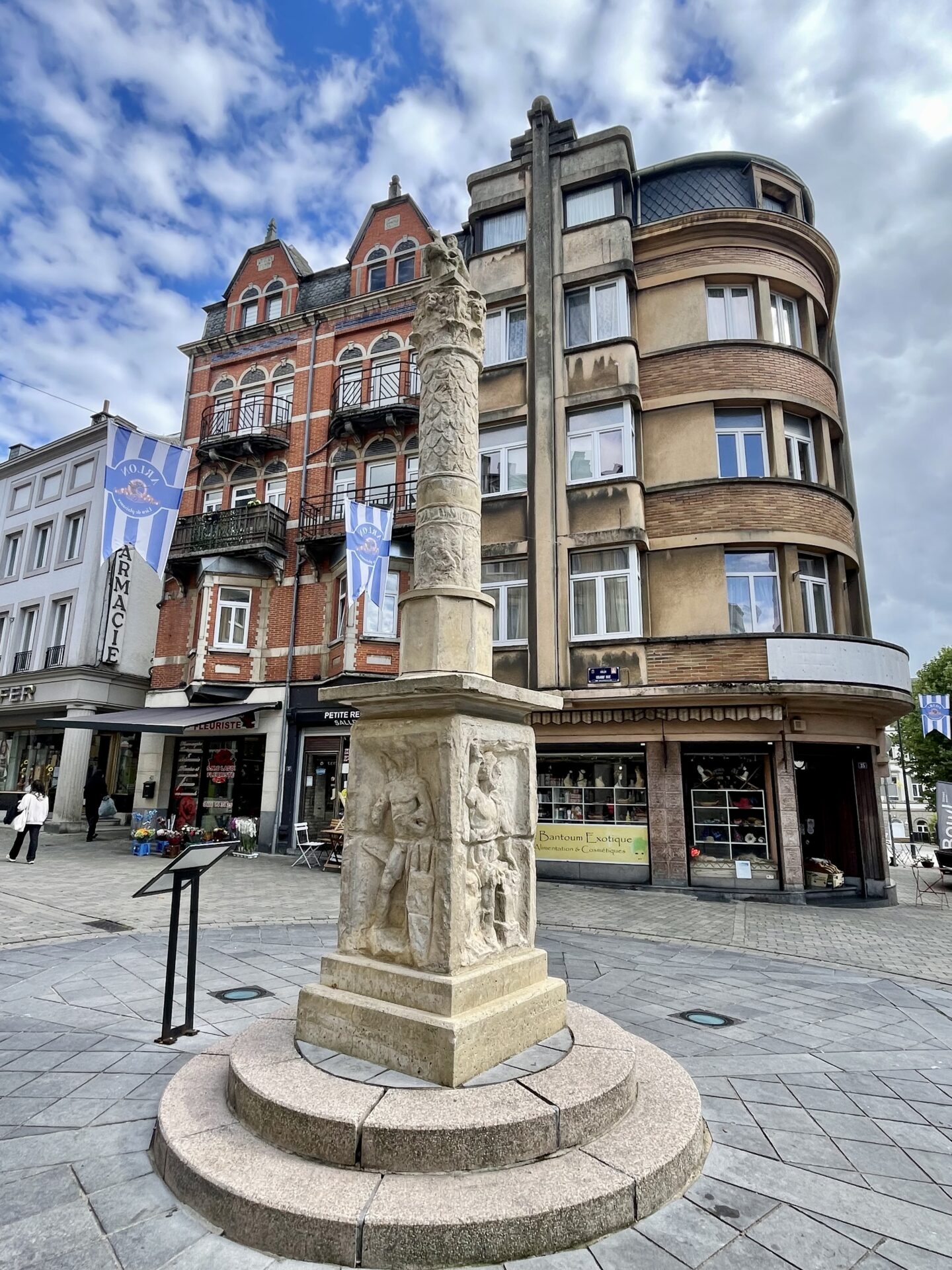
Gallo-roman column in Arlon. Credit: The Brussels Times / Angela Dansby
Le parc archéologique has remnants of rich Roman life: public and thermal baths with a hypocaust heating system. Excavations also uncovered foundations of one of the first Roman basilicas in the fourth century, where the city’s first parish church, Saint Martin, was built four centuries later (remains of which remain). From the 17th to 19th centuries, the park was also the town's cemetery, and retains some tombstones and crosses.
Every two years, a Gallo-Roman re-enactment called Veni vidi Orolaunum takes place in Arlon, usually the first weekend of September. It includes camps, crafts, cooking, music, gladiator shows, horse demonstrations and military manoeuvres. It also has workshops, such as pottery, archery and jewellery-making, and guided tours of the archaeological museum and Roman towers.
The former Hôtel du Nord, which now houses the Royal Arlon Tourism Office, is the city’s oldest building. A modernisation of this building and its connection to the adjacent Le Palais, an old courthouse, will create a tourist, cultural and event hub in the city centre by 2028.
The Totemus app lets visitors explore Arlon and its Gallo-Roman history in the form of a treasure hunt.
Traditions
Several folkloric and seasonal festivities animate the city’s calendar, led by Carnaval d'Arlon and Les Fêtes du Maitrank. The four-day Carnaval d'Arlon in March includes the “dressing of the stag” (decoration of the Cerf Bramant calling deer statue in Square Astrid), costume contests, concerts, crowning of a carnival prince and a parade called the Grande Cavalcade.
Maitrank, meaning May drink in Luxembourgish, is an apéritif made of white Moselle wine flavoured with sweet woodruff (a fragrant herb), a splash of Cognac or Armagnac, and fresh orange slice. Les Fêtes du Maitrank celebrates this regional drink with a three-day cultural and folkloric festival, including the inauguration of a Maitrank fountain, free tastings, folk music, street games and a formal ball.
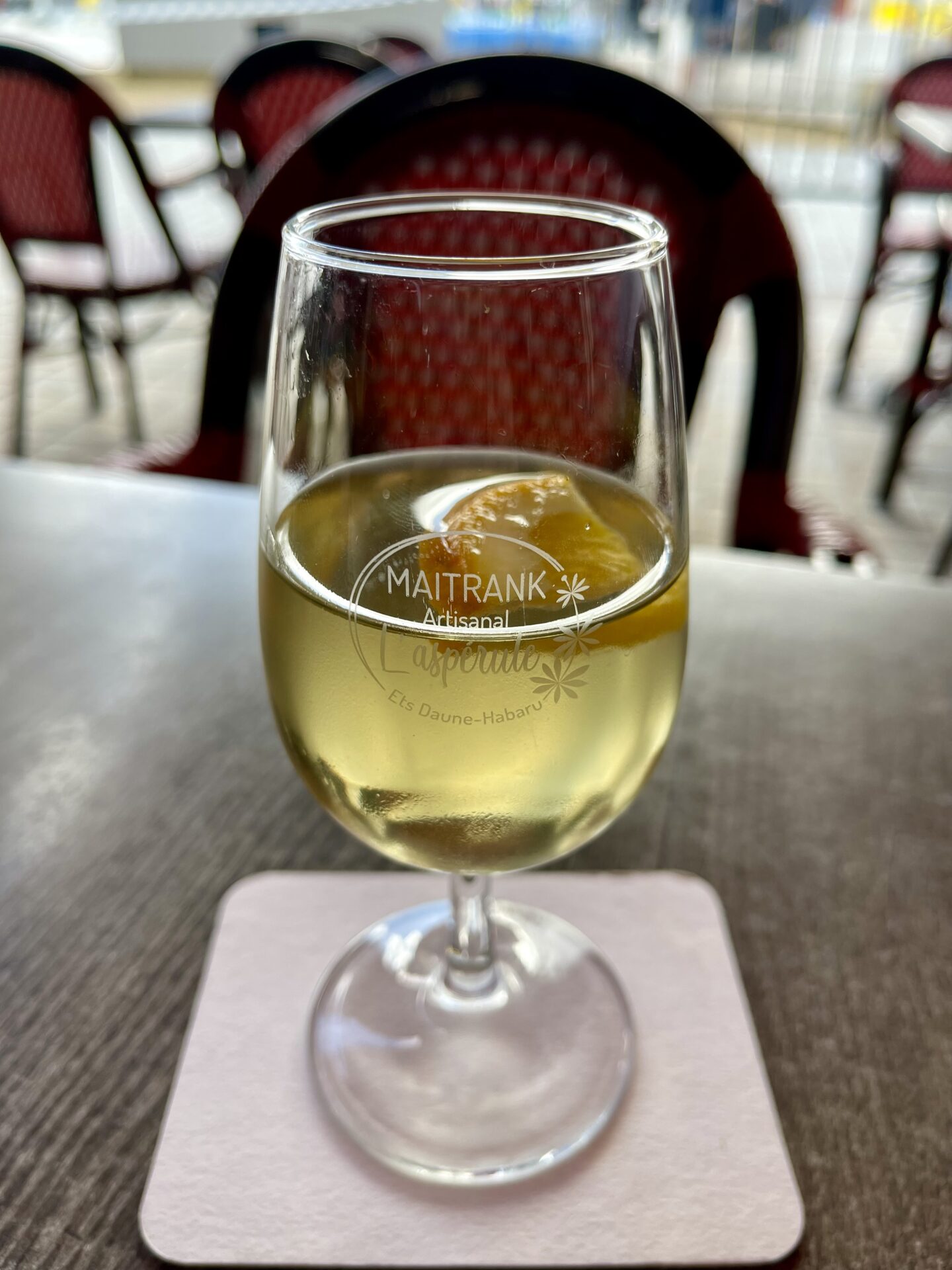
Maitrank drink, typical of Arlon. in Arlon. Credit: The Brussels Times / Angela Dansby
There are 24 Maitrank ambassador bars serving the drink year-round, including Gompel Bar, Brasserie Twins, La Pause Gourmande, Maison Knopes and Hostellerie du Peiffeschof. Some also serve Orolaunum Vicus, a local, organic gin inspired by Maitrank.
As a run-up to the Maitrank festival, Pause Culture is a series of free lunchtime concerts on Fridays during May. The 50-minute concerts are at unusual venues throughout the city centre, such as churches and heritage buildings.
Les Faaschtebounen (Lent beans), every first Sunday of Lent, is when local children serenade the homes of newlyweds from the past year, who throw candy and coins. The children sing a Luxembourgish song that can be translated as “there is happiness in your house, throw us the Lent beans.”
La Marche aux lampions de Saint Martin, a torchlight procession with storytelling, is on the Friday night near Saint Martin’s Day on November 11. Participants carry torches through the city, celebrating Saint Martin of Tours, a fourth-century Roman soldier-turned-bishop, who is revered for sharing his cloak with a beggar. His namesake day marks the end of the harvest and beginning of winter.
Sacred spaces
Église Saint Donatus atop La Knippchen, a hill in central Arlon, offers panoramic views and peaceful green spaces in the oldest part of the city. The church was built in the 17th century by Capuchin monks on the site of a former castle and convent, later transformed into a citadel.
In 1719, it was struck by lightning, after which its patron saint became Saint Donatus, the Roman Christian leader, who was known to protect against storms (Arlon was susceptible to lightning due to the iron in its soil). A statue of Donatus is inside the church along with impressive frescoes.
The Montée Royale (Royal Ascent) up to the church is lined with chestnut trees, several terraces and 14 identical stone crosses fit for a saint. On the other side of the church is Chamilles de Cornouillers (Dogwood Arbours), a magnificent bower of cornel trees more than 350 years old. Below on the hill are beautiful flower gardens, sculptures and resting places.
Le Belvédère from the 20th century is atop St Donatus Church as a replacement for the original Capuchin bell tower. Every hour, its carillon plays a traditional Luxembourgish folk song. Visitors can climb 144 steps to an open-air balcony for the best views of Arlon. On a clear day, one can see as far as France and Luxembourg. Open from 2 to 6 pm seasonally.
Neo-Gothic Église Saint Martin is listed heritage with stunning stained glass windows and the tallest (97m) church tower in Wallonia (currently under renovation until 2030). It is the third church in Arlon to bear its name. The first was built in the eighth century where today’s Archaeological Park sits but it was destroyed in the 16th century.
The name was then given to another church, also eventually destroyed (its 1634 door at the foot of St Donatus Hill is its sole surviving element). The current and third Saint Martin church from the early 20th century was the brainchild of Belgian King Albert I, who had two major churches built on the extremities of the country (the other in Ostend). That’s why a statue of him is in front of the church.
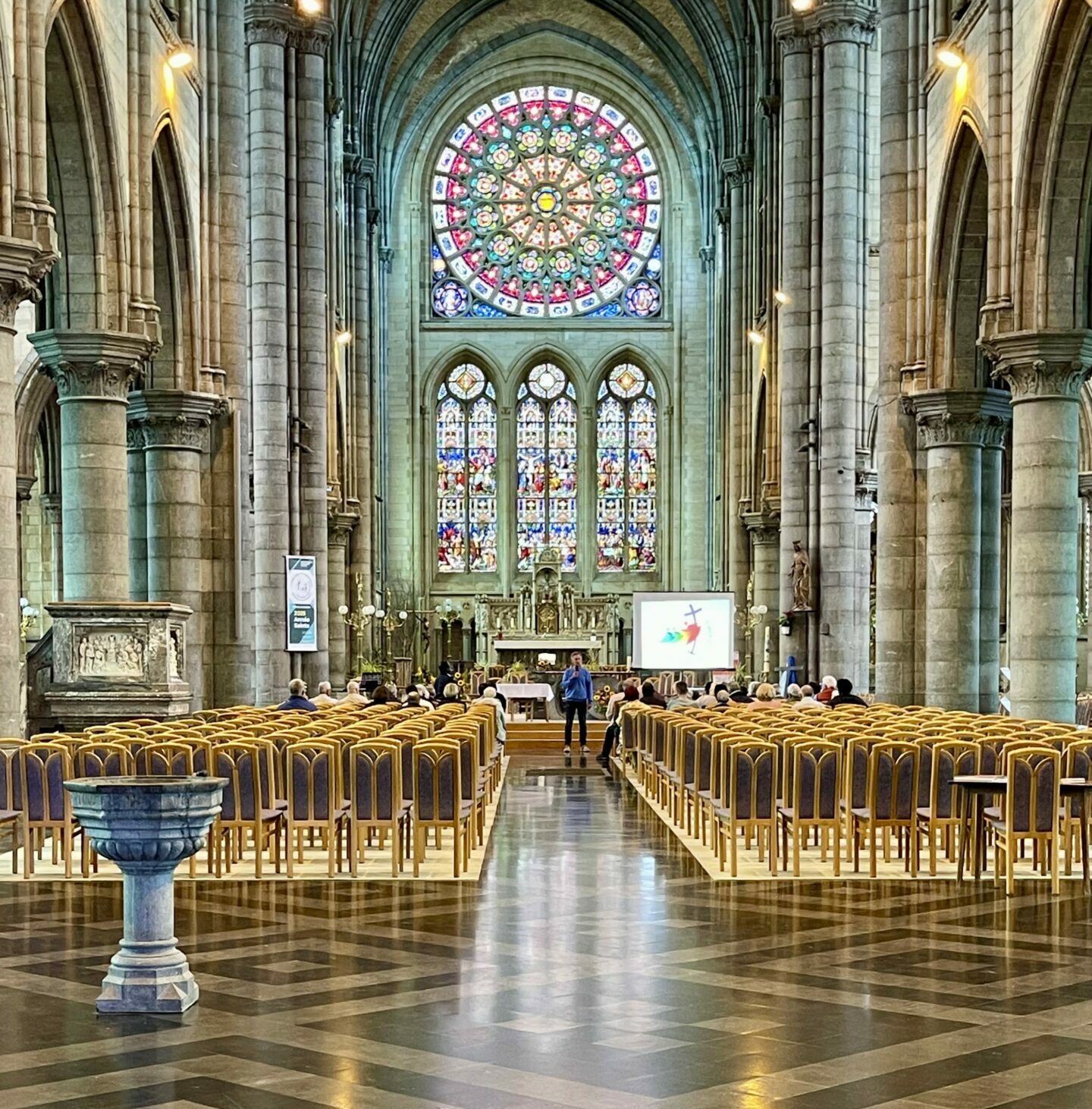
St. Martin Church in Arlon. Credit: The Brussels Times / Angela Dansby
The 19th-century, Romano-Byzantine Synagogue d'Arlon was Belgium’s first synagogue, which sits on a street named after it. Arlon also has the oldest functioning Jewish cemetery in Wallonia from around the same time.
About 4km east of Arlon, Abbaye Notre-Dame de Clairefontaine has the ruins of a 13th-century Cistercian abbey. Run by nuns, it was founded by Countess Ermesinde of Luxembourg, whose relics lie in a crypt underneath its 19th-century chapel. The original abbey was burned in the French Revolution in 1794, but Jesuits bought the site decades later, building the neo-Romanesque Chapelle Notre-Dame. Behind it is a spring basin, a medicinal garden and a 4km waymarked trail in woods.
Architecture
Le Palais, a large neo-Gothic building on Place Léopold (Arlon’s main square), is the former Palace of Justice that’s now an elegant exhibition space. The new Palace of Justice, some 1.5km away, is its opposite architecturally with a modern design of dark, rectangular mirrors.
The stately, longer Palais Provincial was the result of Arlon becoming the capital of Luxembourg province in 1839. It is a listed monument with World War memorials on its facade.
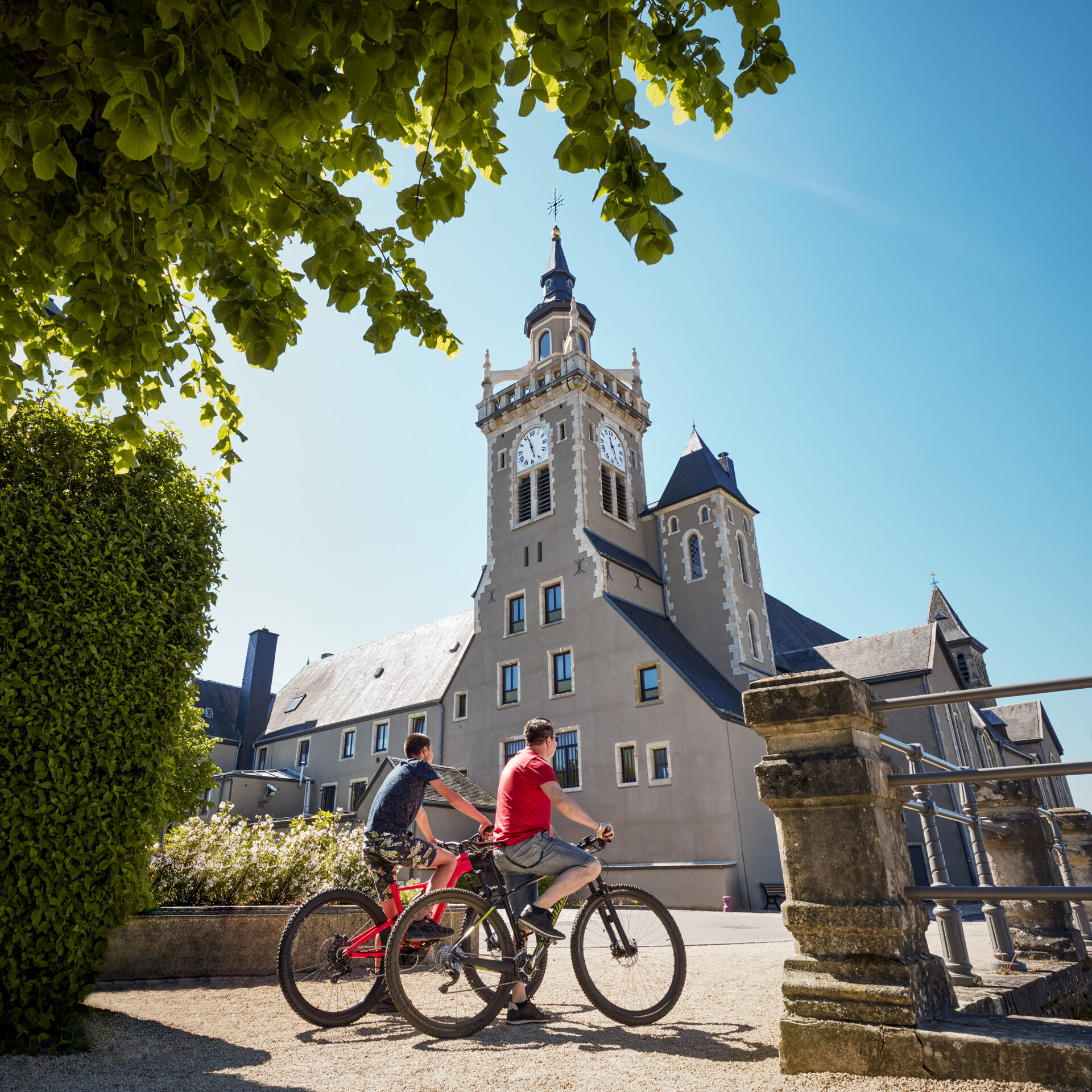
A bike ride near Saint-Donat Church in Arlon
The stately, 19th century Hôtel de Ville (City Hall) was recently renovated with modern elements. In front of it is Le Jass, a sculpture of a soldier, by Jean-Marie Gaspar, as a tribute to those who perished in the First World War.
An obelisk near Léopold Square celebrates the life of Édouard Orban de Xivry, a former governor of Luxembourg province who was assassinated in his office by an employee in 1901.
VisitArlon.be has a 2.1km “Archi-walk” called Arlon and its Fine Facades that goes past notable buildings, such as the Art Nouveau-inspired Gompel Haus, Hotel du Parc, Art Nouveau Haus, Haus at Rue Francq 22 and The Milz House as well as the striking, 19th-century railway station and white limestone Old Banque Arlonaise.
The Gompel Haus is particularly notable for sgraffito – a technique of scratching a superficial layer to reveal a lower colour or pattern – on its facade. Visit Arlon’s City Walk also includes some of these buildings.
Visual art
Musée Gaspar is Arlon’s primary art venue. It features the works of the late brothers Jean-Marie and Charles Gaspar, sculptor and photographer, respectively, in their former family home. Jean-Marie, a student of the sculptor Jef Lambeaux (creator of Les Passions Humaines pavilion in Brussels’ Cinquantenaire Park), was known for his animal sculptures – one of which is the city’s symbol (Cerf Bramant).
Charles lived in the 19th-century home, formerly a bank, until his death in the 1950s. He bequeathed it to the city to create a museum of his brother’s works and others he collected, including religious relics from the ancient Saint Martin church as well as the 16th-century Fisenne Retable (Altarpiece) from Antwerp. The museum also hosts temporary exhibitions.
Behind it is Le parc Gaspar with a statue celebrating Étienne Lenoir, an Arlon man who invented the gas engine, patenting it in 1860. The statue is composed of a half-naked woman admiring an etching of Lenoir’s face.
The bronze Cerf Bramant stands proudly in Astrid Square, dwarfing the white bust of the former Belgian queen in the same garden. It’s a large copy of the original in the Gaspar Museum.
On Knippchen hill are the white busts of former King Albert and his wife Elisabeth, and Paul Reuter, an Arlon mayor who resisted German troops during both world wars. A work in between the busts by sculptor Catherine Lhoir of Arlon sharply contrasts with jazz-inspired, rusty, curvy lines.
Le Messager, right of the Arlon train station entrance, is a statue of the Roman god Mercury flying through the air. Similar in shape but much larger in scale is Arc Majeur, a massive steel semi-ring straddling the E411 motorway between Arlon and Namur.
The Autelbas Museum, 12km from Arlon, has remains from a Carolingian potters’ workshop and objects discovered in the ruins of Autelbas Castle. It is accessible by appointment only.
Military memories
Near cheerful Astrid Square is a sombre Memorial to General Patton in honour of the American liberation of Arlon. Its centrepiece is an M10 tank destroyer, next to which is a Liberty Road milestone as part of a 1,152-km route from Normandy to Bastogne.
The Monument aux Morts du 10ème Régiment de Ligne commemorates 1,500 soldiers who died in the First World War. The top of the obelisk has a winged victory angel and its facade has a sword wrapped in laurel leaves. Another monument honours Le Regiment de Chasseurs Ardennais in the Second World War.
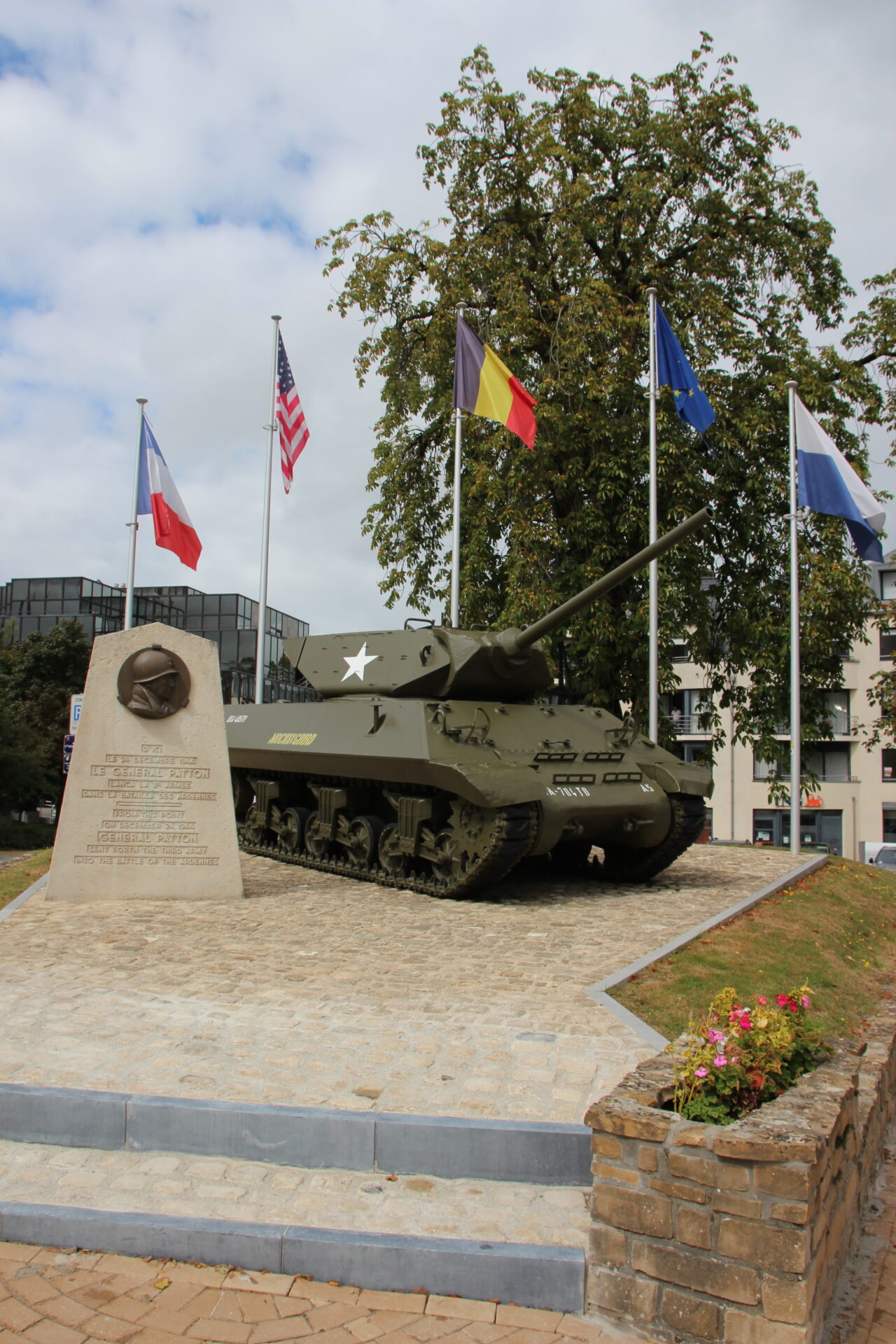
Patton Memorial in Arlon. Credit: The Brussels Times / Angela Dansby
The Musée militaire d'Arlon explores Belgium's infantry history from 1830 to present. It has an extensive collection of uniforms – including some worn by Belgian kings – weapons, equipment and historical documents. It also has special section dedicated to the American army. Visits by appointment only.
1793, à l'assaut d'Arlon! (Arlon taken by storm!) is the name of a biennial reenactment of the Battle of Arlon during the War of the First Coalition between French and Austrian troops. It features more than 100 participants, a military camp and hospital, drills, weapon demonstrations, historical fashion parades and more. The free event is the off-year and same weekend as the Gallo-Roman festival.
Nature and recreation
The Semois River not only runs through Arlon but starts there; its source was traced to two local basins that used to belong to a tannery. One basin, deemed La Source de la Semois, is visible and denoted by a replica fragment of a Roman monument.
The city’s Coulée Verte, a scenic green pathway along the banks of the Semois, has informational panels that highlight Gallo-Roman findings in the area. The Atrium is an urban garden space decorated with historical and tourist information panels. It is a welcoming place like the atrium in Roman houses.
There are several waymarked hiking trails in and around Arlon, including the adjacent municipalities of Attert, Aubange and Messancy. For cyclists, the signposted 65-km Belarel circuit goes through villages in Arlon, and the Node-to-Node Network covers 2,600km in all 44 municipalities in Luxembourg province.
Surrounding sites
Just outside of Arlon, the Musée du Cycle de Weyler houses more than 200 pieces showcasing the evolution of the bicycle in chronological order. It was created by Philippe Tibesar, 1994 Belgian cycling champion, who personally guides visitors on a 90-minute tour by reservation only.
The Musée du Scoutisme International in Bonnert is dedicated to the scouting movement, with an extensive collection of rare items from around the world. Visits by appointment only.
Luxfly Indoor Skydive in Sterpenich, next to the Luxembourg border, simulates skydiving via a circular space with transparent vertical walls and massive airflow.
Tour tips
While Arlon is reachable by direct train, driving there is recommended for increasing accommodation options and exploring the region.
Public places in Arlon are largely closed on Sundays, except the Archaeological and Gaspar museums (afternoon only) and during the flea market the first Sunday of May to November.
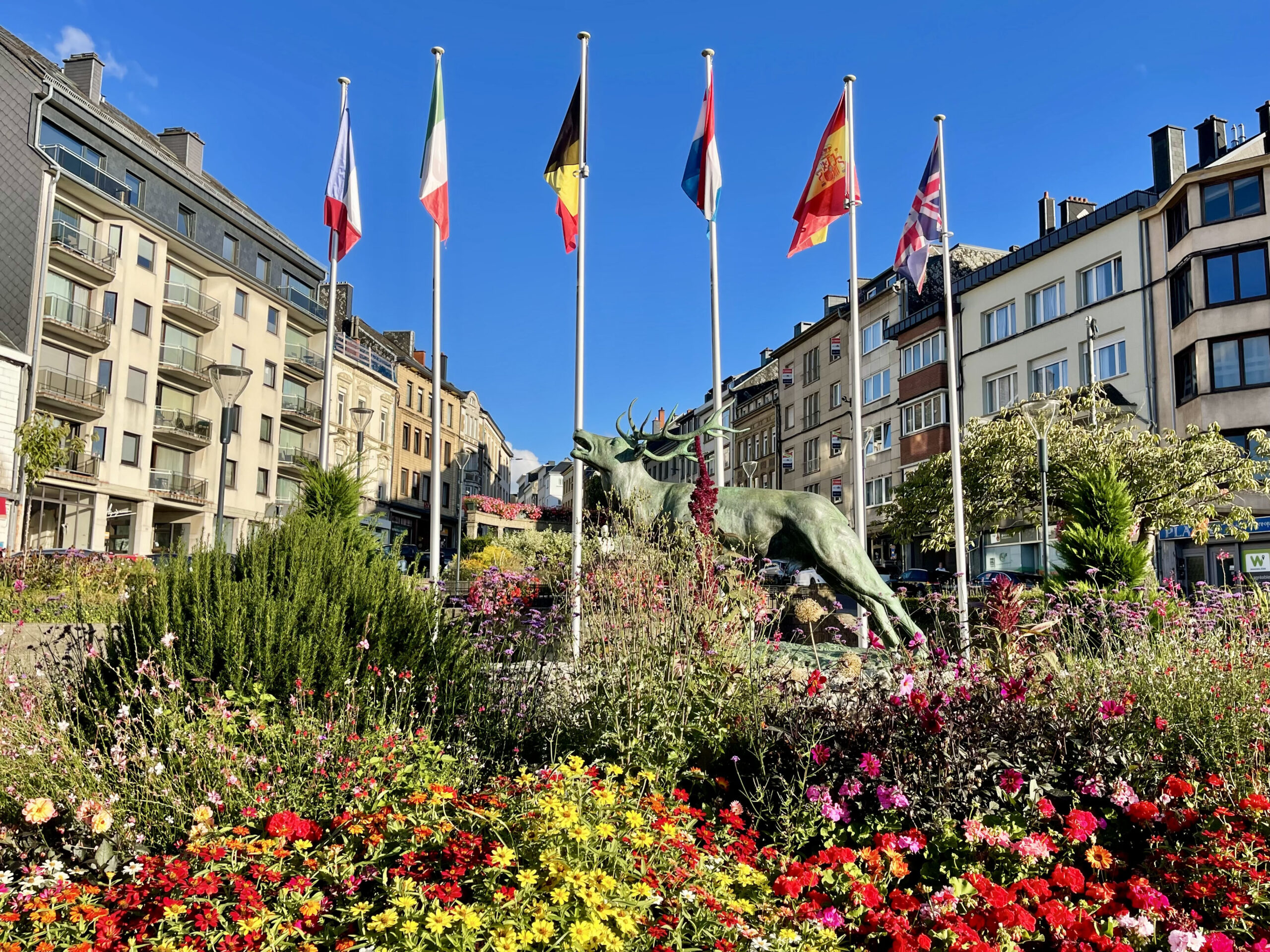
Astrid Square in Arlon. Credit: The Brussels Times / Angela Dansby
EXPERIENCE
Arlon Folies: A 12-day cultural festival in August with concerts, theatre performances, stand-up comedy and other stage shows
Carnaval d'Arlon: A four-day carnival with a parade, concerts and costume contests, next March 25-28
Les Faschtebounen: Every first Sunday of Lent, serenades by local children at the homes of newlyweds, who throw candy and coins
Les Fêtes du Maitrank: Every fourth weekend in May, a three-day festival celebrating the regional apéritif, including a Maitrank fountain, free tastings, folk music, street games and a formal ball, May 22-24
Les Apéros: Free music concerts on Saturday afternoons in the courtyard of the tourism office in summer and inside Le Palais in winter
Les Aralunaires: A five-day May music festival with more than 40 emerging artists of various musical genres performing at nearly 20 venues
Lux Fashion Week: Three days in September focused on clothing and jewellery design from Luxembourg province, including fashion shows, a trade fair and pop-up shop
Marché de Noël Solidaire: A Christmas market with artisan products, Belgian foods, an ice-skating rink and a festive atmosphere
1793, à l'assaut d'Arlon!: A biennial, September reenactment of the Battle of Arlon, including a camp, historical fashion parades and more
Vini Vidi Oraulonum: Alternating with 1793 every two years, a Gallo-Roman re-enactment with camps, gladiator shows, military manoeuvres, workshops and guided tours
SAVOUR
De la Terre à l’Assiette: Rustic but chic featuring “bistronomy,” the art of enhancing local produce from farm to table
Le Chef est une Femme: Offers modern French cuisine in a modern atmosphere (Tuesday to Friday only)
La Grappe d’Or: With one Michelin star, offers multicourse menus highlighting local artisans in an intimate space outside of central Arlon
La Régalade: In the village Toernich, features seasonal French cuisine “inspired by the garden” and fixed menus
Pause Gourmande: A casual, Brittany-inspired galetterie featuring a range of savoury and sweet crêpes
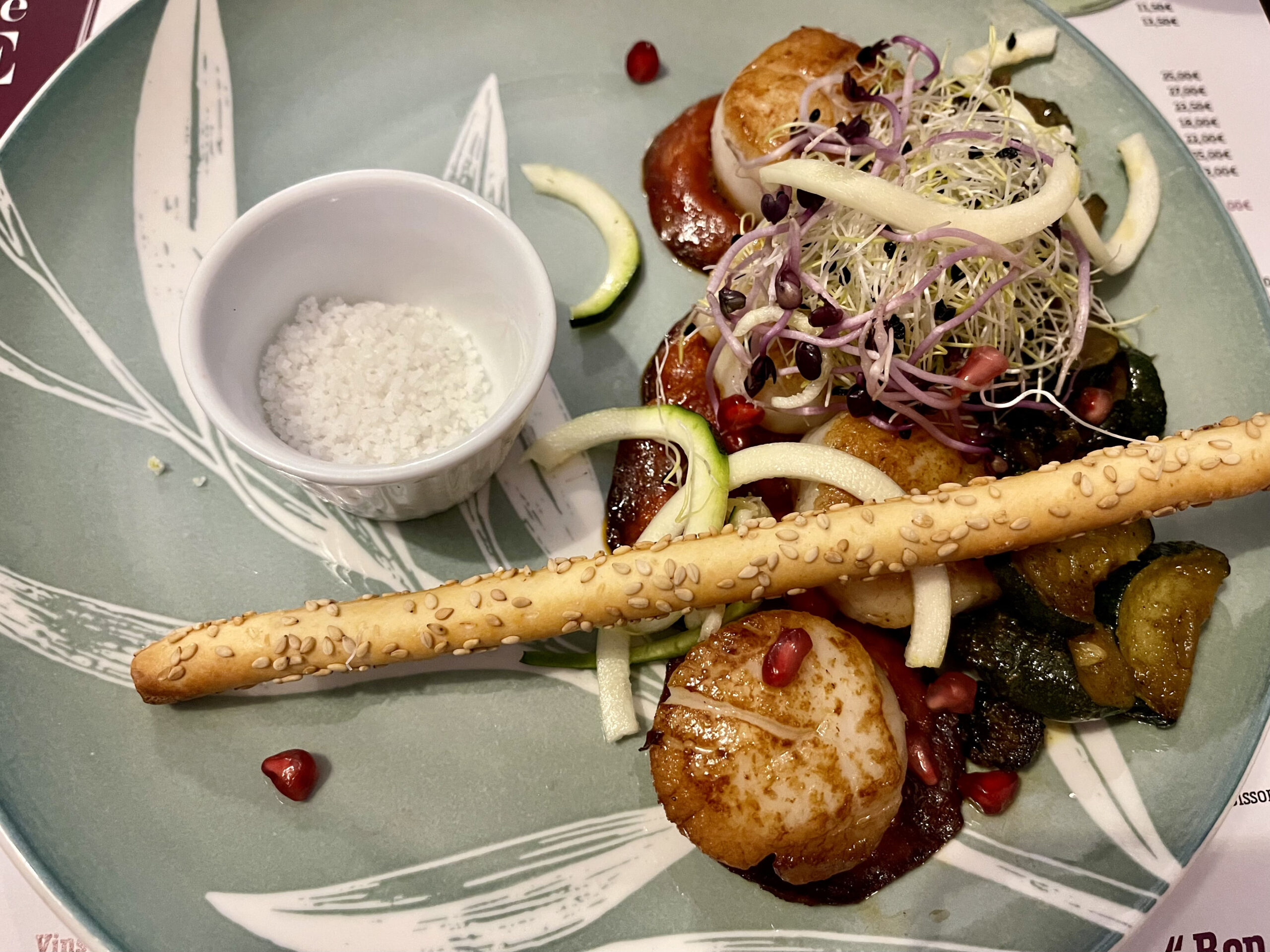
Belgo-French cuisine in Arlon. Credit: The Brussels Times / Angela Dansby
SIP & SNACK
Gompel Bar: Trendy cocktail bar in a stunning sgraffito building with occasional live music
Green Coffee: Newish café with specialty coffee drinks, pastries, abundant plants and local artisanal products
Maison Knopes: Popular tea salon with snacks, sweets and a terrace
Soho: English-style pub with a wide beer selection and outdoor seating
Vino Terre Happy: Wine bar, cellar and shop offering private tastings and a pop-up restaurant by reservation
STAY
Appart’City Classic Arlon Porte du Luxembourg: The only accommodation in the city centre, clean and convenient with a kitchenette
Bois d’Arlon Golf & Resort: Four-star with modern rooms, Brasserie G, 18-hole and 9-hole golf courses, a spa and castle for events, 10 min by car from the city centre
Hostellerie du Peiffeschof: Charming 9-room hotel with Le Zinc gourmet restaurant and an outdoor spa
Ibis Styles Arlon Porte du Luxembourg: No frills but clean and comfortable chain hotel with Lasperule restaurant, a bar and terrace
Van Der Valk Hotel Luxembourg-Arlon: Chain resort with modern rooms, spa, pool, 24/7 fitness centre, upscale Brasserie l’Œuf, Restaurant Le Nid and two bars
SHOP
Artisphere: Concept store representing 50 artisans and local brands of jewellery, home décor and upcycled items, organic cosmetics and more
Christophe Men's Store: Exclusive men’s clothing store, including tailor-made suits and formal wear
Maison Manigart: The shop in town to buy local beer, spirits and Maitrank
Schmit Beaufays pour Elle: Haute couture shop for women
Visit Arlon: Sells local products such as L’Abeille Arlonaise honey, Orolaunum Vicus gin, local beers (ARA by Brasserie d’Arlon Coopérative, Arel, Les Sangliers d’Arlon), Maitrank and more.
Related News
- Weekend Break: Making the most of Mons
- Weekend Break: Rendezvous in Ronse
- Weekend break: Reflections on Namur
- Weekend break: I’m Leuven it
- Weekend break: A tour of Tournai
- Weekend break: Sass in Hasselt
- Weekend break: Hop to Pop
- Weekend break: Down to Dinant
- Weekend break: Taste of Bouillon
- Weekend break: J’aime Durbuy
