
Since the 2020 Covid pandemic hit, a sequence of crises, including full-scale wars on the continent, have made many people anxious about their future.
There is a subculture with a unique pitch to alleviate this stress, preparing for any disaster imaginable. Preparedness is literally in the name of prepping – a social movement emphasising self-reliance and catastrophe aversion.
Admittedly, survivalism, as it's also known, is not as big in Belgium as it is in other countries, such as the United States. However, there is one Belgian enthusiast who hasn't just made it a daily part of his lifestyle, but has set out on a mission to teach it to others.
To explain his work to a wider audience, Jimmy Linssen, the man behind the 'Some-Belgian-prepper' website, invited The Brussels Times for a trip out to Buggenhout in Flanders, his base of operations.
The one and only Belgian prepper?
Linssen’s website gallery portrays an image quite stereotypical of the movement: men in military uniforms, homesteading setups, a cellar full of supplies and even firearms. Arriving at the house, we were met with fences lined with barbed wire, a guard dog sign, and a rather bizarre sight for Flanders: a torn Belgian tricolour on a flagpole.
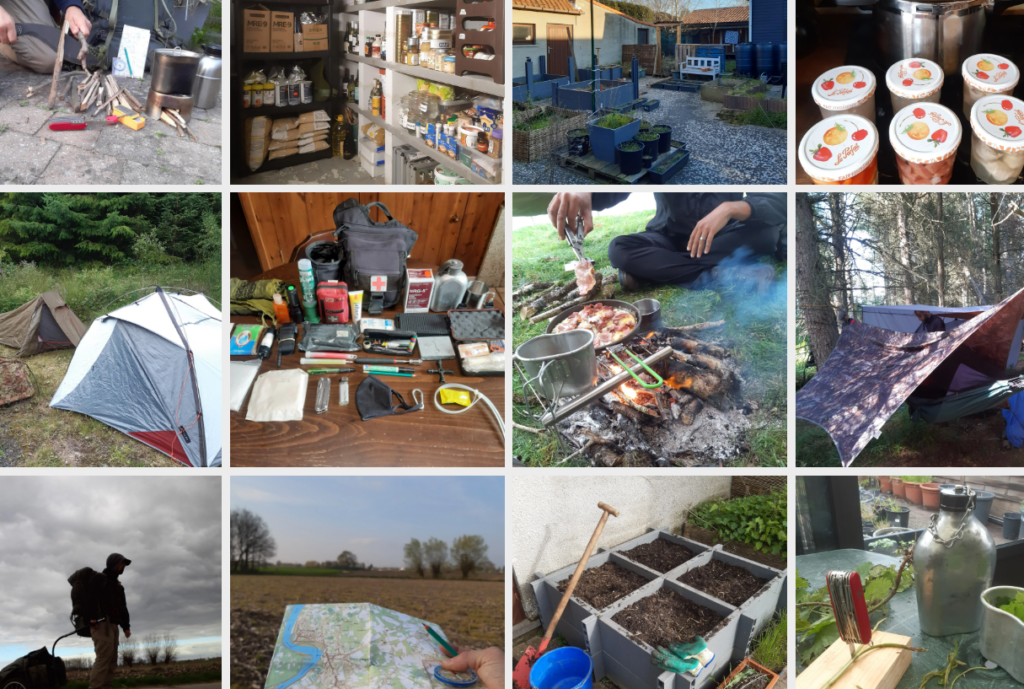
Gallery on the website of Jimmy Linssen. Credit: Some-Belgian-Prepper (Jimmy Linssen)
A man in cargo pants and a cap emerges. Linssen is a bit reclusive, but greets us warmly. “Please don’t photograph the exteriors, that’s my only request,” he says, bringing us through a garage furnished as an impromptu workshop. A few minutes later, we sit down at a rustic wooden table in a wide, cozy guest room inside the old brick-built Flemish house, heated by a pellet wood stove.
Linssen explains that for most people starting in the movement, it's about pop culture and preparing for a certain event – and for him, it was no different. “When I was 17 I played a game called Stalker [a cult-classic Ukrainian apocalyptic video game]. I started looking up nuclear plants nearby and thought to myself if Chernobyl could happen here,’” he says.
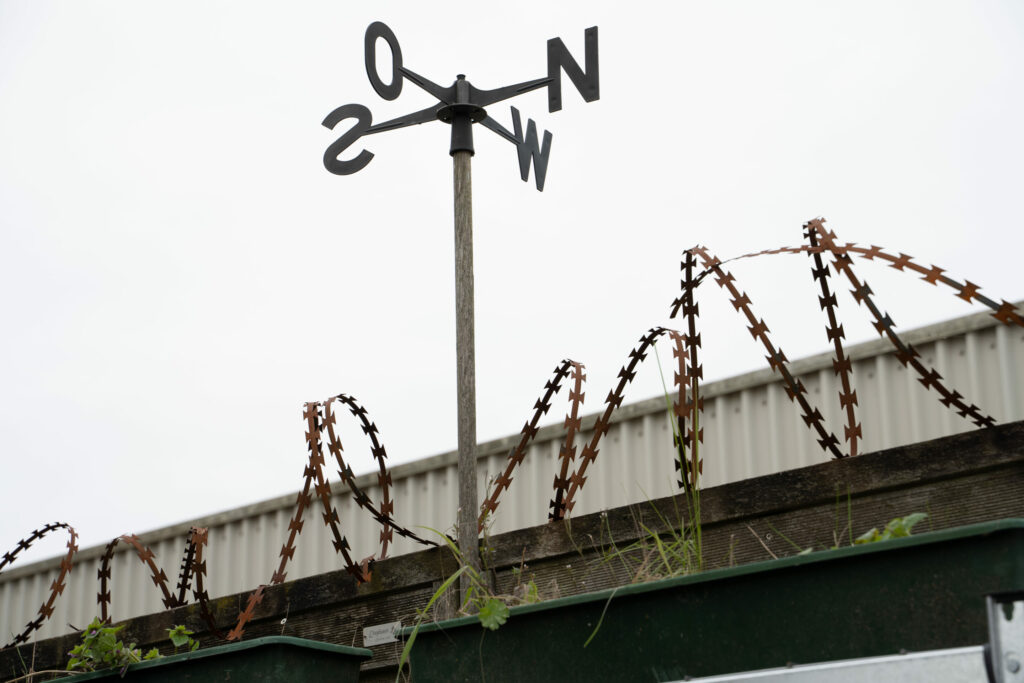
Jimmy Linssen's fence. Credit: Vicente Torre / The Brussels Times
Bit by bit, Linssen introduced survivalism into his everyday life, starting by gaining skills and knowledge, before it developed into a personality-defining feature.
“For me, it's a lifestyle. I'm the kind of prepper they would call a homesteader," he says. "I try to invest in self-reliance, like making my own food or recycling, repairing and maintaining my stuff. I want to have systems in my house which allow me not to depend upon electricity or water from the outside."
Linssen tried to turn his 12 years of survivalist deep-dives into a revenue stream, but was forced to stop giving classes due to what he claims were overly high taxes and complicated bureaucracy. “It just wasn’t worth it in the end,” he tells us. These days, he uploads English-language video guides on his YouTube channel instead.
Dissecting prepping
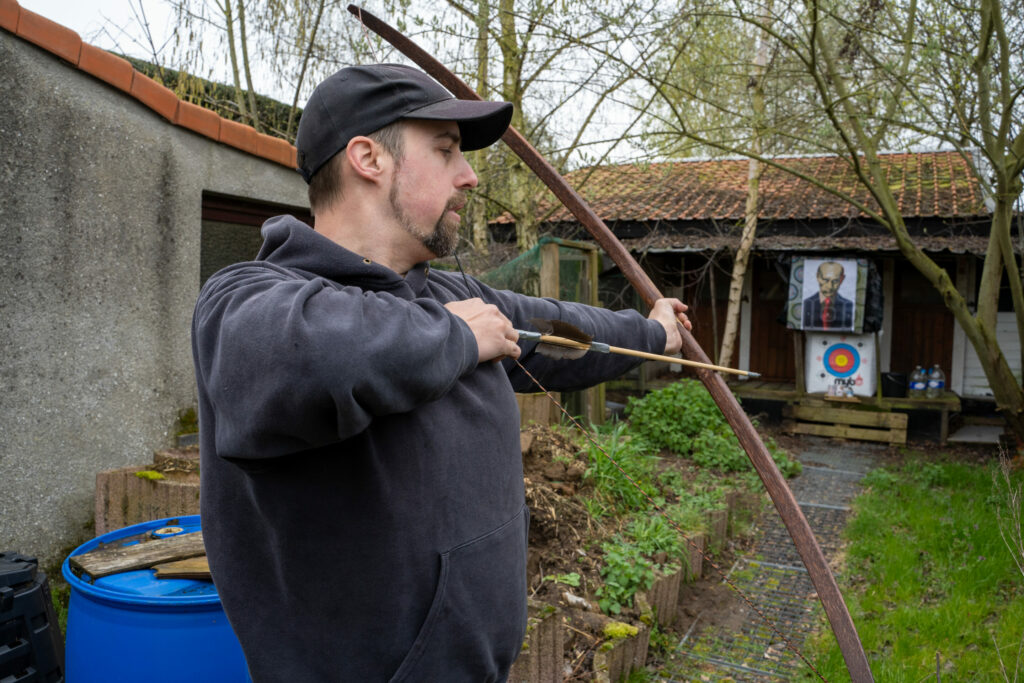
Jimmy Linssen shooting a longbow. Credit: Vicente Torre / The Brussels Times
The media image of prepping is often associated with far-right paramilitary movements or overly-paranoid conspiracy theorists. Linssen’s assessment is that the core of the movement is simply preparing for emergencies and natural disasters, though he agrees politics play a role.
When asked if he adhered to any political side, Linssen says: “I have lost faith in politics. They are not doing a good job. For 50 years or so all of it has been in decline. Politicians used to provide a dream to work towards, and now we are only trying to hold on to what we have, and even that is not working. So I lost my hope in politics and put it in my own self.”
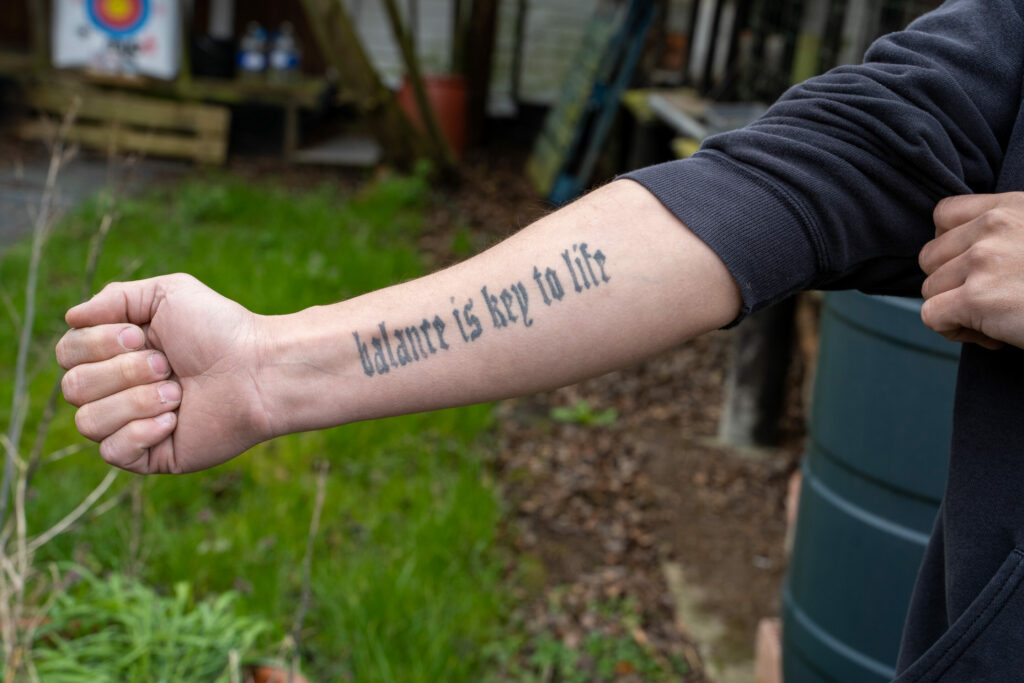
Tattoo on Jimmy's arm. He has another tattoo dedicated to video game Stalker. Credit: Vicente Torre / The Brussels Times
He claims he tries to stay in the middle and acquaint himself with everything, which includes reading extremist literature from both sides. He mentions reading The Camp of the Saints, a polarising 1973 book portraying the downfall of Western society.
“The interesting thing about this book is, whether you're left or right, you will read the book differently depending on your political affiliation. I think it’s important to read controversial books like Mein Kampf, The Red Book of Mao Zedong, or The Unabomber Manifesto. I always try to see why people are coming to their conclusions…I also hate censorship. I prefer my bullshit pure straight from the heart, so at least you know what people are about.”
Returning to his flag outside, he argues it’s a symbol of the decline he just described. “I’ll renew it when something changes," he says.
Your guide to surviving
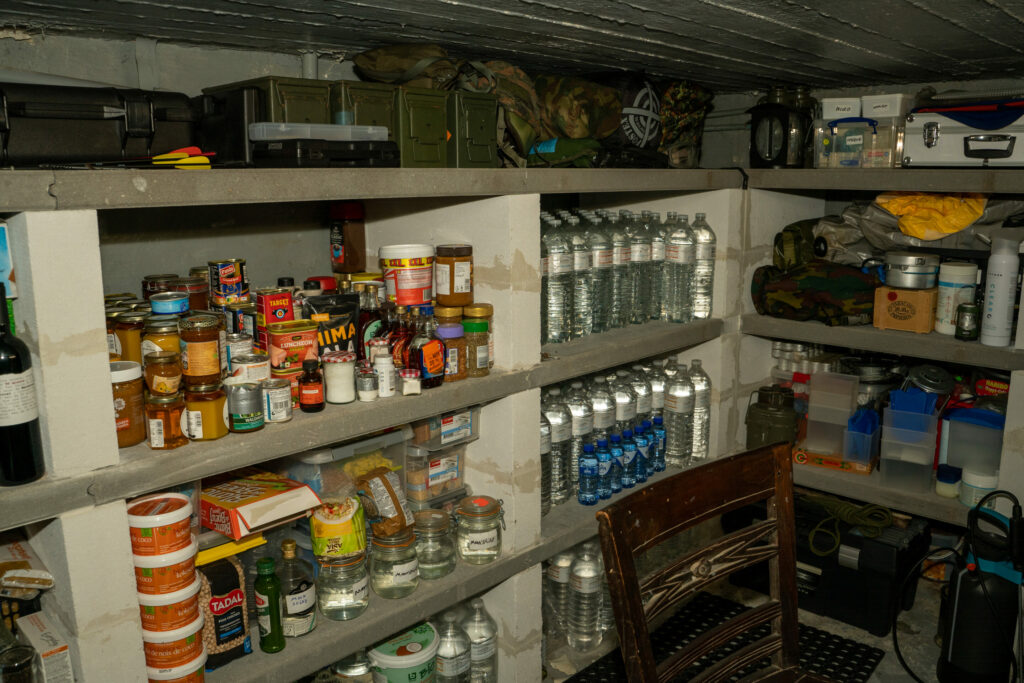
Linssen's supply cellar. Credit: Vicente Torre / The Brussels Times
Linssen’s account would not be complete without a survivalist crash course for readers of The Brussels Times.
According to Linssen, the base of any prepping is knowledge. “If you got knowledge, you are able to improvise, that’s why it's most important. For example, if you know 10 ways to make a fire, you can use whatever there is in your surroundings to get timber and a spark.” He owns a whole library of guides and says the SAS Survival Handbook is a good starting point.
He also advocates for primitive survival techniques over modern technology, arguing the former is more reliable. “I always look at different historical places in the world to know how people survived and what they use," he says.
"Copper has antibacterial properties. If you read into ancient Egypt, you will learn that soldiers put their copper weapons to wounds, disinfecting them after they noticed that soldiers who did this died less of infections.”
In Linssen’s opinion, prepping does not have to be an all-out lifestyle like his – it’s mostly about everyday occasions.
“You can start with everyday occurrences," he explains. "Having to fix your bike chain after it slips or giving first aid to someone who fell down. Then there’s dangerous social encounters, like facing criminals or economic preparedness if you have to live a month without a salary. Next level are natural disasters and only then bigger events like an all-out war.”
According to Linssen, the context of prepping depends on circumstances. Someone living in a rural area may benefit more from bush-crafting, while city residents could focus on acquiring an EDC (an everyday carry kit). Some skills are universal, like first aid with an emphasis on stopping bleeding, which Linssen advocates including in high school education.
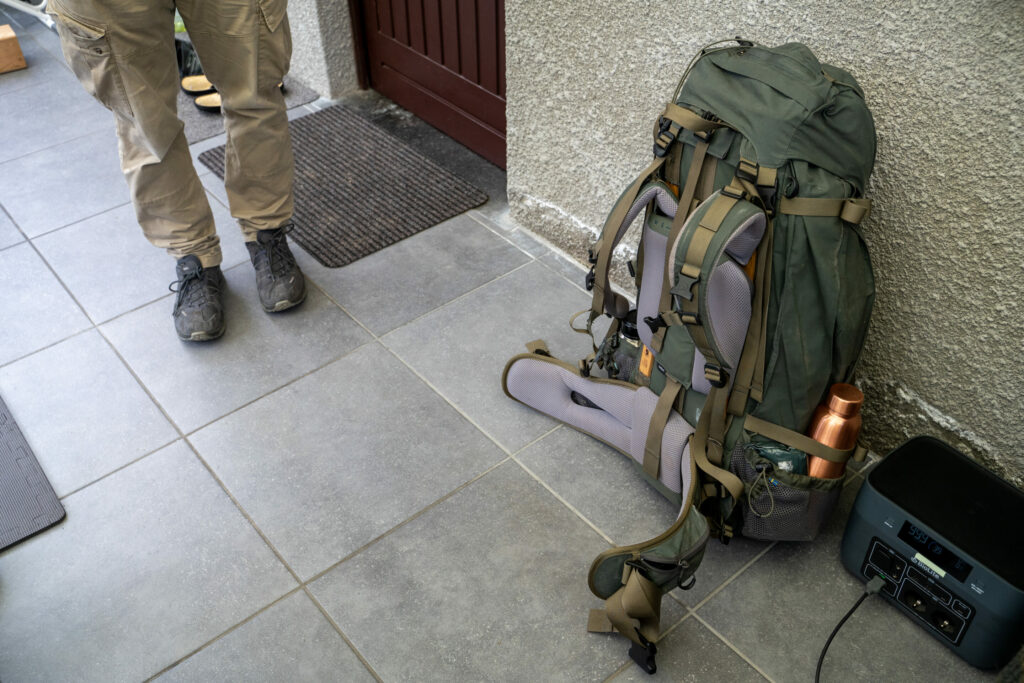
A 75l bug-out bag showed to us by Linssen. Credit: Vicente Torre / The Brussels Times
A 'bug-out bag'
We move to our host’s porch, where he explains the three-component prepping guideline, starting with a "bug-out bag". The essential components are water (with ways to filter more), food, protection from the elements, a first-aid kit, tools, and some sort of weapon for self-defence.
Self-defence skills are a must in Linssen's world, and he repeatedly says there are “monsters” out there. “A simple spear is one of the oldest weapons in the world and it’s still effective today. Pepper spray is illegal in Belgium, and in my opinion, it's a good self-defence weapon for both old and the young," he says.
When it comes to gun ownership, Linssen cannot recommend it, saying it’s a hassle to own a firearm and a fully legal prop pistol with sound can be as effective in scaring potential intruders away.
“Also, if somebody breaks into your house you could get sued if you hurt him, and I find that absurd," he says. "I would like to see that self-defence would be more appropriate to the victim instead of the perpetrator.”
For surviving the elements, Linssen has one crucial rule: wear wool. "Wool is the best material to own, it even once saved my life. I was hiking in the Ardennes when this big storm flooded Liège. My whole campsite was flushed out. I wrapped myself in woollen blankets so I could stay warm even though I was soaking wet," he recalls.
“Even if it's fully wet, wool retains 80% of its insulation value. There is a certain chemical reaction that will happen when the water molecules get between the pockets of wool, giving it a little bit of heat. It only takes moisture from your skin, not the oils, and the oils can feed the bacteria.”
Showing us a heavy-duty vintage Belgian army jacket, Linssen says: “You can sit close by a campfire with it and it will not melt, in contrast to synthetic materials.”
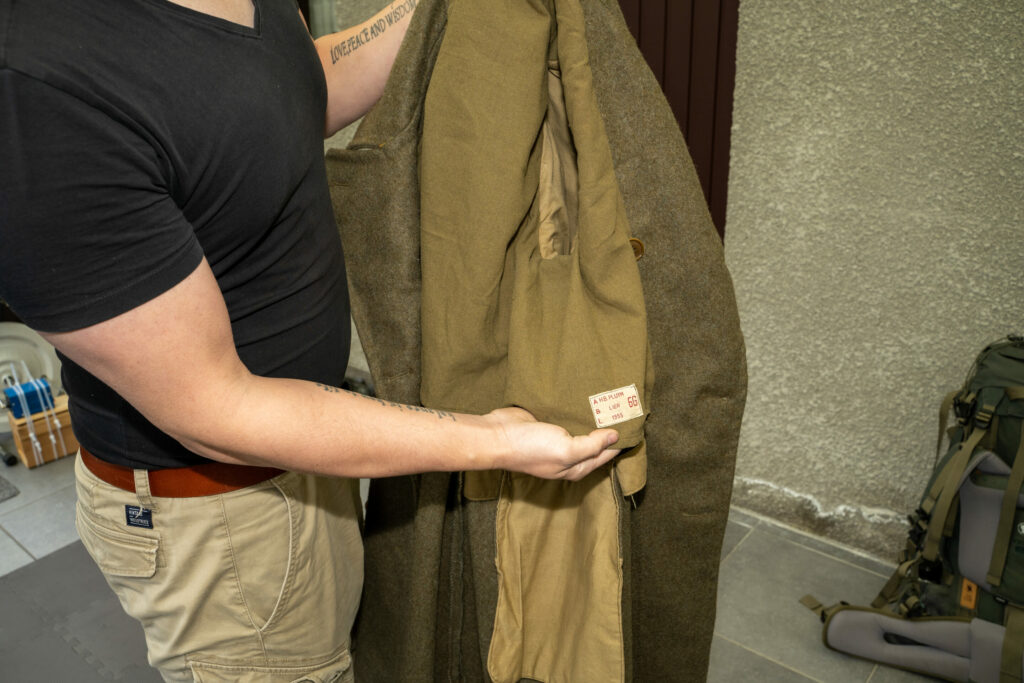
Authentic old Belgian army jacket owned by Linssen. Credit: Vicente Torre / The Brussels Times
Supply hoarding
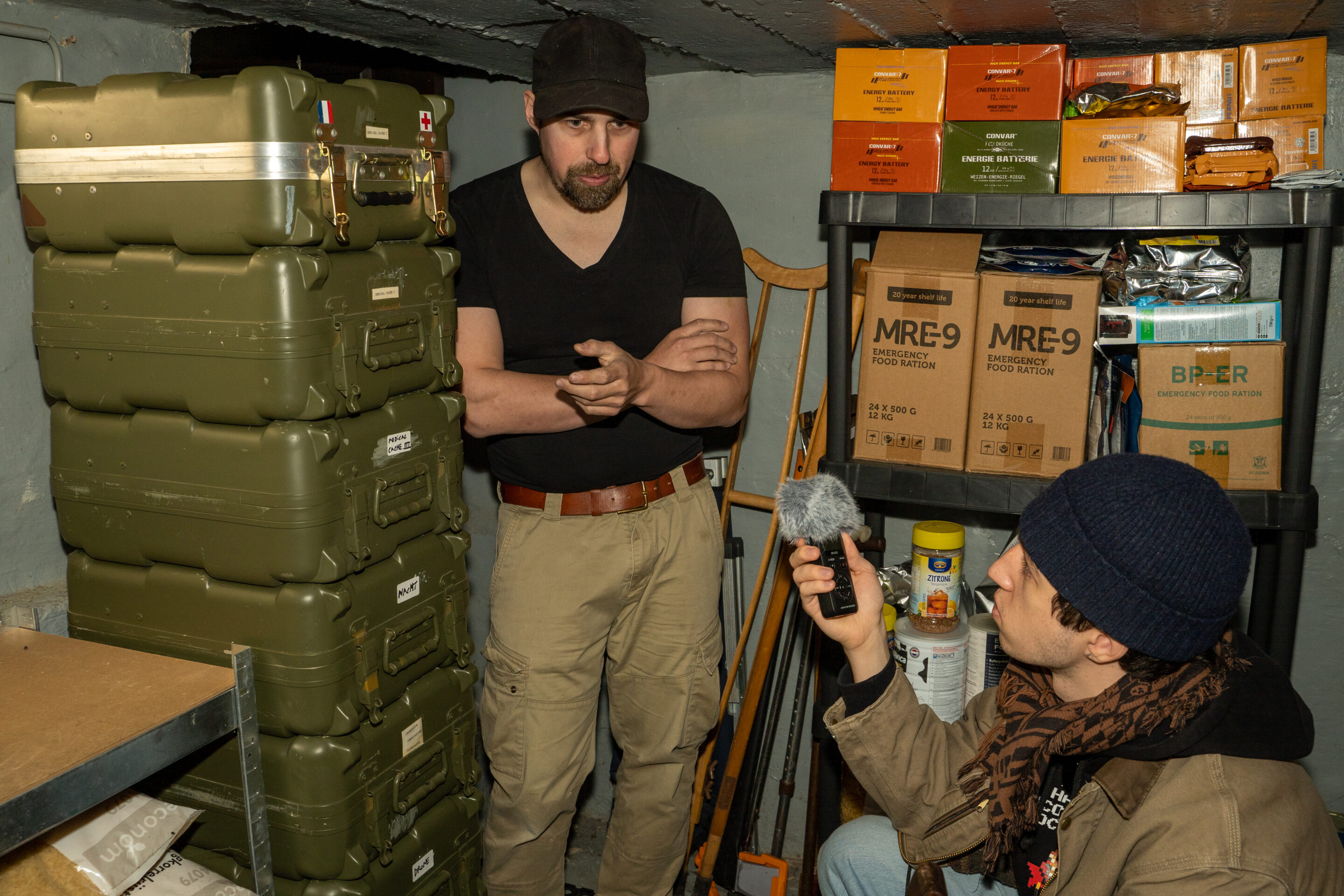
The next step of his survival guide is supply hoarding. To demonstrate what he means, he takes us into his basement. The small room holds an extraordinary amount of things. A sole map of the area hangs on the wall, giving the place an eerie apocalyptic vibe.
“It’s like insurance. If my harvest goes bad, I can still rely on this food. Most of this stuff can be kept for up to 35 years. Honey or maple syrup never go bad. Pasta can last you 15 years. Then there’s candles, matches, hygienic items. The water bottles are bought in large quantities for when I cannot even filter rainwater because of a chemical disaster... so you always have something at hand.”
Some of his supplies go beyond the basics, featuring a medical kit for minor surgeries, drones and even night vision goggles.
Self-reliance
The last part of Linssen's guide is self-reliance. His yard includes all sorts of vegetables, a Berkefeld water filter, a dehydrator, and a chicken coop. However, the most curious part is the guinea pig farm.
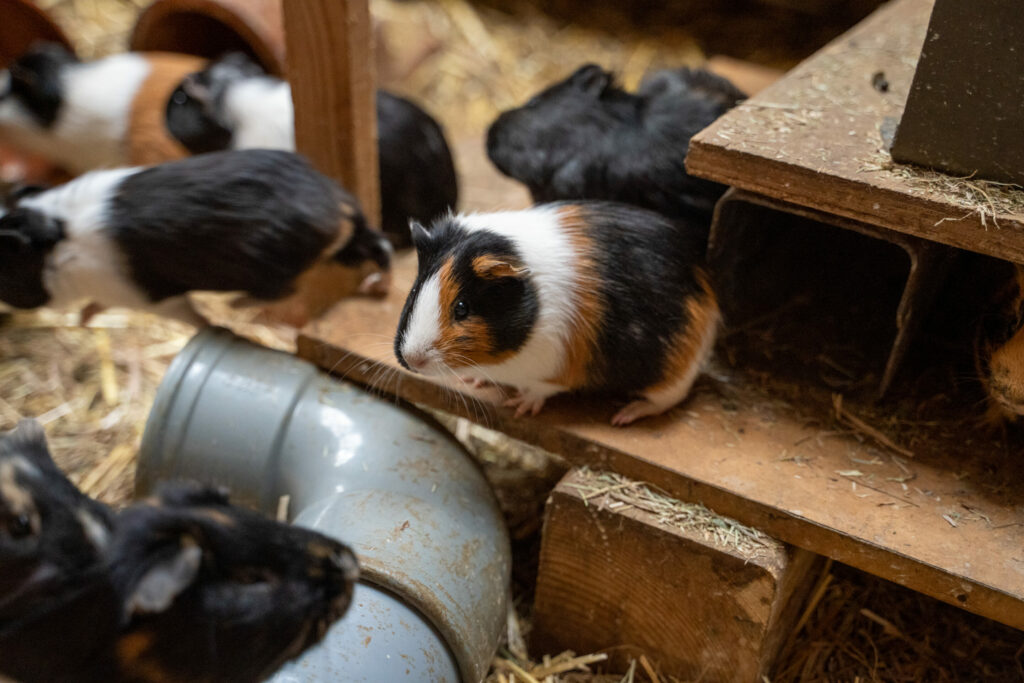
A guinea pig grown for food by Linssen. Credit: Vicente Torre / The Brussels Times
“The Aztecs originally had guinea pigs for food," he says. "They've been bred for 6,000 years for that reason, like we use chickens in the West. Their manure I use for compost. I grow vegetables and so we get a circle of self-reliance.
"I get meat, fur, and leather from them, while growing food. I know they are seen as pets, but I find they are one of the best parts of my survival plan. Even the UN uses them in Africa to support small farms. They breed like rabbits but they are easier to keep.”
I might not live to see the end of the world, but if there is one, I will have a phone number at the top of my notebook.
Editor's note: No guinea pigs were harmed in the making of this story. In fact, Kosmos Khoroshavin saved two of Jimmy Linssen's guinea pigs from certain death. Daisy and Chernika are now safely ensconced in a comfortable cage in our reporter's home in Flanders.
