
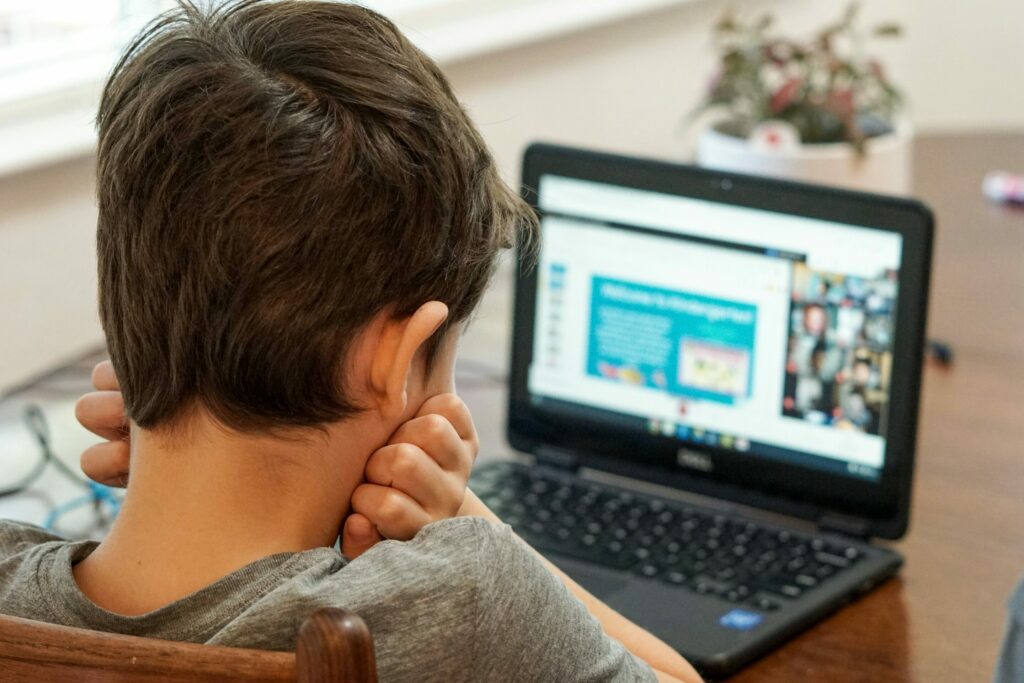
Flanders is cracking down on social media use for under-13s. In Brussels, the reality is entangled in legal complexity, resulting in questions about how feasible the measure is.
The Flemish Government recently said minors under 13 years of age have no business scrolling through "harmful content" on social media platforms and announced it would introduce a ban.
They are inspired by the Australian model, where under-16s have now been banned from major platforms, including TikTok, Instagram, Facebook, YouTube, and Threads. Accounts have been deactivated, and Big Tech companies risk fines of tens of millions of dollars if they fail to comply.
A government study in Australia showed that 96% of children aged 10 to 15 used social media, with seven in ten exposed to harmful content, including violent material and content promoting eating disorders. One in seven reported being subjected to grooming-like behaviour, while more than half experienced cyberbullying.
In Belgium, enforcing the same policy quickly became entangled in institutional complexity. Regional Flemish Media Minister Cieltje Van Achter (N-VA) is pushing ahead with a decree requiring tech giants to enforce stricter age verification.
"The responsibility must lie with the platforms themselves," she told The Brussels Times. "They should make their services safer by design, reduce harmful content, and stop using addictive features that put children at risk."
The 13 threshold is not new; most platforms already impose it in their terms and conditions. But enforcement has long been weak, with many children accessing social media well before reaching that age.
Van Achter's approach is to force platforms to take that rule seriously and to take responsibility. "If the measures are insufficient, the platform is placed on our list, so that enforcement of the minimum age of 13 can be ensured," she said.

Flemish Minister for Brussels and Media Cieltje Van Achter (N-VA) during a plenary session of the Flemish Parliament in Brussels, Wednesday 21 May 2025. Credit: Belga
Political clash
At the federal level, the proposal has triggered immediate resistance. Digitalisation Minister Vanessa Matz (Les Engagés) told Bruzz that allowing regions to act independently could create chaos.
According to Van Achter, however, what would be chaotic is continuing to wait while harmful social media keeps operating without clear boundaries for children. "Flanders is acting within its own competencies and taking responsibility where it can. This is not chaos, this is governance. Of course, we consult with other relevant stakeholders," she said.
The Federal Government suggested a centralised system using tools such as Itsme or MyGov.be where age verification would be handled outside the platforms.

Credit: Unsplash
But the regional Flemish Government insists that the idea offers better protection and does not mean automatic identification for every citizen. "We want less harmful social media for children, not more Big Brother for everyone," Van Achter said.
Due to Belgium's complex system of regions and community competences, the Brussels-Capital Region will likely be in an awkward position. Social media use is not a federal or regional competence, but one managed by the communities.
This raises questions such as whether the rules would apply to all children in Brussels, or only those within Dutch-speaking institutions? Could different systems coexist depending on language?
In theory, any rule imposed by Van Achter would only apply to children in Flanders, as well as to those in the Dutch-speaking system in Brussels. For children in Wallonia and Brussels' French-speaking system, a system should be decided by Jacqueline Galant (MR), the Media Minister in the French Community Government (also known as the Brussels-Wallonia Federation).
Negotiations with the French-speaking ministry are planned, Van Achter confirmed.
'A simple age limit will not necessarily solve the problem'
Nel Broothaerts, CEO of Child Focus, told The Brussels Times that an age limit alone risks missing the bigger picture. "A simple age limit will not necessarily solve the problem," she said.
Children are already present in large numbers on social media, despite existing rules. And in many cases, bypassing age restrictions is easy. "It will also be easy for children to circumvent these systems," she added.
What concerns Child Focus even more is what happens once children are online. According to the organisation's latest annual report, victims of online sexual exploitation are not only increasing, but they are also getting younger. In 2024, 70% of grooming victims were under 13, and nearly half were younger than 12.
The number of cases of sextortion reached 178, while reports of abusive content continue to rise, with thousands of alerts processed each year. "There have never been so many victims, and they have never been so young," Broothaerts said.
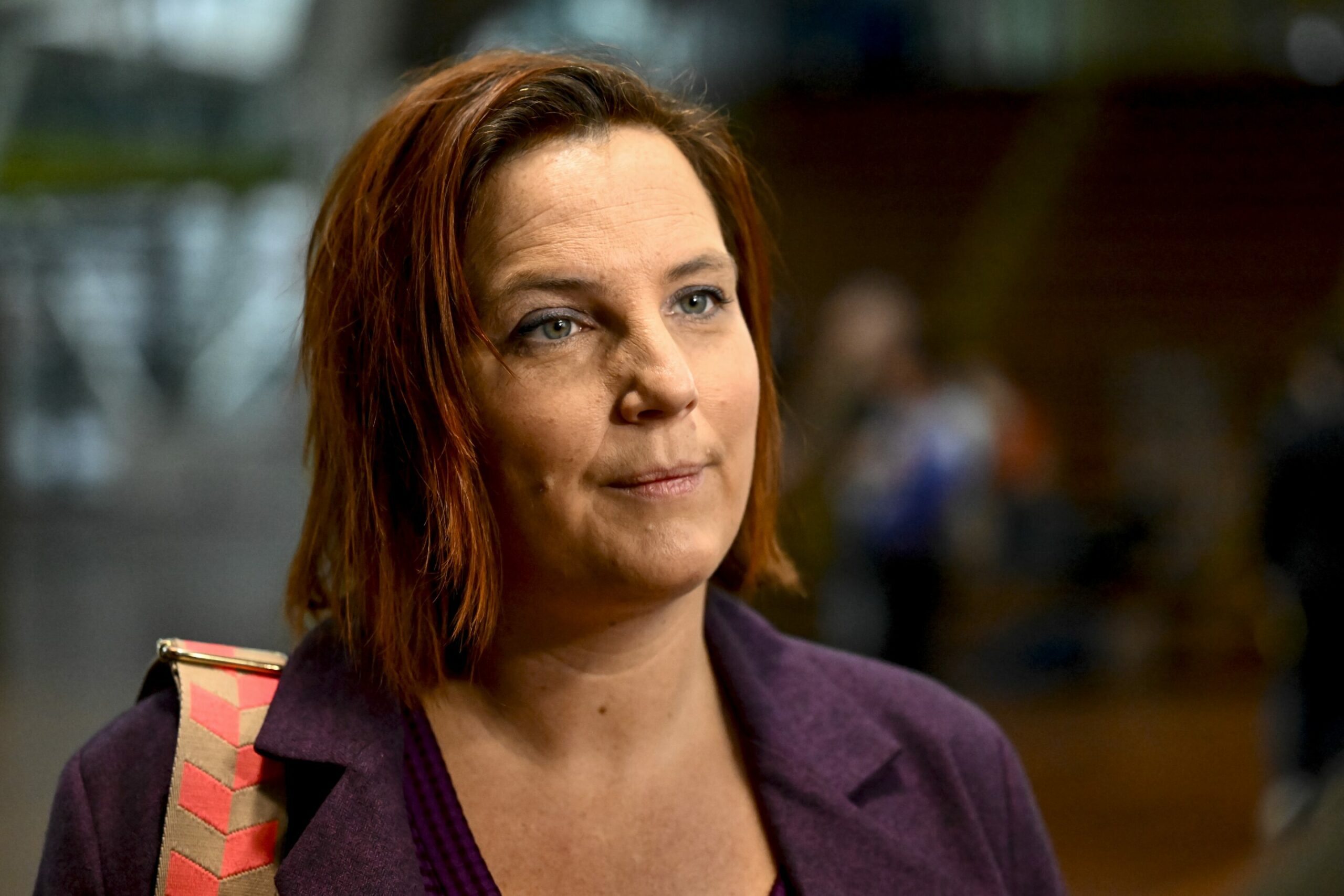
Child Focus CEO Nel Broothaerts, Monday 16 December 2024, in Antwerp. Credit: Belga/Dirk Waem.
Figures for 2025 will soon be published, Broothaerts confirmed, and they have definitely increased. "The core problem is the way platforms are designed," she said, pointing to addictive algorithms and the ease with which adults can contact minors.
Child protection online is often delayed by a lack of coordination, Child Focus regrets.
Today, responsibility for child protection online is spread across multiple levels of government in Belgium: federal, regional and community.
Often acting independently, this is precisely what complicates the rollout of a similar social media ban in Brussels.
