
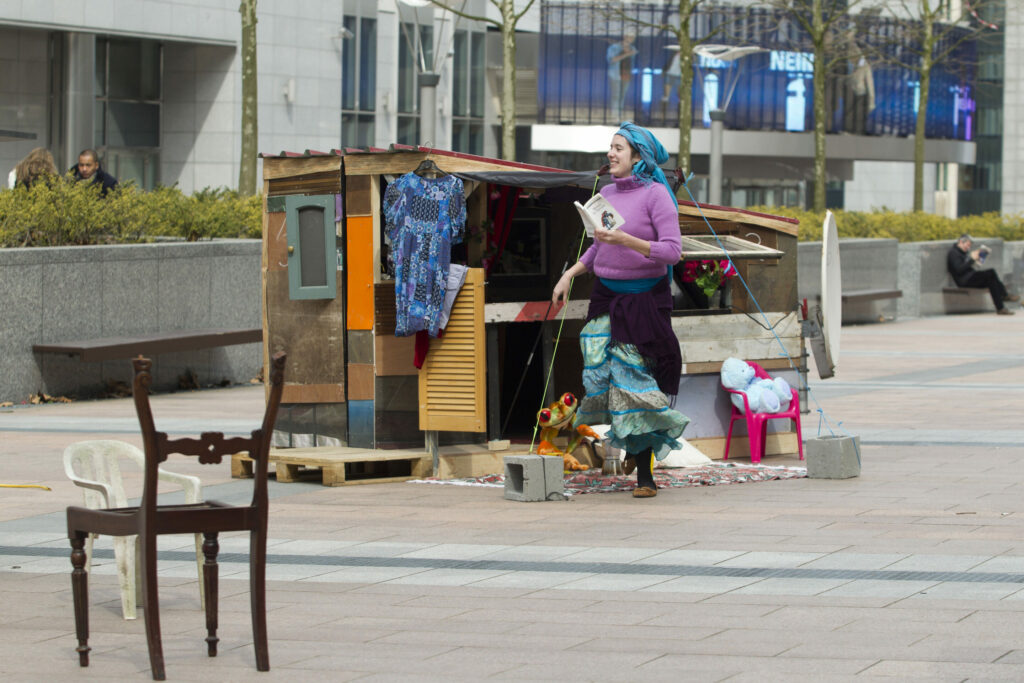
While Roma people and Travellers have historically always been the subject of stigmatisation, they still face normalised and structural but deeply rooted discrimination in Belgium, a new report has highlighted.
Ongoing structural racism and discrimination against Roma and Travellers in Belgium were exposed once again this week, with a new study by the country's Centre for Equal Opportunities and Opposition to Racism, Unia.
"Roma people and Travellers are citizens with civil, social, political and economic rights, just like the rest of us," said Els Keytsman De Ronne, director of Unia.
The reports received by Unia highlight recurring problems in various areas, but particularly in relation to the right to housing. These include a lack or absence of suitable sites, forced evictions, or barriers linked to the registered address.
Not trivial
Roma people and Travellers are also victims of persistent prejudice, stigmatising, inhumane and hateful statements in the media and on social media, and often during interactions with the police, and are still frequently the targets of hate crimes.
These findings form part of a long history of persecution, cited in the report, including the genocide of hundreds of thousands of Roma during the Second World War (Porajmos), which Unia says still receives insufficient recognition in Belgium.
"The fight against antiziganism (anti-Romani sentiment) is not a trivial matter: it is a way of testing our ability as a society to guarantee human rights and equality for all, and to care for minority groups and their specific circumstances," Keytsman De Ronne said.
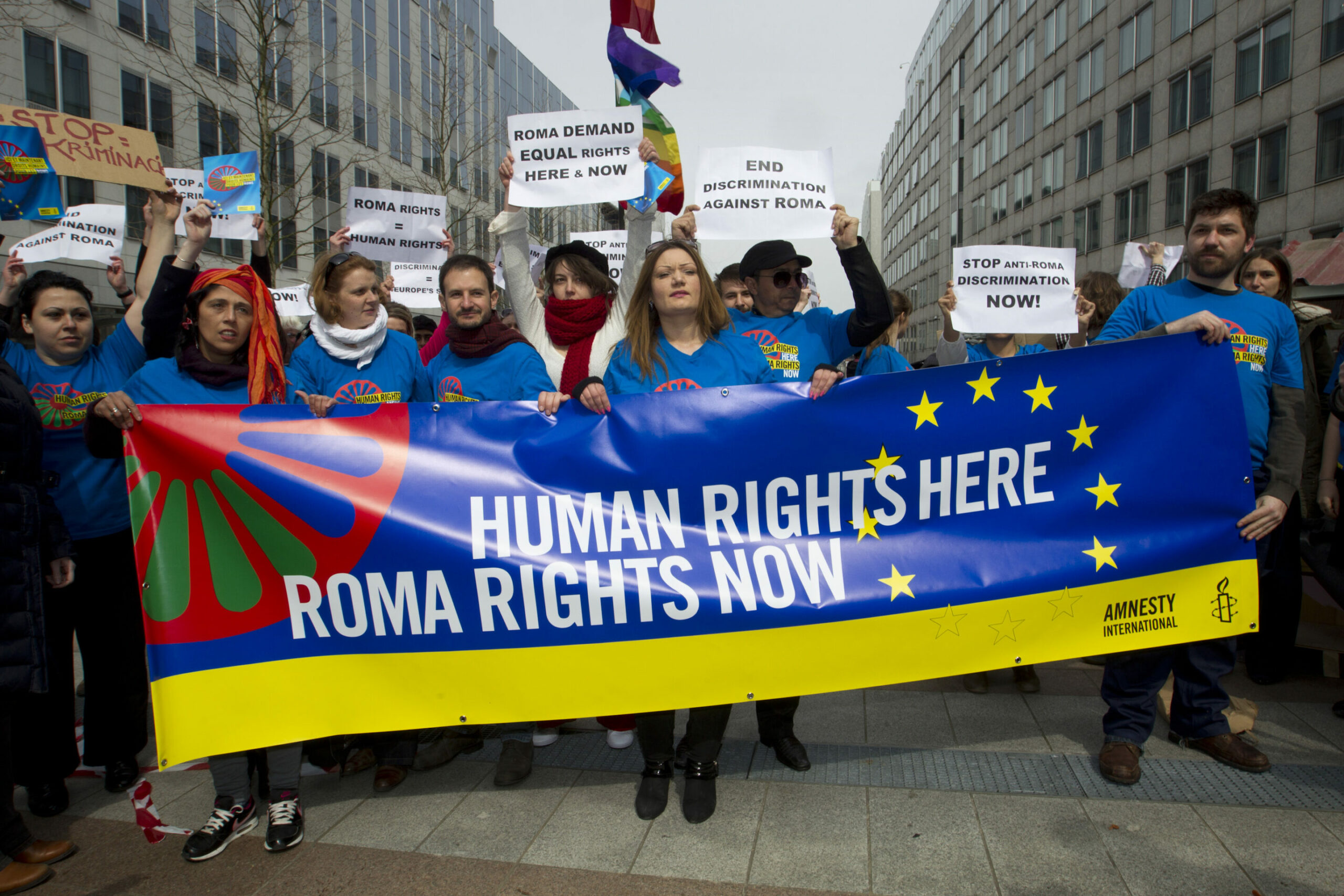
Illustration image of activists of Amnesty International pictured during a protest of Amnesty International to protest against 'discrimination of the Romani People in Europe', Monday 08 April 2013 in Brussels. Credit: Belga/Kristof Van Accom
In 2025, Unia received 46 reports related to discrimination against Roma people or Travellers. This is a relatively low figure linked to a lack of trust in institutions (among the communities concerned), limited knowledge of the law and legal remedies, fear of reprisals or stigmatisation, and socio-economic vulnerability that hinders access to justice.
It is often third parties, such as civil society organisations, social workers, teachers or members of the public, who alert Unia.
More than ten years after Belgium was condemned by the European Committee of Social Rights, none of its regions meets the minimum standards of the European Social Charter regarding caravan sites, although these findings were reiterated by the Committee in 2021 and 2023.
The lack of suitable residential and temporary sites leads to regular evictions, rendering the right to housing unattainable. The lack of suitable housing can, in turn, have an impact on other fundamental rights such as education, healthcare, and so on.
"The evictions faced by these families also repeatedly reinforce the perception that their presence is illegal, and the whole situation fuels racist prejudices," Unia said.
Involve the affected communities
Through the testimonies of experts from the Roma and Traveller communities, Unia points out that policy has so far too often been devised without their participation. This would ensure sustainable policy, in line with the 'nothing about us, without us' principle.
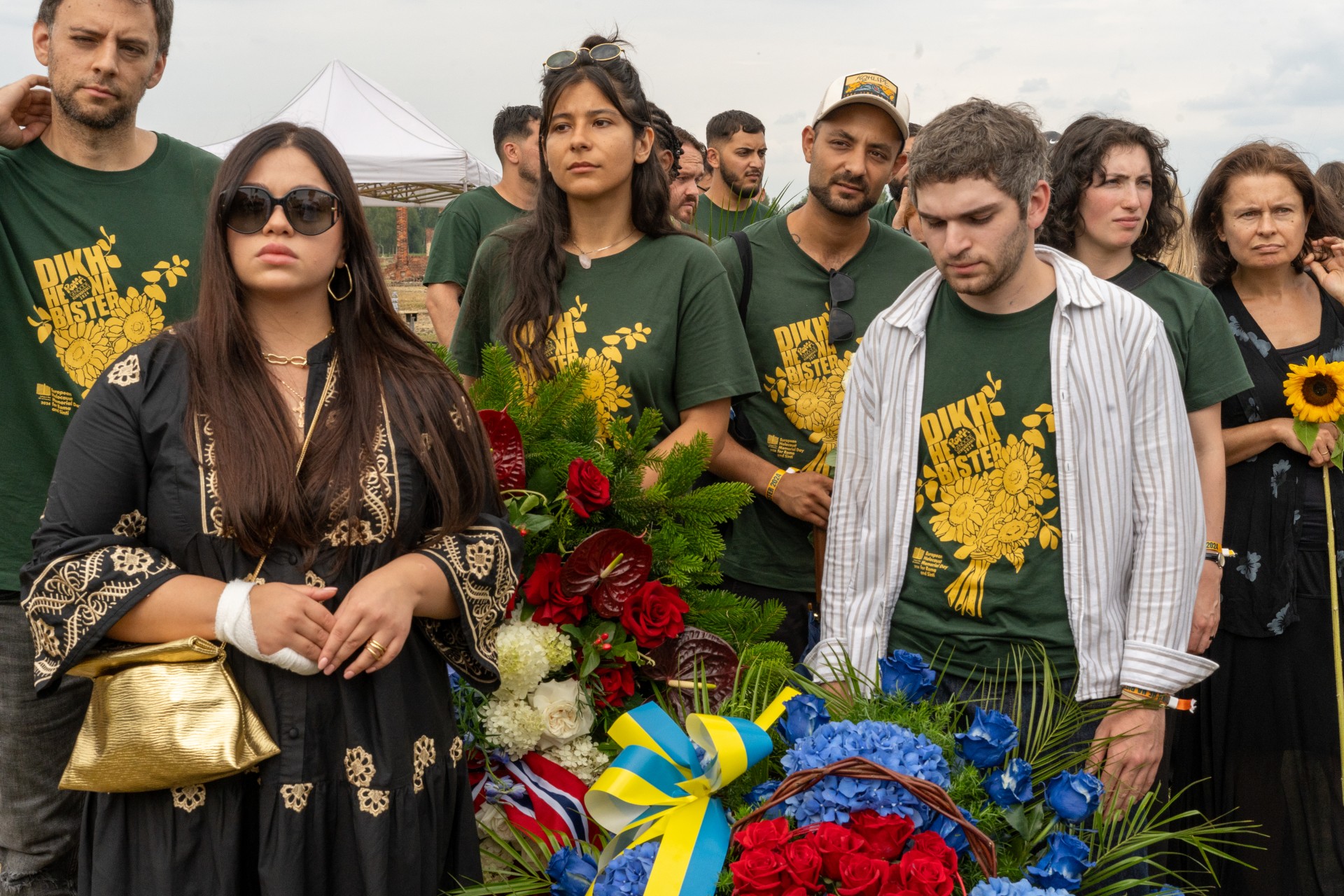
Credit: Documentation and Cultural Centre of German Sinti and Roma
Unia is also calling on the Belgian authorities to develop an ambitious national strategy with accompanying indicators and budgets. In terms of housing, the regions must create sufficient sites.
The Federal Government, meanwhile, must reinstate the right to an administrative appeal in disputes concerning the reference address.
Unia also calls for anti-gypsyism to be explicitly mentioned in an inter-federal plan against racism, accompanied by specific actions.
Finally, Unia advocates that Belgium officially recognise 2 August as a day of remembrance for the genocide against the Roma. On that day in 1944, more than 3,000 Roma and Sinti people were murdered in the Roma section of Auschwitz-Birkenau.
