
European lawmakers and Member States have agreed to double tariffs on foreign steel to protect the struggling European industry against low-cost Chinese imports.
Late on Monday evening, governments and representatives of the European Parliament reached a deal to raise import tariffs on steel to 50% and to cut by 47% the volume exempt from surcharges.
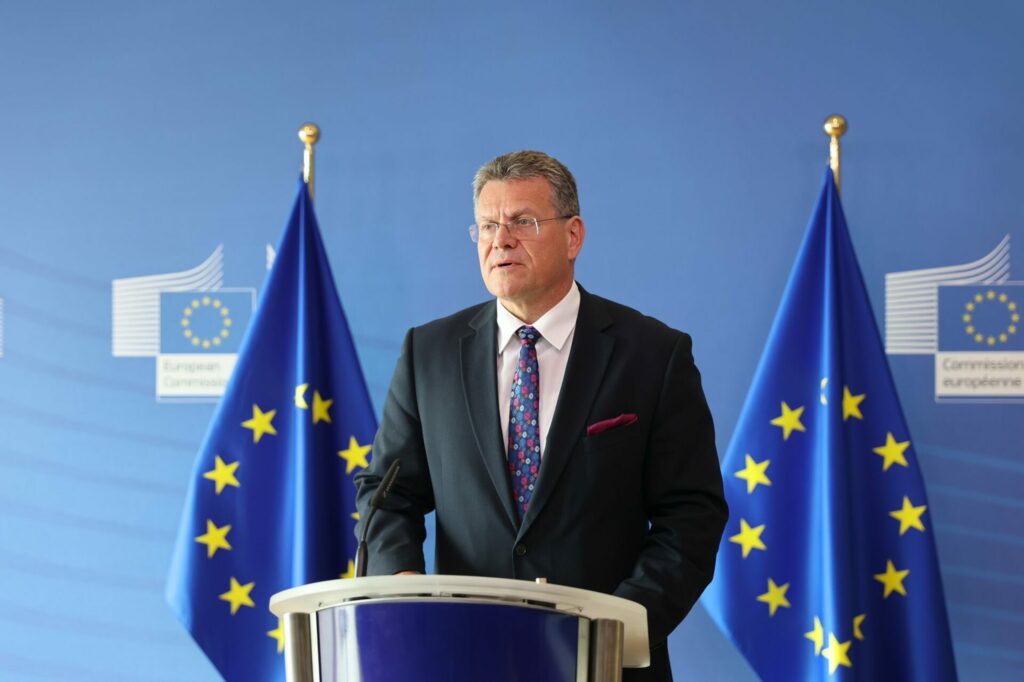
“The structure and global position of the European steel sector are fundamental to our strategic autonomy and industrial strength,” said EU Trade Commissioner Maros Sefcovic.
“We cannot turn a blind eye to global overcapacity, which has reached critical levels. Today’s agreement helps provide the stability our producers need to thrive in Europe.”
Under the new measures, duty-free import quotas will shrink to 18.3 million tonnes annually, nearly half the current level.
This figure aligns with the total steel imports into the EU in 2013 – the year the EU says its market became unbalanced due to overproduction, primarily driven by China. Chinese steel production, which is heavily subsidised, now accounts for over half of global output.
The revised tariffs will apply to imports from all non-European Economic Area countries, except Iceland, Liechtenstein, and Norway. They will replace the existing system, which imposes 25% duties on imports beyond the established quotas, and is set to expire at the end of June.
The agreement will still need formal approval from the European Council, representing member states, and the European Parliament.
Warning over rare earths
The European Union Chamber of Commerce in China also warned on Monday that stringent Chinese export controls on rare earths are disrupting European businesses’ strategies in the country.
China dominates the global rare earth industry, metals are crucial for products ranging from smartphones and wind turbines to defence equipment.
Last year, Beijing leveraged this dominance by imposing export restrictions, causing supply chain disruptions and contributing to a temporary trade truce with Washington.
However, current authorisation procedures are increasingly challenging for foreign companies seeking access to rare earth supplies, according to a report published on Tuesday.
“In many cases, the licensing process remains slow, unpredictable, uncoordinated, and lacks transparency,” the chamber stated.
It added that there is growing awareness among businesses that China’s export control framework poses a lasting commercial risk, noting that export permissions for certain goods could be withdrawn at any time for political reasons rather than security concerns.
Jens Eskelund, president of the chamber, highlighted a noticeable “profound shift in mindset” among EU companies. At a press conference prior to the report’s release, he explained that businesses can no longer assume Chinese suppliers will always deliver.
Firms and governments are now prioritising contingency plans, Eskelund said.
Even in the event of a Sino-American agreement on critical metals, Eskelund believes Beijing is likely to continue using export restrictions as leverage in international disputes.
