
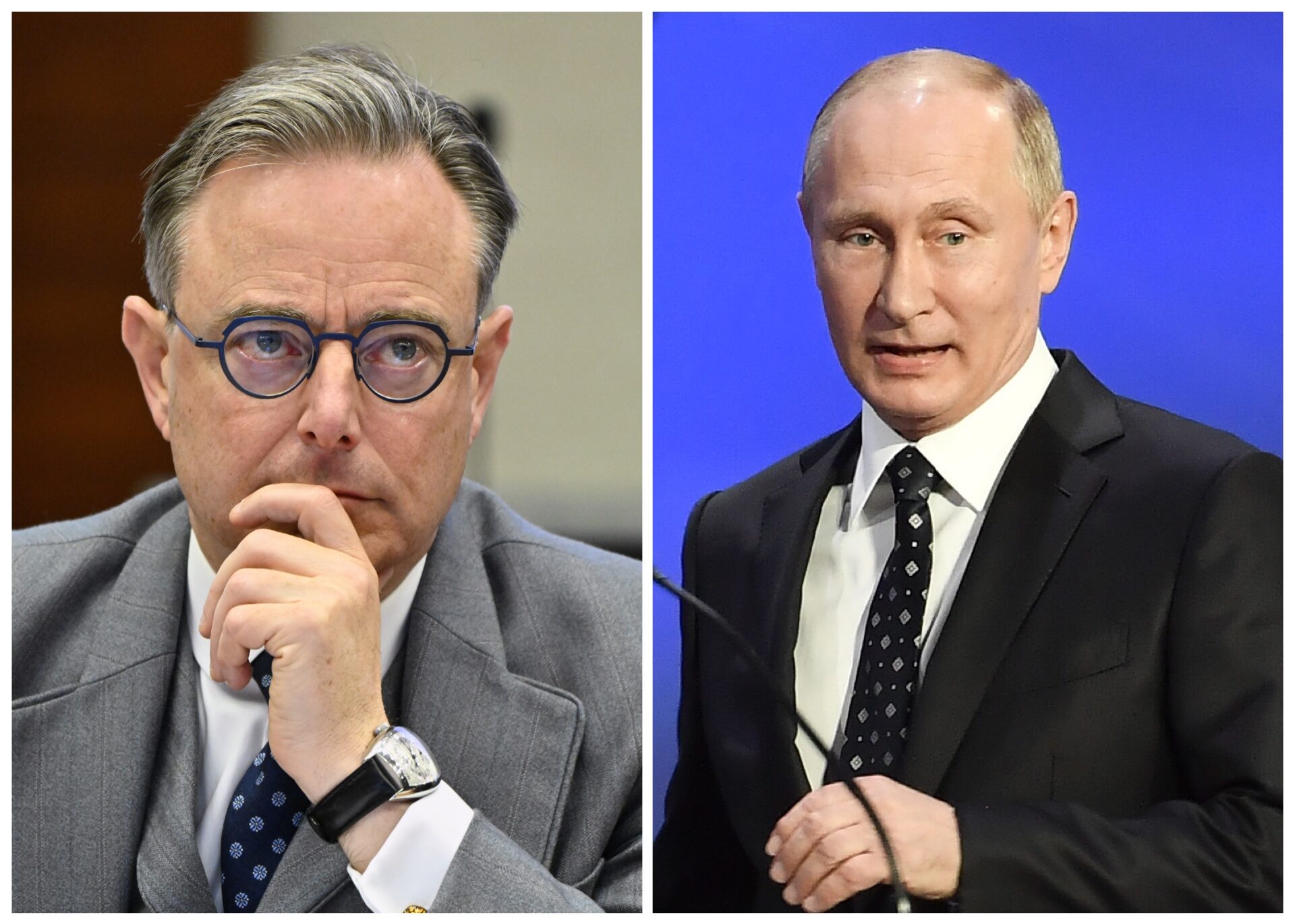
Last month, Belgian Prime Minister Bart De Wever made headlines after calling for the "normalisation" of relations with Russia and for the EU to negotiate with Moscow to bring an end to the war in Ukraine.
"We must end the conflict in Europe's interest ... and at the same time, we must normalise relations with Russia and regain access to cheap energy," he told L'Echo.
De Wever's comments aroused a great deal of criticism, and exposed differences within the ruling coalition over how to deal with Russia. Foreign Minister Maxim Prévot rebuked the prime minister, saying it would be “giving Putin exactly what he wants".
So what exactly is Belgium's position on Russia, and how has it evolved in recent years? To find out more, The Brussels Times spoke with Russia analyst Dr Joris Van Bladel, a Senior Associate Fellow at the Egmont Institute in Brussels and a member of the expert group informing the Belgian government on Russia’s diplomatic playbook.
De Wever under pressure over frozen assets
Belgium and Russia have had a long history of commercial cooperation and diplomatic relations. Even after Russia annexed Crimea in 2014, Belgium took part in sanctions and defence efforts as an EU and NATO member state, but maintained pragmatic commercial relations, especially in energy and in the diamond trade.
In 2017, imports from Russia returned close to pre-Crimea levels and before the G7 ban in 2024, around 30% of Belgium's rough diamond imports came from Russia. Belgium's Zeebrugge port has also remained an important hub for Russia’s Yamal liquefied natural gas (LNG) supply to Europe.
According to Van Bladel, since the end of the Cold War, Belgium has generally taken on a 'mediating' position in relations with Russia – a standard position for small countries. "The role of Belgium is never at the front line," he told The Brussels Times. "We are never going to take the forefront in certain issues at all. We are more or less mediating."
In late 2025, however, Belgium deviated from this backseat role in spectacular fashion by blocking EU plans to unlock €210 billion in Russian frozen assets to provide aid to Ukraine. The assets are mainly located in the Brussels-based financial clearing house Euroclear, and De Wever argued his country could be vulnerable to Russian retaliation if the plan went ahead.
The prime minister came under intense diplomatic and political pressure to change his position, but refused to back down – even as some accused him of being "Russia's most valuable asset".
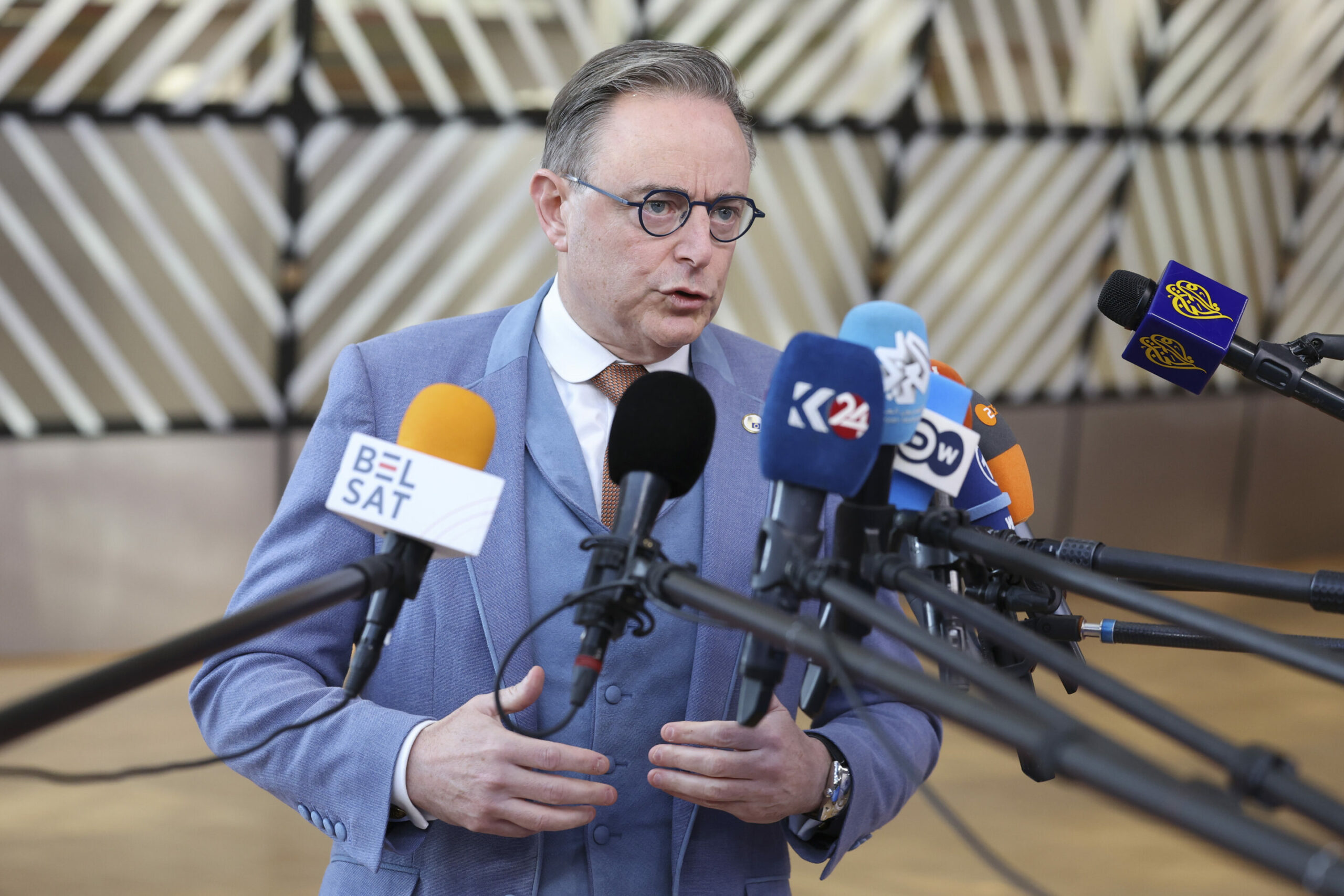
Belgian Prime Minister Bart De Wever at the European Council, Thursday, 19 March 2026. Credit: EU
In Van Bladel's view, De Wever's recent comments on Russia do not suggest the prime minister is either supportive of Russia or that he questions EU policy on Moscow.
"If you take distance from the polarised discussion in our societies, we need to be intellectually fair," says Van Bladel. "There is no discussion about undermining [EU policy]. That's not the point. The point is, what are we going to do with the world after? De Wever is known as a rather pessimist. Therefore, he did not say when it would come. But if we have to be in that scenario, we have to be open to diplomacy. And I think this is intellectually the correct thing to do."
The prospects for reconciliation with the West appear distant, according to Van Bladel. "I believe we are in a very long war. The anti-Western discourse narratives in Russia are taken over by the population more and more and more. As long as Putin and all these people with the same ideology, policy and reasoning are in power, it will be very difficult to reestablish this relationship."
Van Bladel believes De Wever was right to stand firm on the issue of frozen Russian assets. "It was an extremely difficult and complex legal discussion, but we cannot deny that indeed we were going to seize assets from a company [Euroclear] à la Russe. I understand Ukraine's point of view. But in fact, freezing them should put them out of the equation. That's my personal concern. I believe that we’d make a mistake if we seize these assets," he says.
"Our states do not confiscate free market possessions. And it has nothing to do with whether you are in favour of or against Russia. The solution that the EU has found in the end is a valid alternative, and then you don't go into legal grey zones."
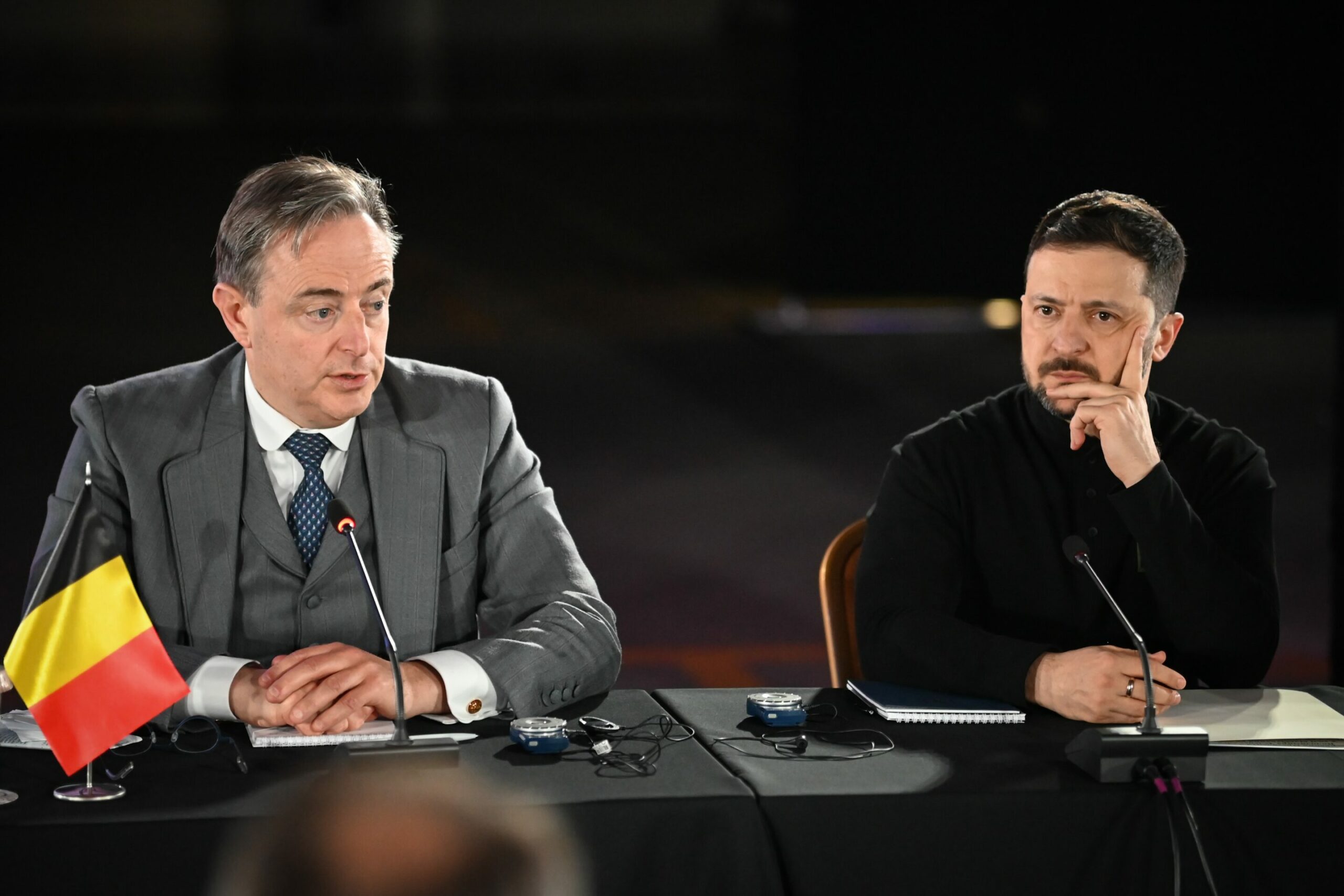
Prime Minister Bart De Wever and Ukrainian President Volodymyr Zelensky at a strategic cooperation meeting at the Ukrainian Defence Industries Tradeshow in Kyiv, on Tuesday, 8 April 2025. Credit: Belga / Justin Yau
In December, the EU came up with an alternative plan to lend Ukraine €90 billion to cover its financial needs for the next two years. However, Kyiv is yet to receive the promised funds, as the Hungarian Prime Minister Viktor Orbán has been blocking them until now. The EU expects his successor, Péter Magyar, to give the go-ahead to unlock the loan to Ukraine, but there are fears that other member states could adopt Orbán's strategy. Van Bladel believes the discussion of the frozen assets "will come back" at some stage.
He also thinks it is unfair for De Wever to be placed in the same category as the pro-Kremlin leaders of Hungary and Slovakia, condemning such arguments as "intellectually false".
"Hungary and Slovakia, these are the countries that are undermining European policy, not Belgium," he says. "I understand where the question comes from, and don't misunderstand me, but we now have the question 'Is De Wever pro-Putin?' He is absolutely not in the same line as Orbán and others. How is it possible that they [media] put them in the same league? That I found intellectually false. This means that we are talking in ideological terms and not in intellectual terms."
De Wever, for his part, is sensitive to claims that he is pro-Russian. The prime minister's father, Henri “Rik” De Wever, hosted Ukrainians at the De Wever family home in the 1980s. In 2024, during a trip to a massacre site in the the Ukrainian town of Bucha, the prime minister became tearful as he recalled that his house was "always full of Ukrainians".
'We underestimate Russia'
Russia’s full-scale invasion of Ukraine made Belgium take a stronger anti-Kremlin position. Currently, Belgium only maintains diplomatic relations with Russia in practical communications, such as those related to consulate services and legal administration.
Sooner or later, says Van Bladel, diplomatic talks will have to resume – and he warns that Belgian diplomats must be well prepared to deal with their counterparts in Moscow.
"If you go into diplomacy, you have to know who the Russian counterpart is. And the point is we underestimate them," he says. "Russians are very good at their diplomacy and misinformation warfare … If you invite, as the media, a Russian minister of foreign affairs, and you think that he will talk as every minister of foreign affairs in Europe, you're wrong. And you will be played …Russia is a very specific negotiator, which may not be underestimated."
