
Kristina Chetcuti, a registered health coach (UKIHCA) specialising in behaviour change and lifestyle medicine (ELMO), answers your health and lifestyle questions.
Q. I’ve been seeing a lot on hormone disruptors lately - how they’re in things like packaging and cosmetics, and I’m not quite sure what to make of it. I’ve got a toddler, a teenager, and then there’s me, always grabbing things on the go. Should I actually be worried, or is it one of those things that might be a bit overblown?
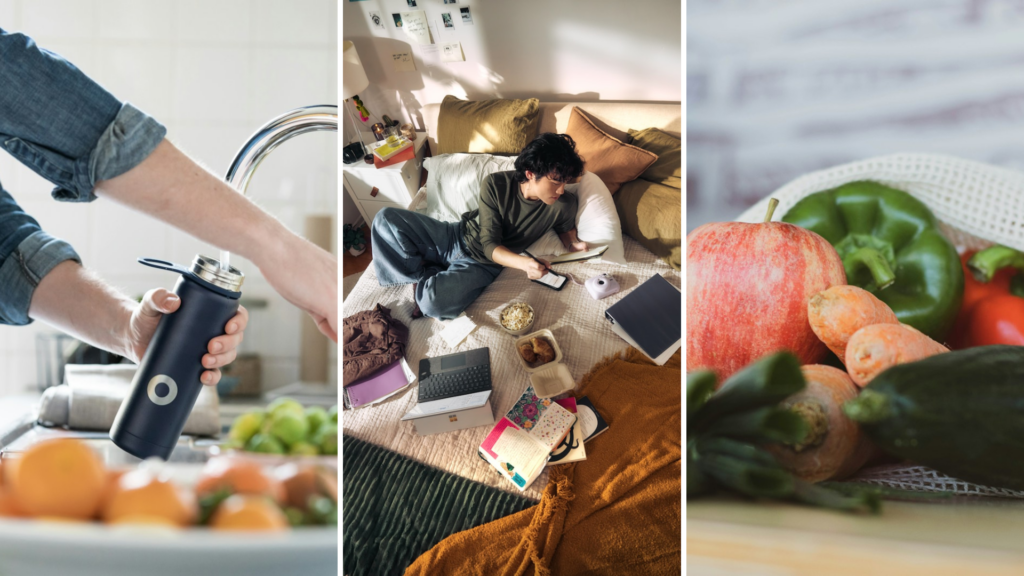
A. About 20 years ago, I ran into an old school friend in a supermarket. She was pointedly skimming over the pre-packed vegetables and was instead filling a cloth bag with loose ones. After the usual catching up, I commented on how planet-friendly she was.
“It’s not just that,” she said. “I try to avoid plastics, they can affect my son’s testosterone.” I remember thinking: now, that sounds a bit woo-woo.
Well, fast forward to today and … my goodness how right she was. What we once dismissed as claptrap is now firmly rooted in science. And we are only just beginning to realise – with horror! – the side effects of the quick-fix, convenience-driven lives we are living.
So, in answer to your question, yes endocrine disruptors are a modern-day health problem – a huge one, at that. Until now, it has been largely under-reported, and the alarm around it rather subdued. But it’s high time we sat up and took notice because the list of potential health effects is, frankly, sobering.
They have been linked to everything from changes in reproductive health and earlier puberty, to effects on brain development, obesity, weakening of the immune system, and an increased risk of certain cancers. And therefore, hats off to the Belgian authorities, who earlier this month issued a series of awareness tips and guidelines aimed at helping parents protect young children.
What are these endocrine disruptors and what’s the problem with them?
I don’t blame you for thinking “Hang on, ‘endo-what’?”. It’s one of those buzzwords that suddenly starts popping up everywhere without much explanation.
Here’s what they are in nutshell: they’re around 1,000 compounds, most of them derived from petrochemicals (surprise, surprise). These include heavy metals, pesticides, herbicides, fungicides, and a range of synthetic chemicals – which can be found in anything from your mascara to your sofa.
They’re called disruptors because that is exactly what they do: they disrupt the hormones, and hormones control everything that happens in our body from growth, to mood, to reproduction. This includes sex hormones such as oestrogen and testosterone, as well as the thyroid – which happens to play a particularly important role in early development. Which is why some governments like the Belgian one, are suggesting to parents to be more vigilant.
Paediatric endocrinologist Laura Lucaccioni and her fellow researchers found out in 2020 that compounds such as these may be the reason why the average age of puberty is getting steadily younger. In the 19th century girls used to get their first period at around the age of 16 or 17, but slowly, slowly that age has been shifting downwards. Today, the average age is 12.
Where do we find endocrine disruptors in our day-to-day life?
This is the eye-popping bit. A good number are often found in electronics such as computers, printers and mobile phones (I’m in the midst of a gadget group hug as I’m typing this). The culprit here is the brominated flame retardant (BFR), which sometimes also happens to be added to everyday items like clothing, furniture, sofas and mattresses (you can see the benefit of good old straw bales).
Then there’s food packaging. Chemicals such as phthalates are used in a wide range of plastic food and drink containers. They can spread into food, particularly when heated something many of us do automatically when we put containers in the microwave.
Another commonly discussed compound is BPA. Thankfully, it is longer permitted in children’s products, but it is still found in some plastic containers, water bottles, and the internal lining of some tinned foods. Oh, and it can also migrate into food, when in contact with acidic ingredients such as tomatoes (I recommend switching to jars).
And then there’s toys. Although in the EU we’re pretty strict on compound content, toys from certain countries, like Russia, China and the Philippines, might still use paint that contains lead (another reason to love our EU).
What can I do to mitigate?
It feels daunting, but with courage, it is doable. Think of my schoolfriend – she managed to do it two decades ago. You don’t need to obsess, but you can focus on what is within your control to mitigate the potential harm:
- In the kitchen, use glass containers, stainless steel or cast iron where possible, and try to avoid non-stick pans
- At the supermarket go for unpackaged food where possible, and choose loose fruit and vegetables rather than plastic-wrapped options
- Choose takeaways that offer food in more natural packaging such as bamboo
- Install a water filtration system, which may help reduce certain chemical residues in water
- Eat a diet rich in fruit and vegetables, which helps support the body’s natural detoxification processes
- Welcome kefir and other fermented foods in your fridge – they support a strong gut-blood barrier which may prevent unwanted chemicals from spreading
- When out shopping don’t take receipts unless you need to – some thermal paper receipts have been found to contain BPA or similar, which can be absorbed through the skin (you’re helping yourself, and the cashier, and the planet)
- Opt for good old-fashioned wooden toys for your children
- Limit children’s exposure to phones and other electronic gadgets where you can
- Go au naturel and don’t use as much make-up. If you must apply make-up, look for products carrying the EU Ecolabel mark.
- And of course, do keep on showering – just use personal care products with more organic ingredients
- Finally, move your body. Some research suggests that sweating may play a small role in helping the body eliminate endocrine disruptors.
You can do it!
Got a lifestyle health question you’ve been turning over in your mind? Send your dilemmas to k.westwood@brusselstimes.com, and we'll tackle them confidentially right here.
