
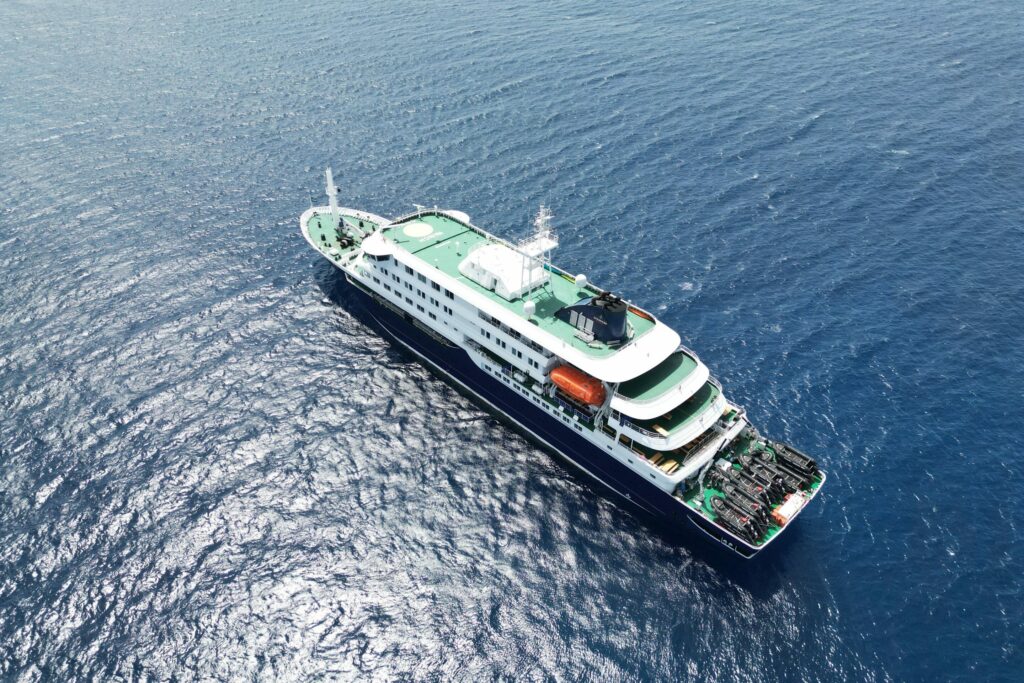
The risk posed by the outbreak of hantavirus on board the Dutch cruise ship MV Hondius "remains low" for global public health, according to the World Health Organization (WHO) Director-General Tedros Adhanom Ghebreyesus.
The WHO chief stated in a social media post that the organisation continues to work closely with the ship’s operators to monitor the health of passengers and crew.
He added that the WHO is coordinating with countries to ensure appropriate medical care and evacuation if necessary.
Three suspected cases on board the MV Hondius have already been evacuated to the Netherlands for further medical attention.
The evacuation was organised in collaboration with the WHO, the ship’s operators, and national authorities in Cape Verde, the United Kingdom, Spain, and the Netherlands.
Three suspected #hantavirus case patients have just been evacuated from the ship and are on their way to receive medical care in the Netherlands in coordination with @WHO, the ship’s operator and national authorities from Cabo Verde, the United Kingdom, Spain and the Netherlands.… pic.twitter.com/olQBk6tdGk
— Tedros Adhanom Ghebreyesus (@DrTedros) May 6, 2026
Hantavirus: What is it and what are the symptoms?
Hantaviruses are a group of viruses typically carried by rodents. Transmission to humans can happen due to contact with contaminated urine, droppings or saliva of infected rodents. Infection can also occur through rodent bites. Human-to-human transmissions are relatively uncommon, according to the WHO.
Symptoms in humans usually begin between one and eight weeks after exposure. The symptoms include fever, headache, muscle ache, abdominal pain, nausea and vomiting. The infection often results in death, although the fatality rate depends on several factors, including the type of virus.
There is no specific treatment or vaccine for hantavirus infection. "Care is supportive and focuses on close clinical monitoring and management of respiratory, cardiac and kidney complications," explained the WHO in a statement.
