
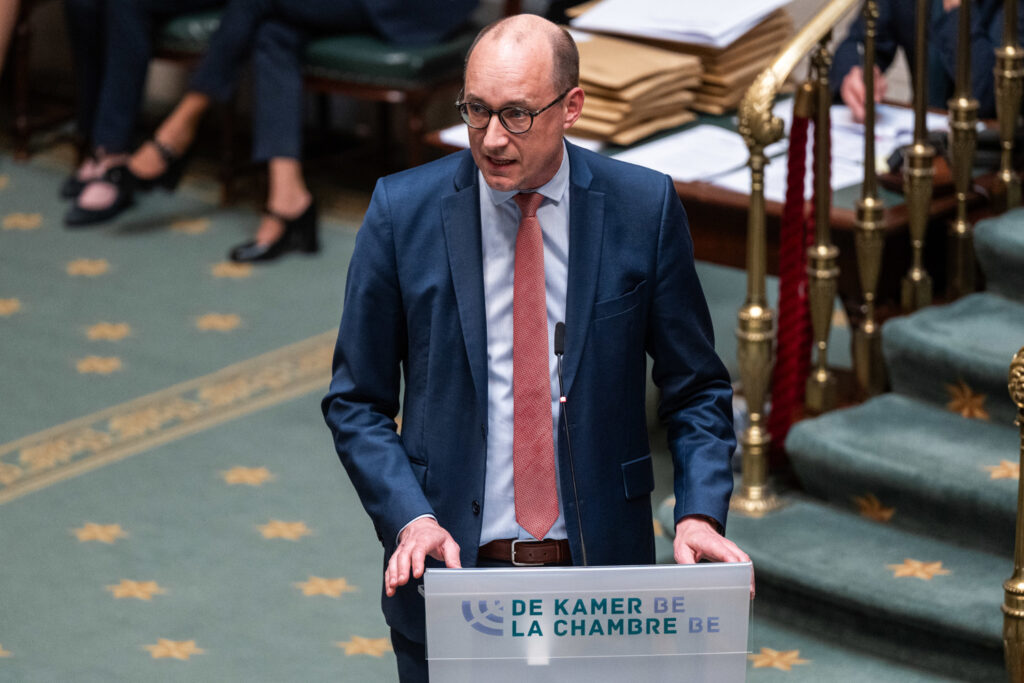
The Belgian Federal Government may need to find €7 billion by 2029, warned Budget Minister Vincent Van Peteghem during a televised interview on Sunday.
Previously, the shortfall was estimated at €4.9 billion by the end of the term. However, Van Peteghem suggested that updated calculations — including the impact of the US-Israeli conflict with Iran — point to accelerating inflation, raising the figure to €7 billion.
According to Van Peteghem, addressing this challenge will require a broad range of measures, spanning areas like healthcare spending, corporate subsidies, welfare increases, and fossil fuel subsidies.
“There’s no single solution — it’ll be a complex mix,” he said.
Tax reforms may also play a role. Van Peteghem argued that Belgium’s tax system has too many loopholes, calling for an honest reassessment.
However, he dismissed Vooruit’s recent proposal to impose a wealth tax, warning that such initiatives often face constitutional challenges and benefit lawyers rather than citizens.
The budget plan must be submitted to the European Commission by 15 October, but Van Peteghem aims to finish drafting it by 21 July.
“If we complete our work by summer, we’ll implement the measures more effectively,” he said, noting that they will inevitably affect everyone. “It must be fair,” he concluded.
Meanwhile, the political party Les Engagés has advocated for massive investment in an energy transition blending nuclear and renewable sources.
They propose creating a Belgian sovereign energy fund and activating EU clauses to bypass debt and deficit rules.
Les Engagés leader Yvan Verougstraete and Climate Minister Jean-Luc Crucke argue that these investments, part of a proposed “New Energy Deal,” would amount to “useful debt.” Such efforts could reduce fossil fuel import costs, foster European job creation, and stimulate economic growth, they say.
