
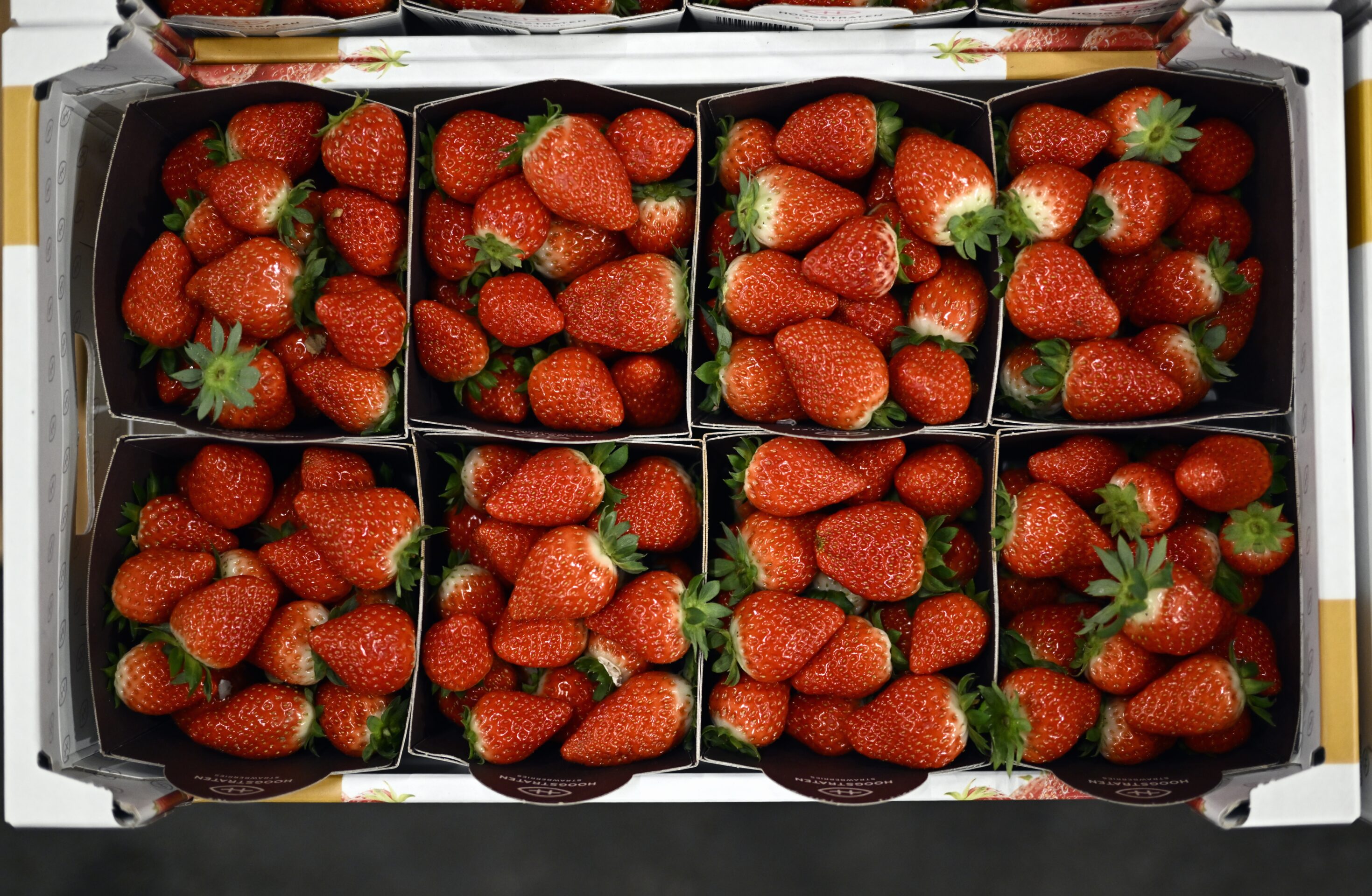
The month of May definitely belongs to strawberries. And yet, that punnet of bright red strawberries that you have in your fridge would not be there at all were it not for a French spy, a real-life, early 18th-century James Bond.
Amédée-François Frézier was on a top-secret mission for the French crown in Chile when he was given a luscious wild strawberry to eat. It was larger, rosier in colour, and far tastier than those at home. Back in Europe, they were no bigger than a small caper, deep red and often rather sour.
Now, Frézier was not in Chile to spy on plants – that part was a side quest. In his official capacity as a military engineer, he had been sent to spy on what the Spanish Empire was up to in its Pacific coastal territories. But while doing so, he fell in love with these Chilean succulent strawberries, and when no one was looking, he stuffed his briefcase with the plants and brought them back across the Atlantic.
They survived the voyage, which is no mean feat, seeing as this was 1714. Not only that, but they even managed to take root in French soil. However, to his dismay, they produced no fruit. Why? In a detail only Bond might appreciate, Frézier had brought back only female strawberry plants.
Nature eventually supplied the missing half: the Chilean plants were cross-pollinated with male French wild strawberries, and the successful matchmaking gave rise to the modern strawberry, Fragaria ananassa – the very same one we eat today.

King Philippe, Thursday 27 April 2017. Credit: Belga/Nicolas Maeterlinck
You could say this was a mission with an unexpectedly sweet ending, especially as there’s one final detail worth savouring: Frézier’s surname comes from the old French word fraise. So, quite literally, (and I’m chuckling to myself as I write this) a man called ‘Strawberry’ travelled across the world, brought back strawberries, and accidentally helped create the ones we eat today.
The size, taste and fragrance of Frézier’s fraises quickly made them popular across Europe. Their delicacy, short season and difficulty of transport turned them into something of a status symbol, catching the eye of none other than Louis XIV, France’s Sun King, whom we’ve already met in our asparagus dispatch.
Clearly a veritable connoisseur of, among other things, fibre, he was rather taken with the new strawberries and had them cultivated in his royal gardens.
We cannot fault him. To this day, eating the first strawberries of the year is a delight, and by May, when the days start getting long and the nights remain cool, they are at their peak.
They’re loved around the world, and we consume so many: Belgium alone produces around 51,000 tonnes of strawberries a year, which is just the tip of the iceberg compared with the sheer volumes produced by Spain, Poland or Greece.
False fruits?
Strawberries come with memories of happiness and sweet nostalgia. They are harbingers of spring and sunshine, humanity’s own injection of positive psychology. And to think they’re not even fruit as such! Botanically speaking, they belong to the rose family, the Rosaceae, and are known as pseudocarp – false flowers.
Because what Frézier didn’t know then, but we know now, is that the juicy red part isn’t the fruit at all, but a swollen part of the flower’s receptacle.
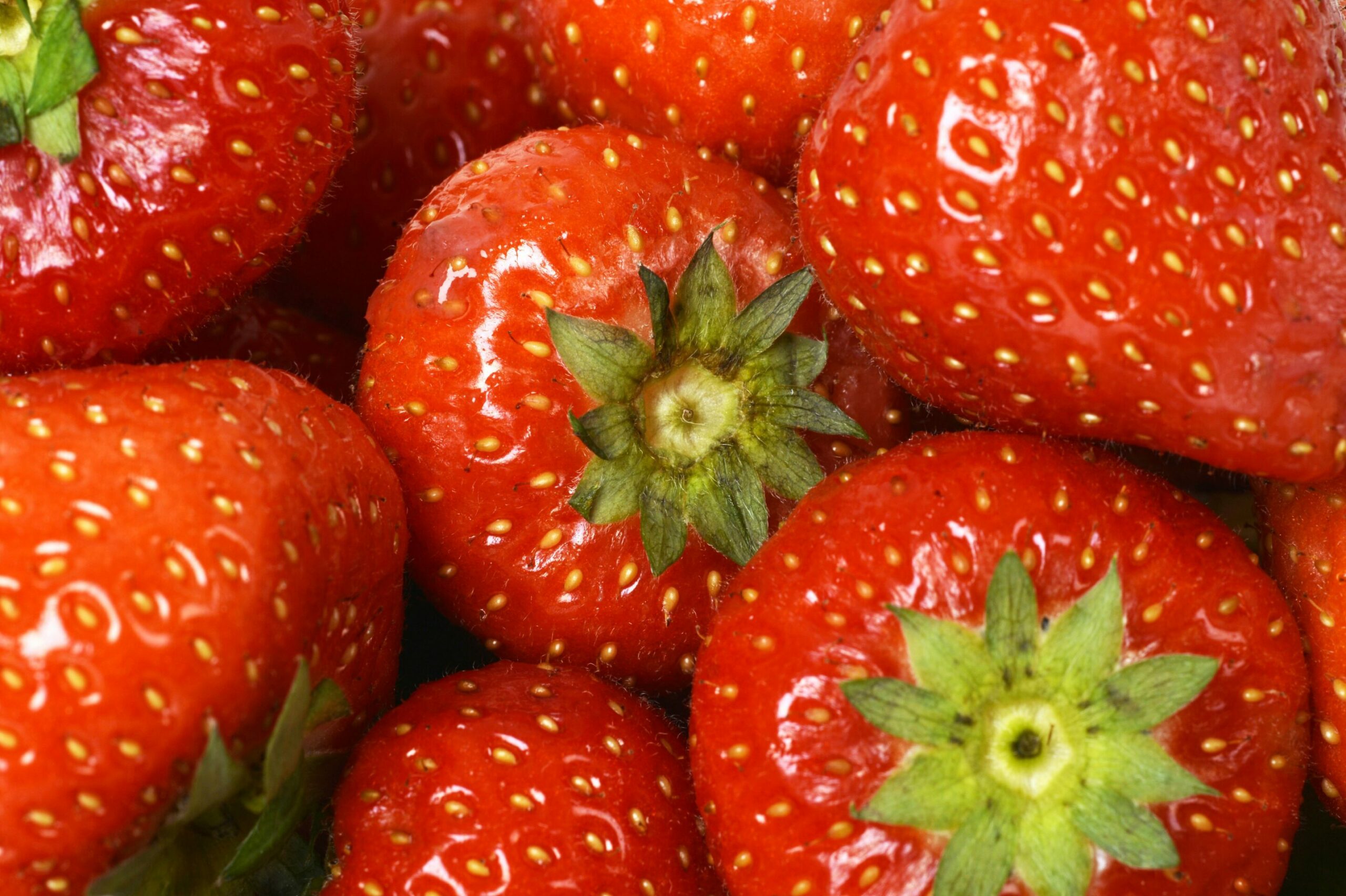
The real fruits are the tiny specks on the outside, each one a miniature package in its own right. Which means that a strawberry is essentially a collection of fruits held together by a very convincing bit of plant architecture. Not unlike Paris' Pompidou: the functional bits on the outside; the rest just holding it all together.
Beyond their taste, their botany and their history, strawberries hold an important role in our health. Nutritionally, they behave exactly like berries. One portion of strawberries, which is roughly about seven strawberries, is packed with vitamin C, folate, antioxidants, all sorts of phytochemicals and polyphenols, and dietary fibres. The health benefits are eye-wateringly joyous.
Research (Guo et al. 2016) shows that eating strawberries and other berries has been associated with a lower risk of Type 2 diabetes; and if you eat them after eating bread, strawberries will improve glucose metabolism (Törrönen et al. 2013). When eaten after exercise, because of their antioxidant and anti-inflammatory properties, they help with a quicker recovery and a reduction in inflammation (Kimble et al. 2021).
But perhaps the best news of all is how strawberries positively impact our brain health: one study found that elderly people who consume greater amounts of berries, including strawberries, delay their cognitive ageing by up to 2.5 years (Devore et al. 2012) – possibly because they help reduce inflammation in the brain.
If this doesn’t make you stockpile your fridge with strawberries, I’m not sure what will. Which leaves one final, delicious question: how should we eat them? Here are a few ways to do them justice:
- Eaten as they are: fresh from the punnet – just go to the park, sit on a bench, bask in the sun (or pretend), let the juice stain your fingers and watch the world go by
- As a snack: paired with Greek yoghurt, chopped nuts, a sprig of mint and a pinch of sea salt flakes
- In a smoothie: blended with other berries, some kefir, and hemp, pumpkin and sunflower seeds for protein
- In a salad: chopped with mixed greens, nuts, fresh mint, crumbled feta cheese and a drizzle of balsamic dressing
- As a salsa: chopped, with red onions, cucumbers, fresh coriander, lime juice, olive oil, salt and pepper, and served as an appetiser with some crackers or crudites
- As a dessert: roasted in the oven (200°C) with balsamic vinegar and black pepper for 20 minutes until jammy, then served warm over vanilla ice cream
Kristina Chetcuti is a registered Health Coach (UKIHCA) specialising in Lifestyle Medicine. Got a lifestyle health question you’ve been turning over in your mind? Send your dilemmas to k.westwood@brusselstimes.com, and we'll tackle them confidentially right here.
