
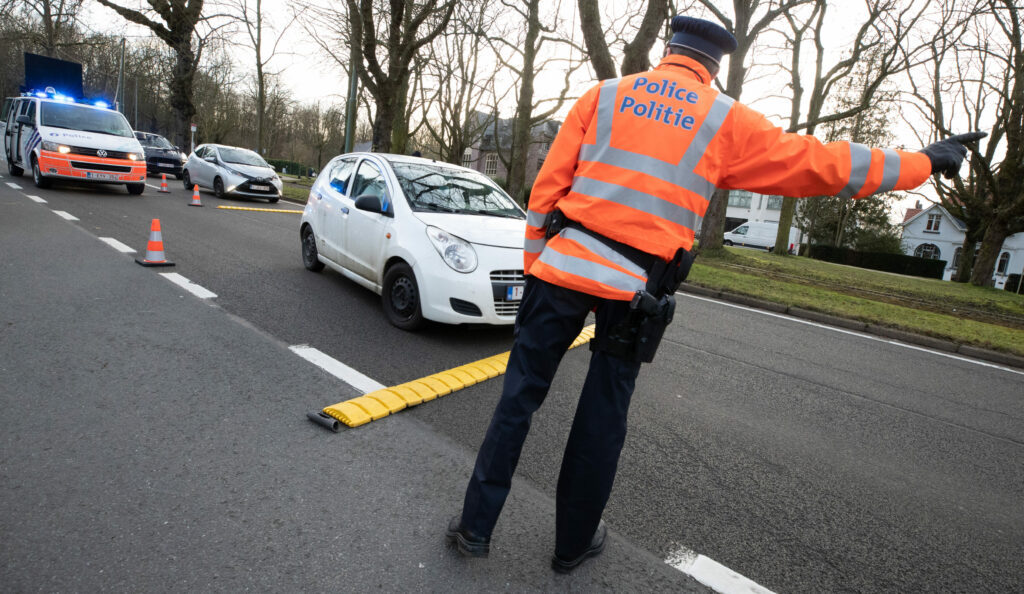
The road safety institute, Vias, has urged authorities to quickly acquire saliva tests capable of detecting ketamine as the Parliament prepares to vote on a legislative amendment making the use of this substance a driving offence.
The proposed change to the Highway Code seeks to add ketamine to the list of drugs prohibited for drivers.
Currently, ketamine is detected in 6% of drug samples analysed in laboratories, and the amendment would establish a clear legal basis to penalise drivers who have consumed it.
Vias emphasises that saliva tests routinely used in Belgium are unable to detect ketamine. At present, only laboratory analysis can confirm its presence.
So far, police officers have largely relied on external signs or the broader concept of intoxication to revoke driving licences of those suspected of using ketamine.
Validated testing devices are, however, available internationally. Acquiring them, according to Vias, would enable police to carry out more effective roadside checks and enforce the new legislation once it is implemented.
Federal Mobility Minister Jean-Luc Crucke (Les Engagés) stated that the NICC and the Federal Public Service for Justice could now move forward by defining the technical specifications for the required saliva tests. This would allow for public procurement processes and ensure these tools can be used on the field.
Ketamine is a medical drug used for pain relief during medical procedures, but its popularity as a recreational drug has surged recently.
Even at moderate doses, its effects significantly impair driving ability, producing external behaviours similar to alcohol-induced intoxication.
