
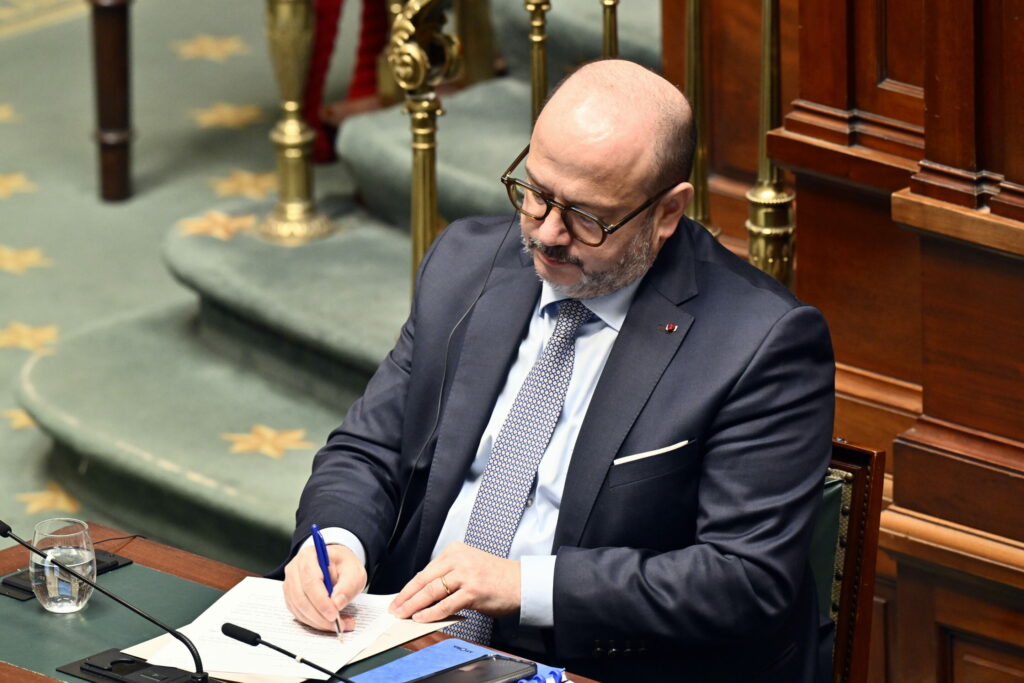
The Parliament has approved legislation formalising the merger of Brussels' six police zones into a centralised, single force, creating what will become the largest police zone in the country.
From 1 January 2028, the Belgian capital will operate under one unified police structure comprising around 6,500 officers.
The law was backed on Wednesday by the governing majority, Ecolo-Groen, and Anders, except for an abstention by Claire Hugon. The Socialist Party, DéFI and Workers' Party of Belgium voted against, while Vlaams Belang abstained.
The reform, introduced by Minister of Interior Bernard Quintin (MR), creates a legal framework allowing voluntary police zone mergers across Belgium, although the merger in Brussels will be mandatory.
"The current security situation demonstrates every day the need for a single police zone across the capital, equipped with unified command, a larger intervention force and a clear strategy," Quintin said.
"The objective is simple: strengthen the efficiency and local presence of law enforcement services throughout Brussels."
The legislation also introduces a minimum staffing standard of one neighbourhood police officer per 2,000 residents. A €65 million budget spread over five years has been allocated to support the merger process.
A so-called "alarm bell" procedure will also apply to merged zones nationwide. This mechanism allows municipalities to request the suspension of decisions relating to the geographical distribution of police stations, zonal security plans, or budgets if they are deemed harmful to the municipality's general interests.
"This merger had been expected for years. We achieved it in barely one year. We are now counting on the responsibility of all stakeholders to make it a success," he added.
Among the strongest opponents of the reform are Brussels' 19 mayors, who remain firmly against the project. Brulocalis has already announced plans to challenge the law before the Constitutional Court.
The debate surrounding the reform has at times been heated, fuelling political tensions between Brussels and Antwerp over drug trafficking and security issues, while also reviving longstanding linguistic and community divisions. Flemish parties have long advocated for a unified Brussels police zone.
