
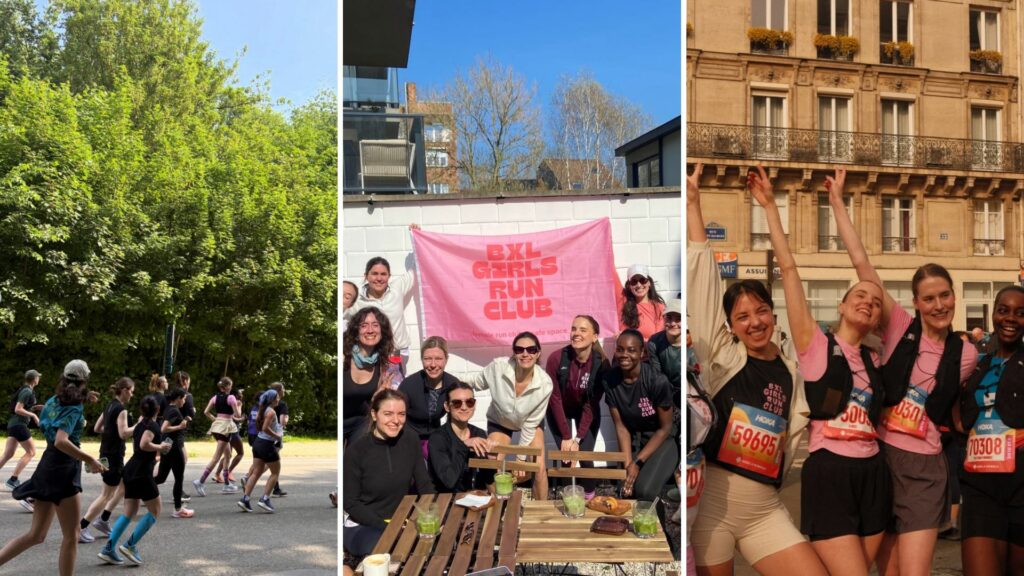
The non-profit organisation Run Her Way and the BXL Girls Run Club (BGRC) have jointly launched a survey to encourage female runners in Brussels to voice their experiences and map out safe running routes.
In a bid to combat insecurity in Brussels, global non-profit Run Her Way and Brussels' female-only run club BGRC are teaming up to make public spaces safer for women, Bruzz reports. A survey has recently been launched, and the pair are aiming to create a selection of running routes for women in the Belgian capital from the results in a few months' time.
US national Kate Tellier, who founded Run Her Way in 2024, lived in Brussels for five years. Although she describes Brussels as a "great city for running", she also says she had one of her worst running experiences in the city. "Near Bois de la Cambre, someone chased me all the way to the front door of my flat in Ixelles," Tellier told Bruzz.
Spanish lawyer Sybila Galera Hauer has also been harassed while running. "You get catcalled, and people stare at you a lot, especially if you're wearing shorts," she said, adding that she often wears a hoodie and a hood and never runs with earphones, so she can stay alert at all times. Sometimes she has felt unable to run in Duden Park in the mornings because it isn't well-lit.
Galera Hauer established BGRC in 2024 to create "a safe space for women who just wanted to run". She felt many other running clubs in the capital had become a sort of "dating app" and a place for men to come and flirt. "Even in a group, we sometimes get shouted at, but it feels less scary then, because you're not alone," she told Bruzz.
'Harassment must never be normalised'
Around 5-6% of women stop running in public spaces after a negative experience, according to data from Run Her Way, and opt for a treadmill instead. Moreover, of the 65% of women who say they have experienced aggression, fewer than 2% actually report it as they do not consider it "serious enough".
"Harassment must never be normalised. Women who say they feel very safe later list all sorts of ways in which they adapt their behaviour to prevent potential harassment," Tellier said.
Tellier and Galera Hauer have now teamed up to launch a survey, available in English, French and Dutch, to investigate how safe women feel when running in Brussels and enable them to voice their experiences.
"Whether you run regularly, occasionally, or haven't started yet, your input will help build a clearer picture of what supports a positive running experience and what could be improved across the city," the survey reads.
Runners can mark out their favourite running routes, indicate places they avoid, and state whether they have ever taken precautions out of fear of harassment, such as wearing covering clothing, carrying self-defence tools, or crossing the road because of a man.
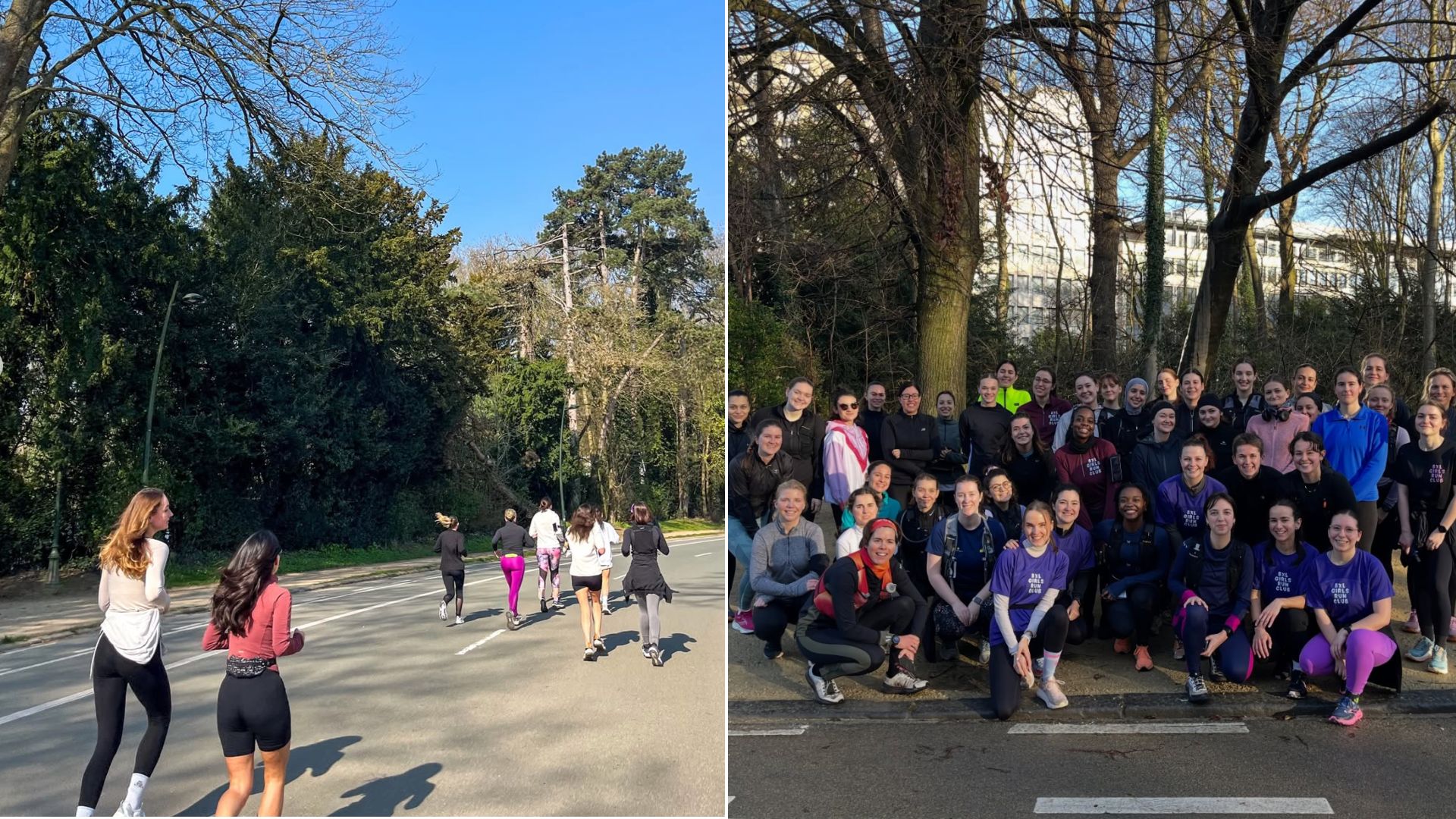
Credit: BXL Girls Run Club
Once the results are in, the pair plan to share the list of safe running routes with women in Brussels. "On Strava, you can often see how long a running route is and what the elevation gain is. However, it doesn't say how the route is experienced by women," Tellier said. "You don’t know if there's lighting in the dark or how isolated the area is."
They will also send the data to local authorities and call for concrete changes to make public spaces safer, such as better lighting or training bystanders to intervene if necessary, according to Tellier. The project is already underway in the Dutch cities of Utrecht, Amsterdam and The Hague and is now being expanded to London and Brussels.
"We haven't been around for very long, but we're already seeing an impact, as awareness of the issue is growing. That's just the start, of course, but I sense a lot of openness from both female runners and cities to get to work with the research findings," concludes Tellier.
Tackling insecurity
The issue of women's safety in Brussels is nothing new and is not limited to running. One reader of The Brussels Times even described the Belgian capital as "the most unsafe city" she has ever lived in after multiple instances of harassment.
Non-profit Plan International has found that 91% of girls and young women in Belgium have experienced sexual harassment. Only 6% of girls feel able to report it to the police. Furthermore, according to an iVOX survey in 2023, 95% of women "sometimes" feel unsafe on the streets, while one in six "rarely" or "never" feel safe.
"The impact of harassment or sexual violence on victims is very serious, both mentally and physically. Victims may change their routes, avoid certain places, change their phone numbers or email, or delete social media accounts," Véronique De Baets of the Institute for the Equality of Women and Men told The Brussels Times.
"Harassment affects women's rights to move freely, enjoy leisure, participate in politics, and have equal access to the city."
