
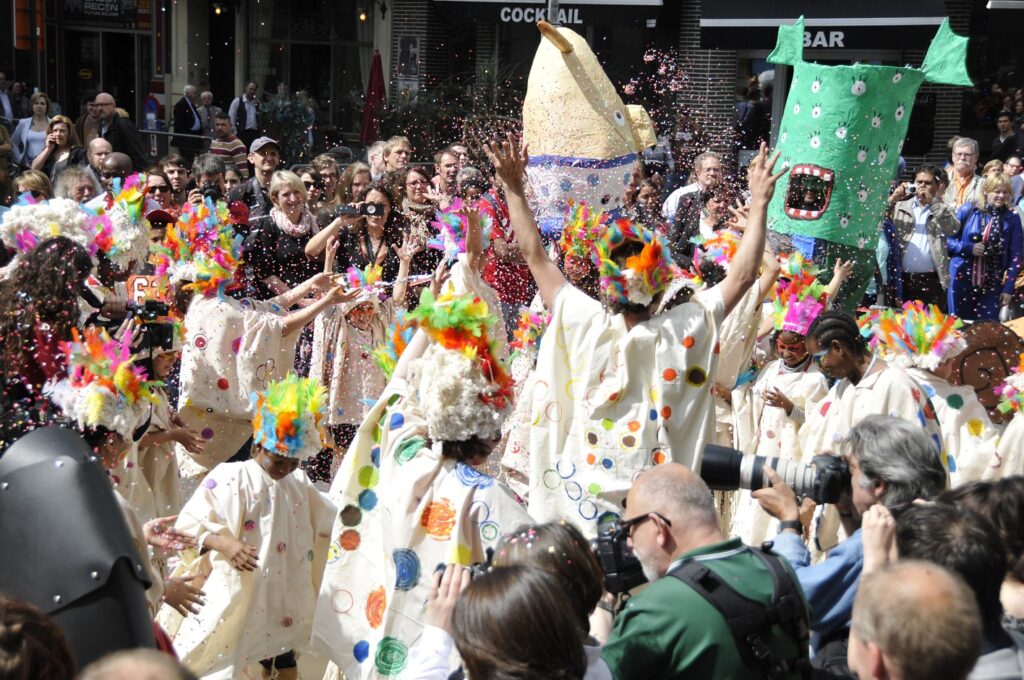
The Zinneke Parade is returning to Brussels this weekend, promising a festive and colourful cultural celebration. But how did it first come about, and what exactly is it?
The popular parade is a joyful and colourful carnival and celebration of community spirit, which brings Brussels' streets alive every two years.
The tradition first started in 2000, when Brussels became the European Capital of Culture. It was designed to connect the many different cultures, communities and districts within Brussels.
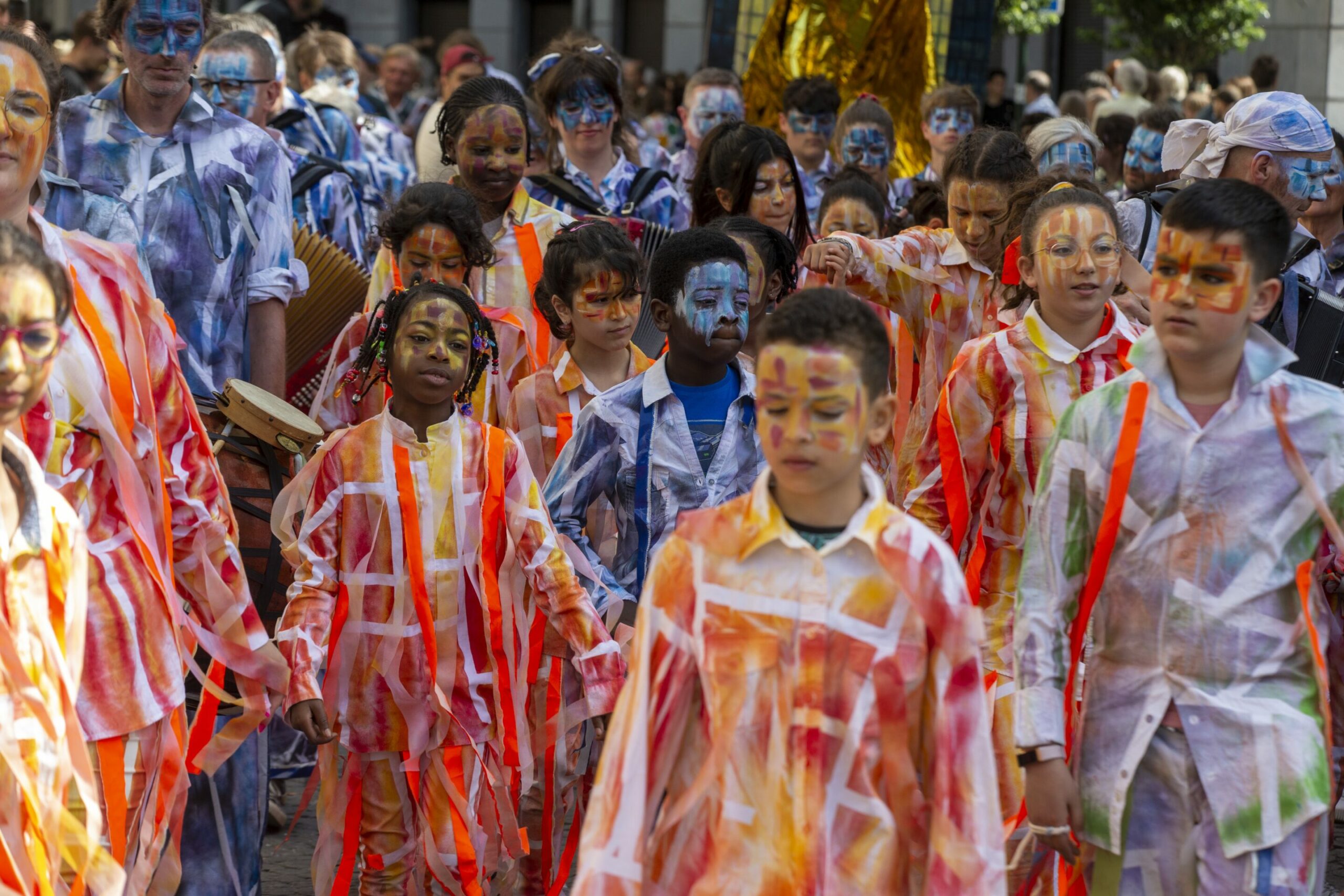
The two-yearly parade was created to connect the many different cultures, communities and districts within Brussels. Credit: Belga / Nicolas Maeterlinck
The city's residents and artists joined forces to highlight the cultural richness of the different neighbourhoods and break down social and cultural barriers across the region.
Many residents still remember the parade in 2000 to this day, as it brought together French and Dutch speakers and international residents and bridged communities.
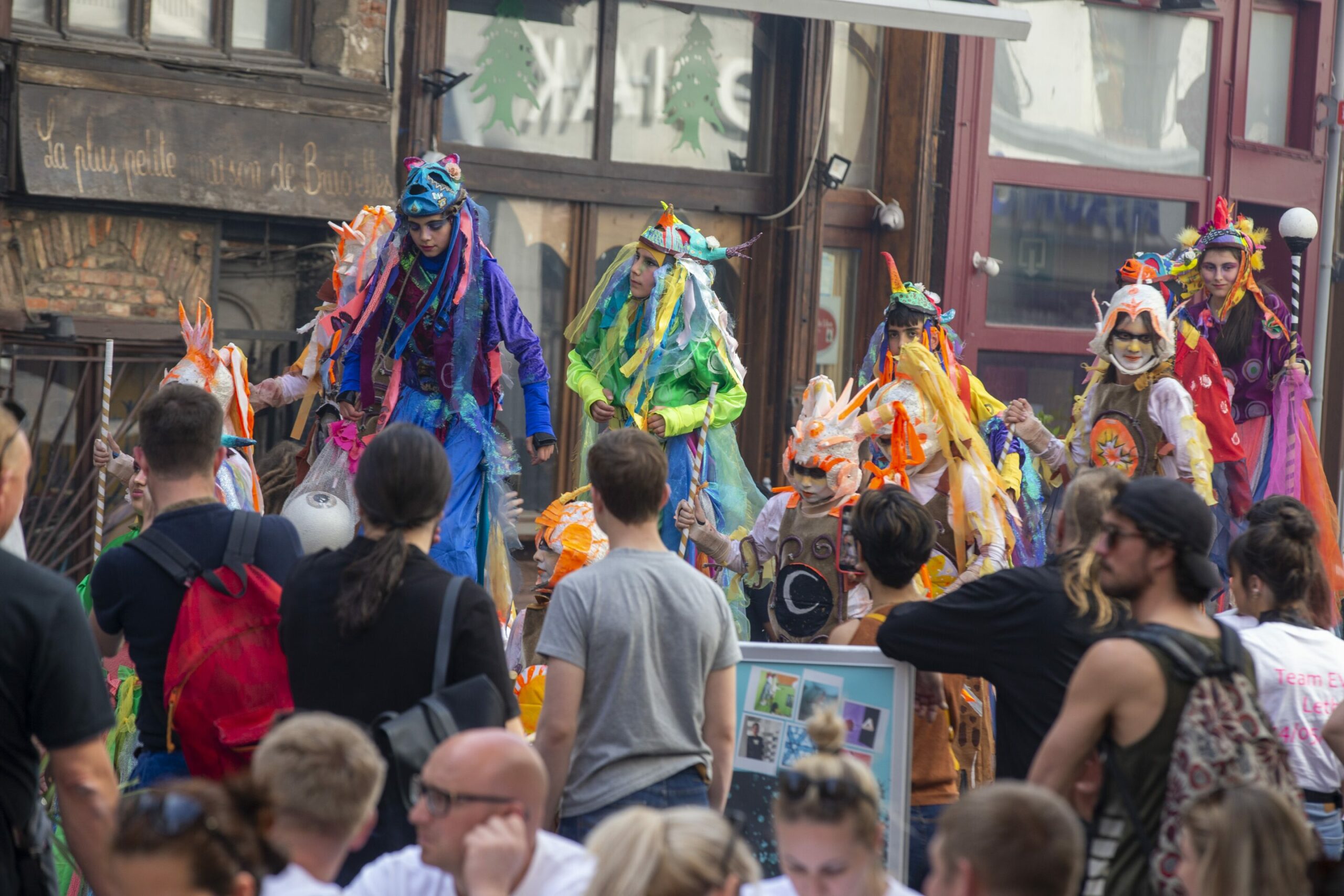
The 12th Zinneke Parade, 14 May 2022. Credit: Belga / Nicolas Maeterlinck
Every two years since then, the parade has taken to the streets under a different theme: 'Zinnergie' (2002), 'The body in the city' (2004), 'The future' (2006), 'Water' (2008), 'To the table' (2010), 'Disorder' (2012), 'Temptation' (2014), 'Fragile' (2016), 'Illegal' (2018), 'To the wolves!' (2020), 'Trompe l'oeil' (2022), 'PlaiZir' (2024).
What to expect this year
For the event's 14th edition this year, the theme will be 'Dreams', inviting participants to let their imaginations run wild and escape everyday life.
"Dreaming is not an escape, but a combative necessity in confusing times. On 30 May, the Zinnodes will transform Brussels into a laboratory of collective dreams, to reaffirm that the city is a place that belongs to us all, sustained by connection and shared dreams," organisers stated.
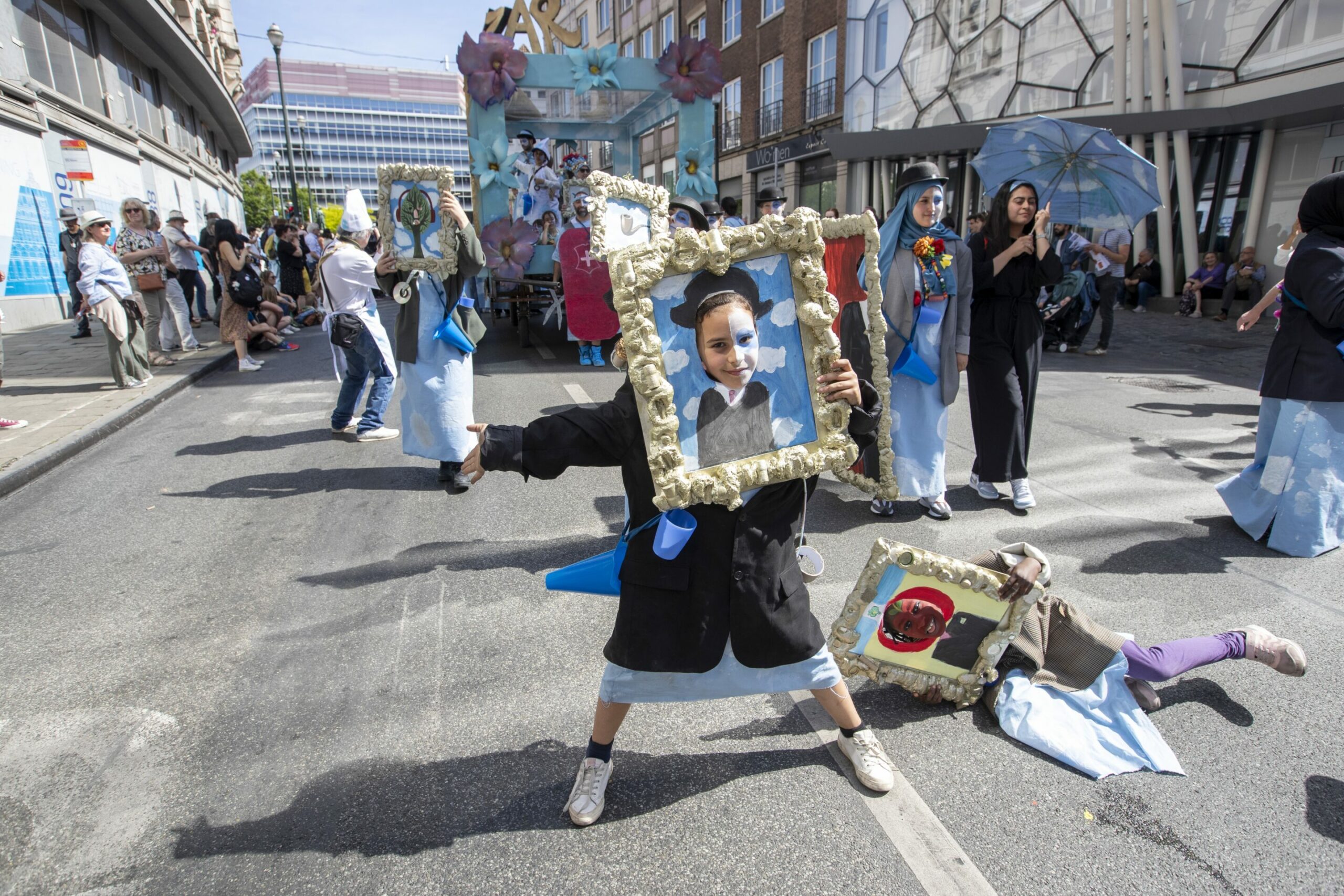
Credit: Belga / Nicolas Maeterlinck
They added that, for some time, the 2026 edition was up in the air. Due to the Brussels Government formation gridlock, "it remained unclear for a long time whether the Zinneke Parade 2026 would receive the necessary support".
However, a resolution to support Zinneke was approved by a large majority at the end of December 2025, and the importance of Zinneke for Brussels was once again underlined in the Brussels coalition agreement, which described it as "an integral part of Brussels' heritage" – though the parade will take a "slightly scaled-down form" this year, Zinneke General Coordinator Leen De Spiegelaere said.
Credit: Belga / Nicolas Maeterlinck
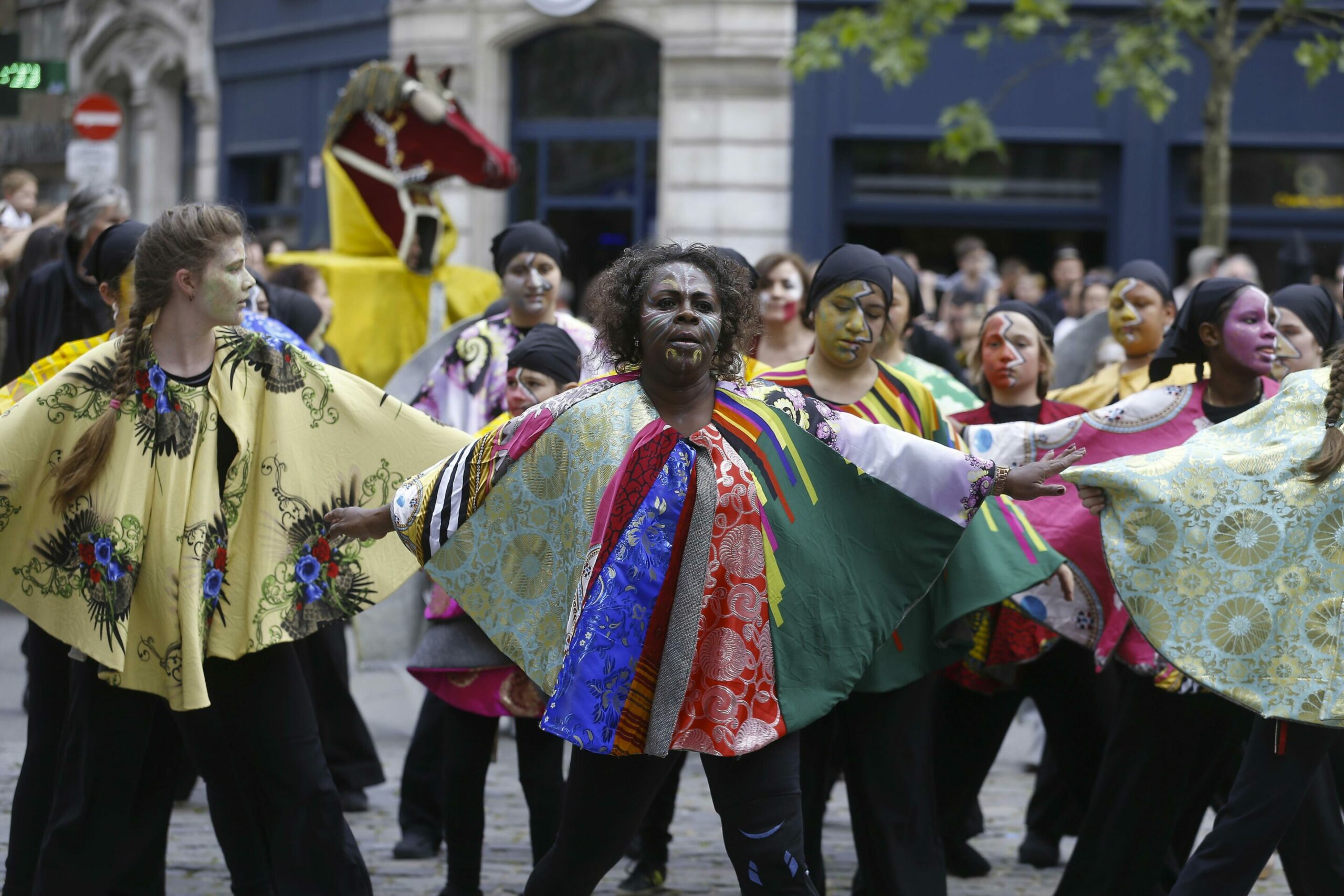
As every year, thousands of visitors are expected to gather in the city centre to witness the colourful and vibrant spectacle, which requires two years of preparation, collaboration with around 200 partner associations and more than 300 volunteers on the ground on the day, 15 floats, and hundreds of handmade outfits – promising a true feast for the eyes.
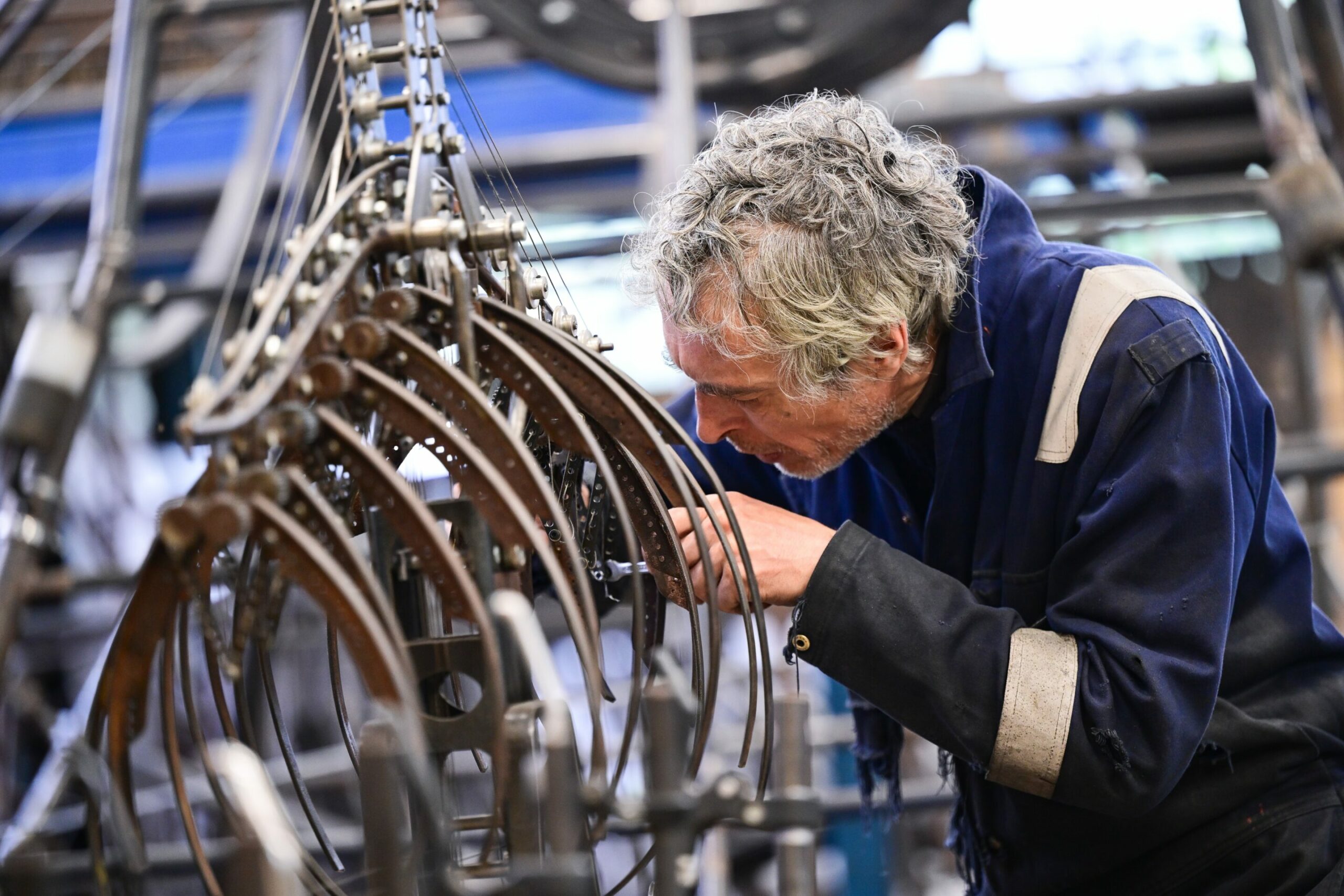
A worker pictured in action at a royal visit to the Zinneke non-profit organisation in Brussels, Thursday 16 May 2024. The non-profit brings together residents from different districts of the capital to carry out creative projects that stimulate social cohesion, such as the Zinneke Parade. Credit: Belga / Laurie Dieffembacq
The procession of 14 'Zinnodes' will set off at 15:00 and "make Brussels' cobblestones rumble". The troupe will follow a new 1.5-kilometre loop, and work their way around the centre through the Grand Place and Saint Géry and end up at Bourse at 17:00.
"The broad recognition in the coalition agreement is a boost to continue building a future of solidarity for everyone," De Spiegelaere concluded.
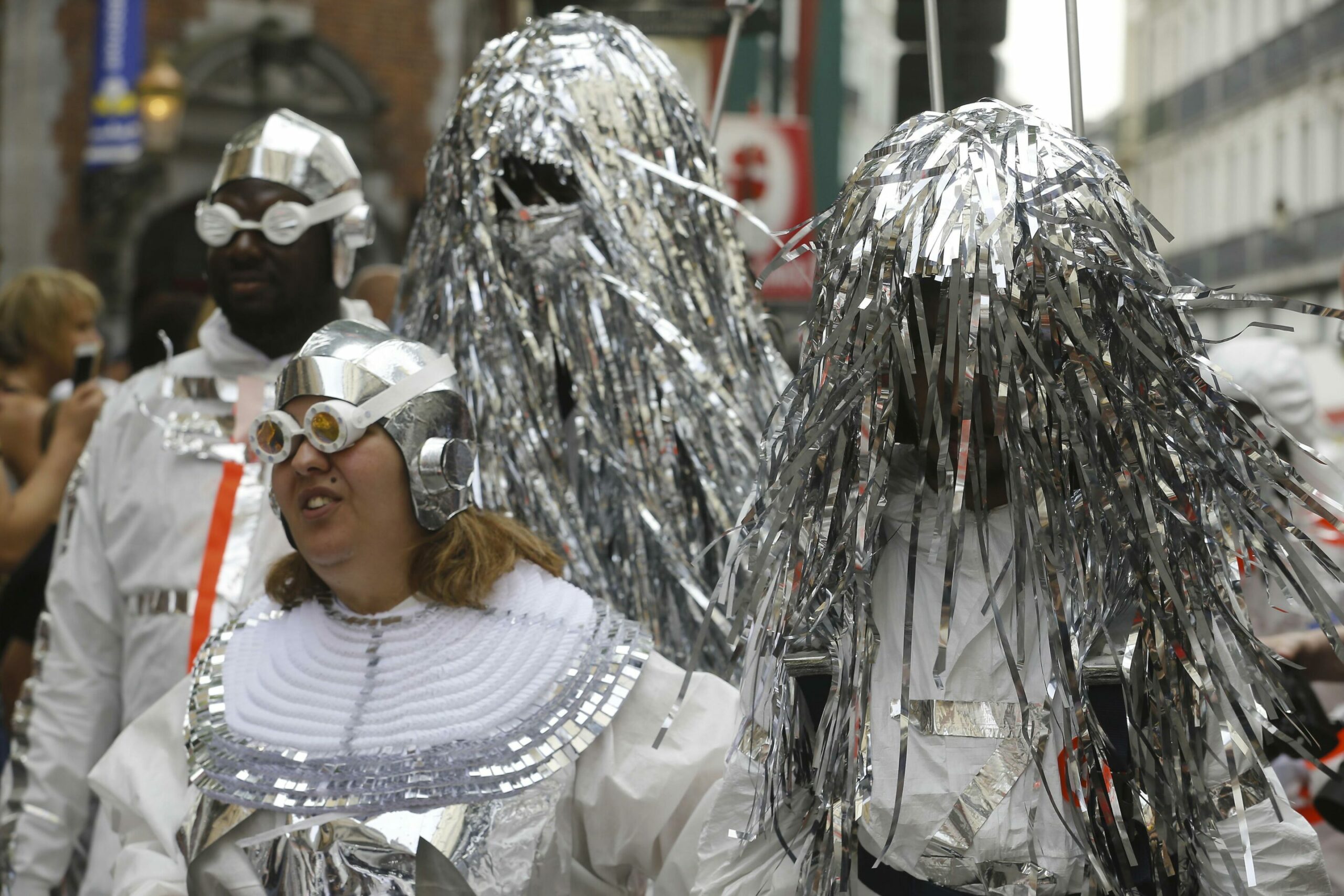
The 2018 parade. Credit: Belga / Nicolas Maeterlinck
