
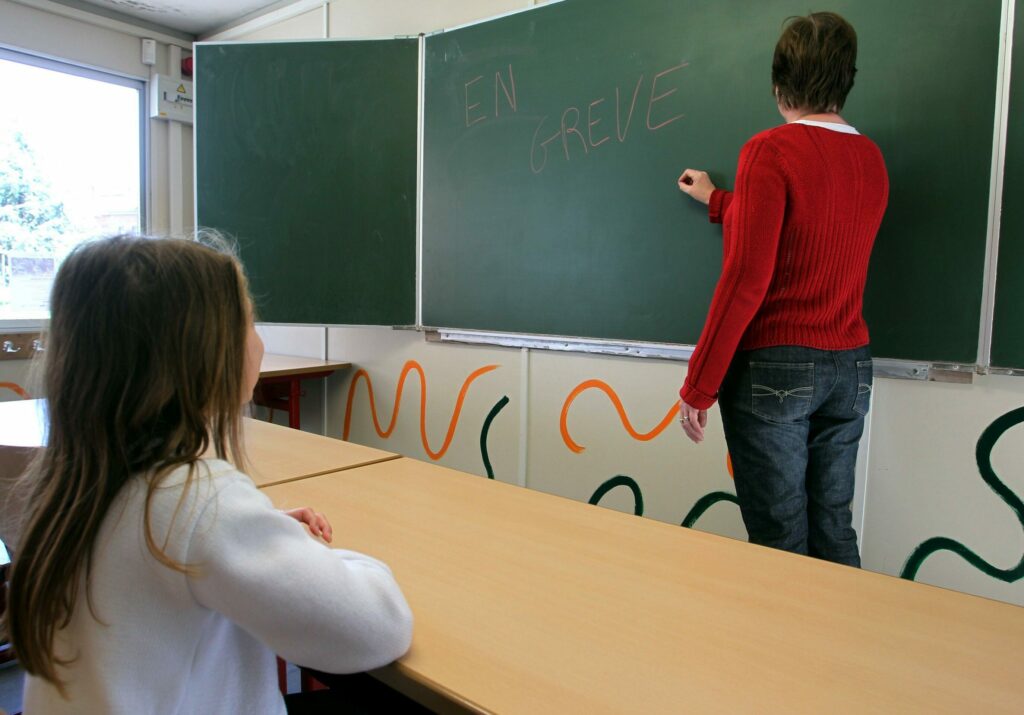
The 10-day strike action launched by the CSC-Enseignement teachers' union officially ended on 27 May, but the dispute between French-speaking teachers and Education Minister Valérie Glatigny (MR) is far from resolved.
Trade unions are maintaining pressure over several reforms introduced by the Francophone Community Government (also referred to as the Wallonia-Brussels Federation) and thet have not ruled out further strike action in the coming weeks.
Since 18 May, numerous schools across the French-speaking community in Wallonia and Brussels have been affected by strikes, picket lines and symbolic actions organised by CSC-Enseignement. The movement was initially aimed at influencing the vote on the programme decree implementing a series of budget-saving measures adopted by the MR–Les Engagés coalition government.
According to the unions, several of these measures directly threaten teachers' working conditions and the functioning of schools.
Among the most controversial proposals are an increase in the teaching load for some upper-secondary teachers, reforms to teachers' employment status, changes to sick leave arrangements, modifications to end-of-career schemes and a number of spending cuts affecting the education sector.
Strike notice extended until 10 July
Although the 10-day strike period ended last week, the social conflict is far from over. According to several CSC-Enseignement representatives, the strike notice has been extended until 10 July. The unions are now focusing their efforts on the vote of the programme decree scheduled for 10 June in the Parliament of the French Community. They argue that the concessions obtained so far remain insufficient.
Facing growing opposition, Valérie Glatigny has stood firm. In an interview with BX1, the Education Minister acknowledged teachers' concerns but argued that the French Community's financial situation makes reforms unavoidable.
She said that several rounds of consultations had already taken place with trade unions and stressed that some measures had been adjusted following negotiations. Among the changes cited by the minister was a modification to the planned increase in teaching hours for upper-secondary teachers, aimed at preventing job losses among temporary staff. Valérie Glatigny maintains that "doing nothing is no longer an option" given the budgetary difficulties facing the French Community.
Concerns grow ahead of end-of-year exams
The dispute comes less than a month before end-of-year examinations in French-speaking schools. According to Sudinfo, uncertainty surrounding the strike has fuelled concerns about the organisation of June exams after unions extended their strike notice until 10 July.
The newspaper reported that some lessons have already been cancelled, teachers have set up picket lines outside schools and some students have stayed at home.
School leaders interviewed by Sudinfo sought to reassure families, saying that mandatory examinations such as the CE1D (at the end of the second year of secondary school) and CESS (at the end of secondary school) should still take place. However, they acknowledged that a prolonged strike could result in some parts of the curriculum not being fully covered before the exams.
