
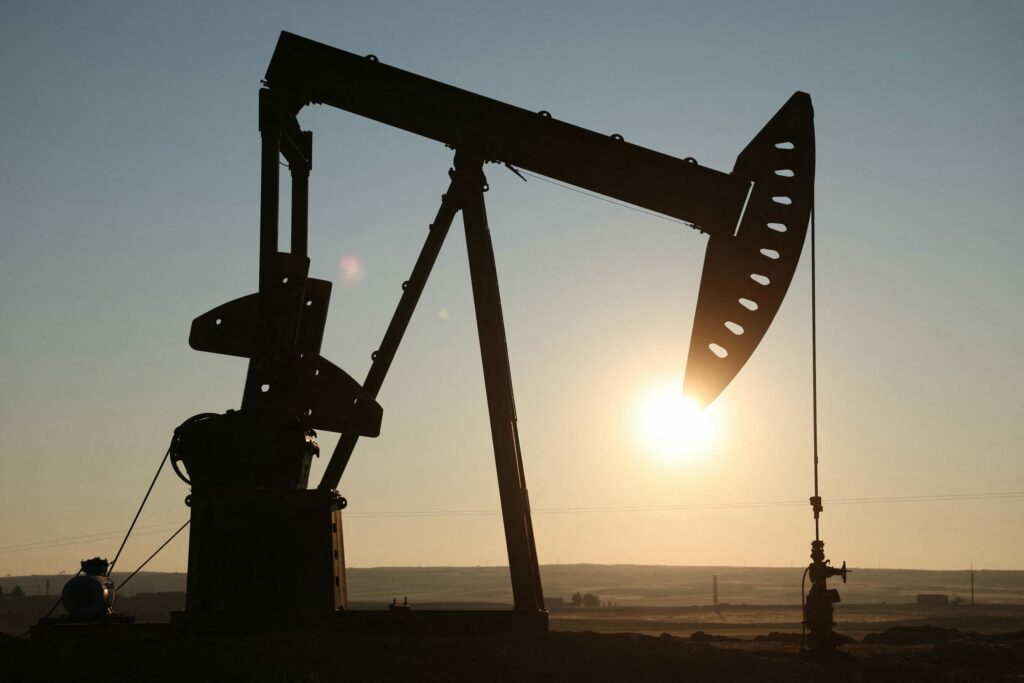
The Belgian Government has approved the establishment of an 'oil emergency plan' to better secure its supply in light of a potential future crisis.
Belgium's Federal Energy Minister Matthieu Bihet (MR) proposed the new plan in a bid to better safeguard the country’s supply of crude oil and petroleum products, which was approved by the Council of Ministers on Friday.
"Recent geopolitical crises have demonstrated the importance of anticipating and preparing our country for all possible scenarios," said Bihet. "With this contingency plan, we are strengthening Belgium’s energy resilience and our ability to protect households, businesses and essential services in the event of disruptions."
The project aims to implement an old EU directive from 2009, which requires Member States to maintain a minimum level of stocks of crude oil or petroleum products.
In particular, EU Member States are required to have an emergency plan that can be implemented in the event of a major supply disruption, like the ongoing blockage in the Strait of Hormuz.
It also sets out the organisational measures to be taken to ensure the implementation of such a plan.
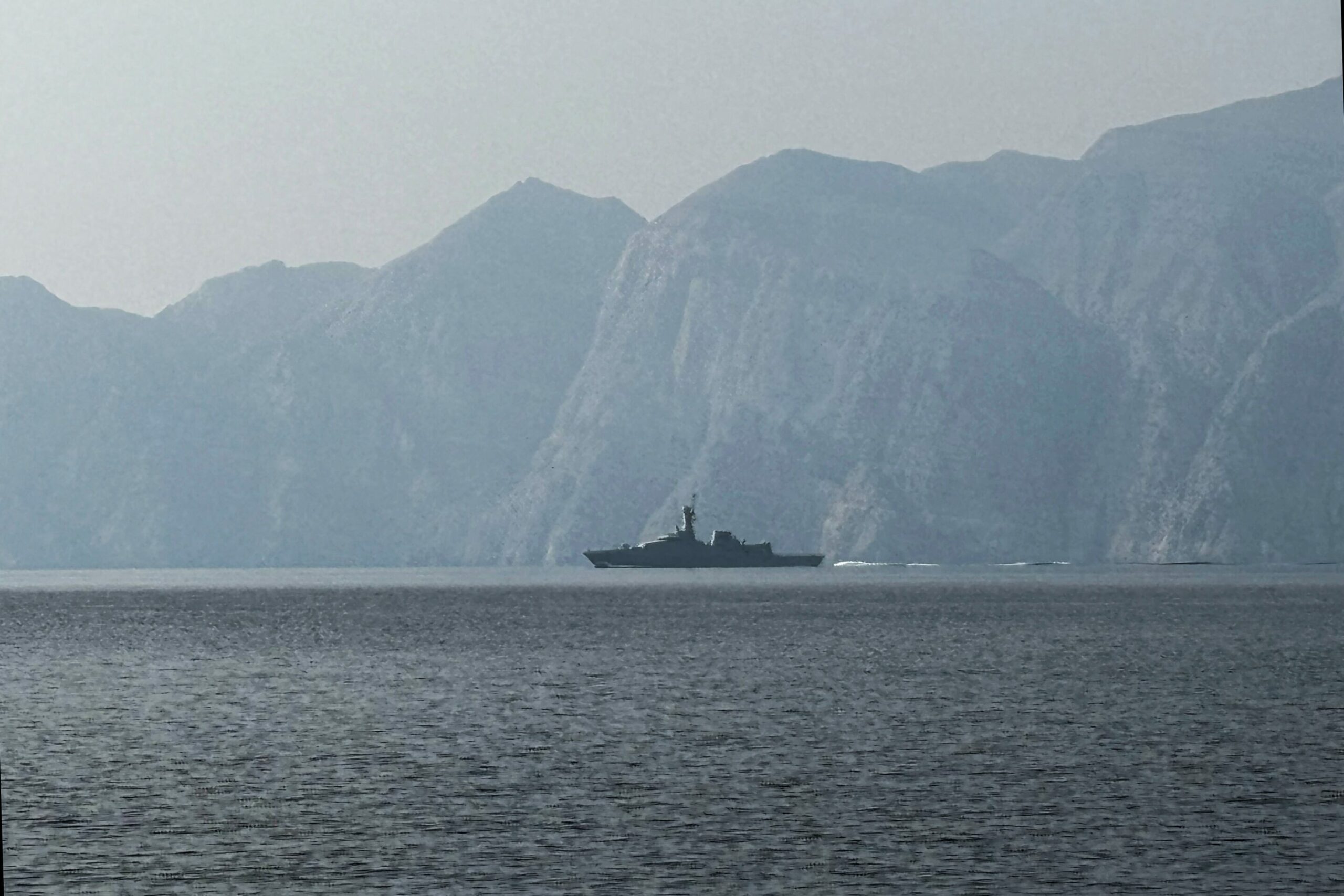
A navy vessel is seen in the Strait of Hormuz, a vital waterway through which much of the world's oil and gas passes on March 1, 2026. Credit: Belga / ADP
On Monday, oil prices shot up after Iran announced it was suspending talks with the United States and vowed to "completely" block the Strait of Hormuz after US ally Israel intensified its attacks on southern Lebanon and Gaza, in violation of the delicate ceasefire agreement.
The vital trade passageway remains at a standstill after over three months, cutting off 20% of the world’s oil supply from global markets, along with the liquid natural gas and fertiliser needed for a functioning global economy.
However, US President Donald Trump stated on Tuesday that Hezbollah and Israel have agreed to mutual de-escalation, even if both parties reported violations of the agreement shortly afterwards.
Oil companies to report more
On the Belgian side, there is an understanding that the disruptions will likely go on as the US and Israeli administrations continue their erratic engagement in negotiations and Iran appears unwilling to give in to pressure.
While the strategic reserves already exist today, the purpose of the plan is to establish a clearer operational and crisis-management framework in the event of a major supply disruption.
In addition, the oil and petroleum sector will report its commercial stocks no longer once, but three times per week (Monday, Wednesday, and Friday), following Bihet's decree passed on 11 May.
This will give Belgium a better idea of the strategic reserves these oil companies have in light of any shock to supply.
Credit: Belga / Eric Lalmand
Oil prices (Brent) remain at around $100 a barrel, 40% higher than before the war. European aviation is having to cancel flights due to the uncertain supply of kerosene, while inflation is also rising again.
Together, Belgium and the Netherlands form one of the main entry gateways for oil supply into Europe. Belgium also has refining capacity, including kerosene production capacity.
96 days of reserves
Yet for now, the Federal Government wants to assure its citizens: Belgium currently has strategic petroleum stocks covering approximately 96 days, which is above the European requirement of 90 days.
In March, the International Energy Agency (IEA) agreed to release 400 million barrels of oil from its emergency reserves available to the market to address disruptions in oil markets stemming from the war in the Middle East.
This was a record, and only the fifth time in the organisation's history that such a measure has been taken. The previous release came after the Russian invasion of Ukraine, when more than 182 million barrels were made available.
At the time, Belgium decided not to tap into reserves, which stood at 92 days coverage. "These reserves are not an instrument for regulating prices, but a mechanism for guaranteeing security of supply when it is threatened. That is not currently the case," Bihet said.
So far, among EU Member States, only Germany, the Netherlands, France, Austria, Spain and France have tapped into their reserves.
"Our responsibility is to ensure that Belgium remains prepared, resilient and capable of protecting its citizens in all circumstances. Energy security is not an option; it is a core duty of the state," concluded Bihet.
