
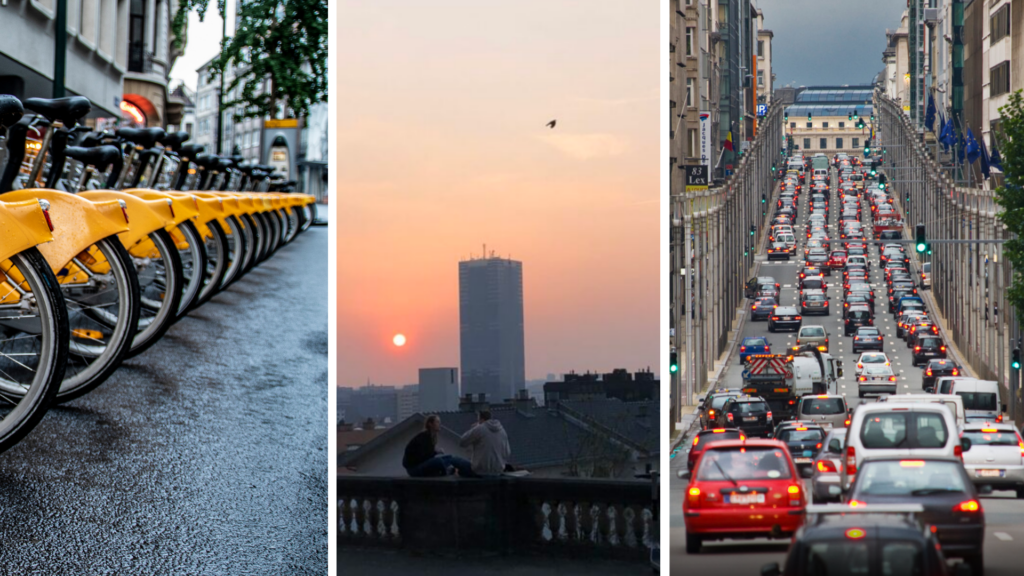
The modern world is full of invisible threats: whether airborne viruses or fine particulate matter, it can sometimes seem as if trying to escape these existential threats is wasted effort. City pollution is alarmingly high and yet many simply see this as part and parcel of urban living.
Yet whilst town centres are by their very design linked to higher levels of pollution than less built-up areas, low air quality should certainly not be something that is taken for granted. As a primary driver of numerous respiratory deficiencies and premature death, the cost to health of living in cities must take precedence over the cost of transforming them.
Some doctors have been advising Brussels residents to move to less densely populated environments, such is the danger of prolonged periods within the city. And though numerous initiatives are attempting to promote alternative means of transport to combustion vehicles, Belgians have an attachment to their toxic chariots that is hard to shake.
As an avowed pedal pusher with no need to ditch my trusty bike for any additional horsepower, I can relate to the concerns of city dwellers who must steer between myriad idling engines and their poisonous emissions. Not only are we at greater risk of immediate harm when on the roads (as I have also learnt), but we must also be subjected to the fumes of those who still travel on four wheels.
Of course, it would be unfair to place the blame entirely on drivers and many road users have plausible reasons for needing a car. Yet the frustration of one exasperated cyclist is palpable: "I am the one reducing air pollution, but I am also the one most affected by it, not those inside the car."
How do you get around town? Let @Orlando_tbt know.
Belgium in Brief is a free daily roundup of the top stories to get you through your lunch break conversations. To receive it straight to your inbox every day, sign up below:
1. 82 years ago, Belgians were refugees too
In May 1940, Nazi Germany launched its blitzkrieg of Belgium and Luxembourg, going around the French Maginot fortifications, and ultimately capitulating Belgium in just four weeks. Read more.
2. Brussels residents told to leave city due to high levels of pollution

People living in Brussels have shared their concerns regarding air pollution in the region, with doctors telling residents to leave the city due to poor air quality, and cyclists increasingly worried about their exposure to pollution. Read more.
3. Dry and mild spring weather for Easter weekend
Brussels will enjoy an Easter weekend of mild spring weather with extended periods of sun, dry conditions and higher temperatures during the day. Read more.
4. 144th Herve Cavalcade celebrations to arrive 15-18 April
The small city of Herve, near Liège in Wallonia, is set to host its 144th annual Easter parade, which will take over the city’s streets with colourful processions and floats. This is the first cavalcade since 2020 due to the Covid-19 pandemic. Read more.
5. Job market discrimination: Mothers continue to face prejudice
Women who have to focus less on their professional careers to raise a family face prejudice later in life, according to a UGent study on gender discrimination in the labour market. Read more.
6. EU investment for Belgium ‘no free lunch’, warns High Council of Finance
The Belgian High Council of Finance (HCF) has warned the Belgian government not to rely on the European Commission’s Recovery and Resilience Facility fund, which promises Belgium €5.9 billion in loans and subsidies. Read more.
7. Hidden Belgium: Leuven’s Art Deco architecture
Belgium knows all about the destruction that war brings. Several of its cities were reduced to rubble during European wars, including the mediaeval university city of Leuven. Read more.
