
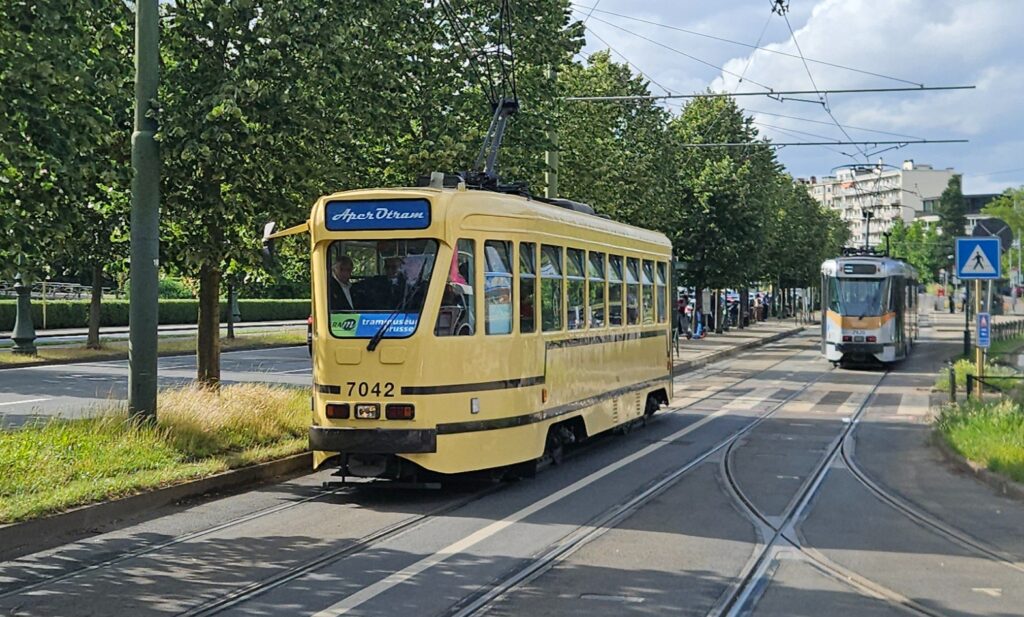
Brussels Tram Museum is offering an out-of-the-ordinary afterwork experience with a new tram ride that combines two of the city's best-loved features: terrace culture and the historic tram network.
Passengers on the 'AperOtram' are promised a two-hour evening journey through Brussels, accompanied by champagne and snacks.
Operating every other Thursday evening from the Tram Museum in Woluwe-Saint-Pierre, the concept allows up to 28 passengers to board a restored tram dating back to the post-war years.
For Renaud de Saint Moulin, director of the Brussels Tram Museum, however, the project is not only about drinks on rails.
"It's the marriage of two concepts that are well known to Brussels residents," he told The Brussels Times. "The terrace, where people enjoy the arrival of spring and summer after work, and the historic tram rides that many Brussels families remember from their childhood."
The idea is to reconnect people with nostalgic family outings and offer a more "adult" experience, centred around socialising.
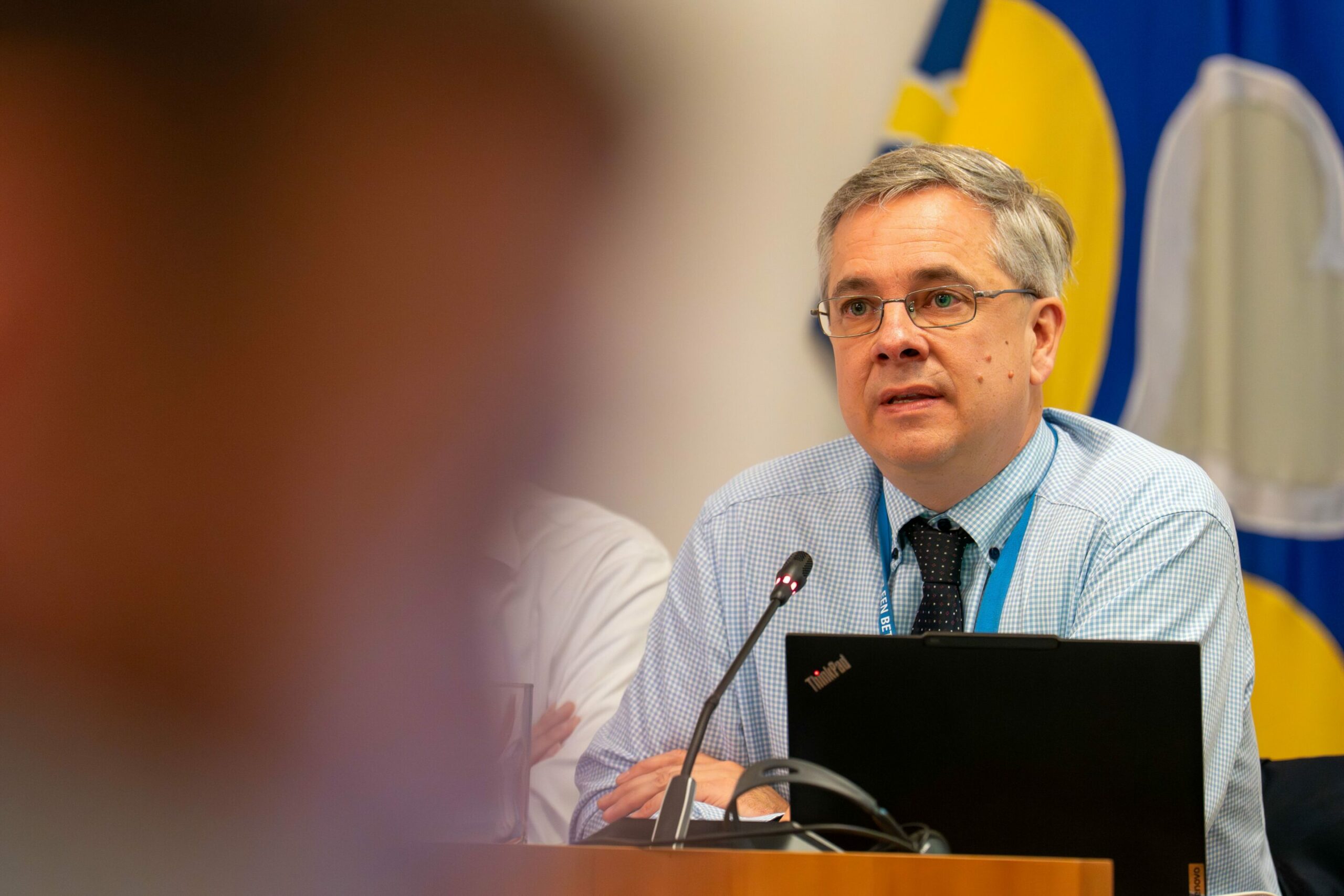
Renaud de Saint Moulin, STIB-MIVB's chairman and director of the Brussels Tram Museum, pictured during a hearing of a special commission on the Metro 3 project at the Brussels Parliament, Brussels, 13 November 2025. Credit: Belga / Marius Burgelman.
A second life for PCC 7042
At the heart of the project is tram PCC 7042. Built in 1952, it has already lived several lives before, serving as a normal passenger vehicle on Brussels' tram network. Years later, after "retirement", it found its way into the museum's collection, in bad shape.
De Saint Moulin, who is also vice-chair of transport operator STIB/MIVB, told The Brussels Times that PCC 7042 suffered major electricity failure, requiring the complete dismantling of its interior. "What initially appeared to be a wiring problem turned into something much bigger," he explained.
As teams stripped the tram down, they discovered extensive corrosion throughout parts of the structure. Damage was severe enough that restoration teams were forced to undertake major repairs to the chassis before rebuilding the interior.
Rather than recreating the vehicle exactly as it would have appeared in the 1950s, the museum decided to give it a facelift. The interior was reconstructed from scratch, but it retained visual elements familiar to generations of Brussels commuters.
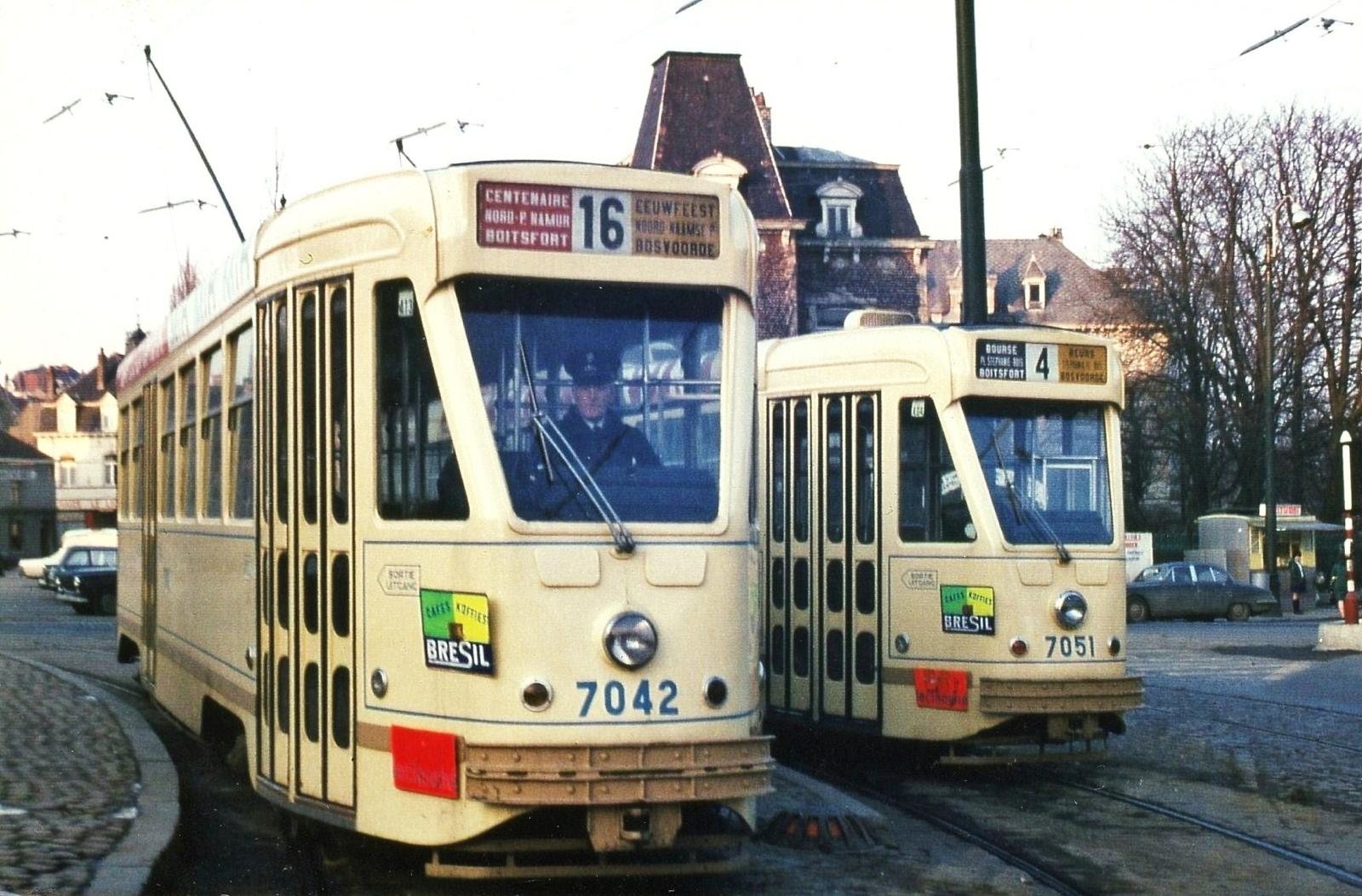
Historic photograph showing PCC tram 7042 entering service after its construction in 1952. Unlike another restored vehicle from the same series that retains its original 1950s appearance, the 7042 was deliberately restored and repainted in a different livery. Credit: René Stevens / Collection Michel Reps.
Historic-style upholstery was installed, inspired by the emblematic blue fabric that many Brussels residents remember from daily journeys on lines such as the 81 and 92. A bar area was added, along with modern lighting and audiovisual equipment, to create a more intimate atmosphere.
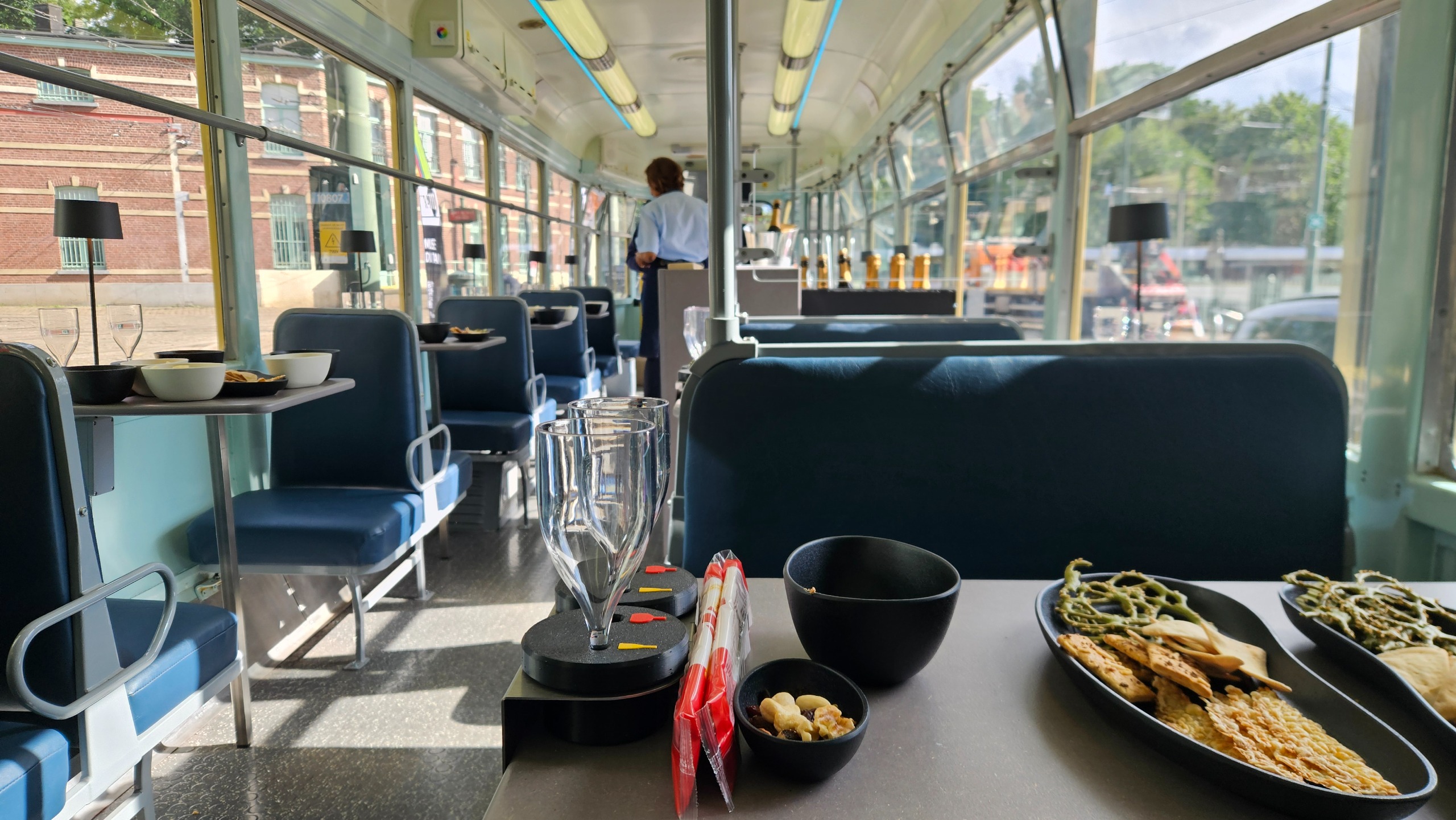
AperOtram's interior Credit: Brussels Tram Museum
The itinerary
The route itself was designed to showcase parts of Brussels that are often overlooked. After departing the museum, PCC 7042 heads towards Montgomery, then travels through Etterbeek and Ixelles.
Passengers pass Place Flagey and the Ixelles ponds before continuing near the Free University of Brussels (ULB) and through Watermael-Boitsfort. The route then follows the tree-lined Boulevard du Souverain before returning to Woluwe-Saint-Pierre.
"We deliberately chose an itinerary that highlights beautiful avenues and remarkable locations," De Saint Moulin said. "It's a way of discovering Brussels through a slightly different lens."
For internationals
Many internationals spend years living in Brussels, and they often remain confined to a handful of familiar neighbourhoods. De Saint Moulin thinks that AperOtram could offer a different way for them to explore the capital.
"It's a great idea for people who have lived in Brussels for a few years and are looking for an original activity with friends, colleagues or people they've met through work," De Saint Moulin said.
The museum has also ensured that English-speaking visitors can fully participate, with staff available to assist them in English.
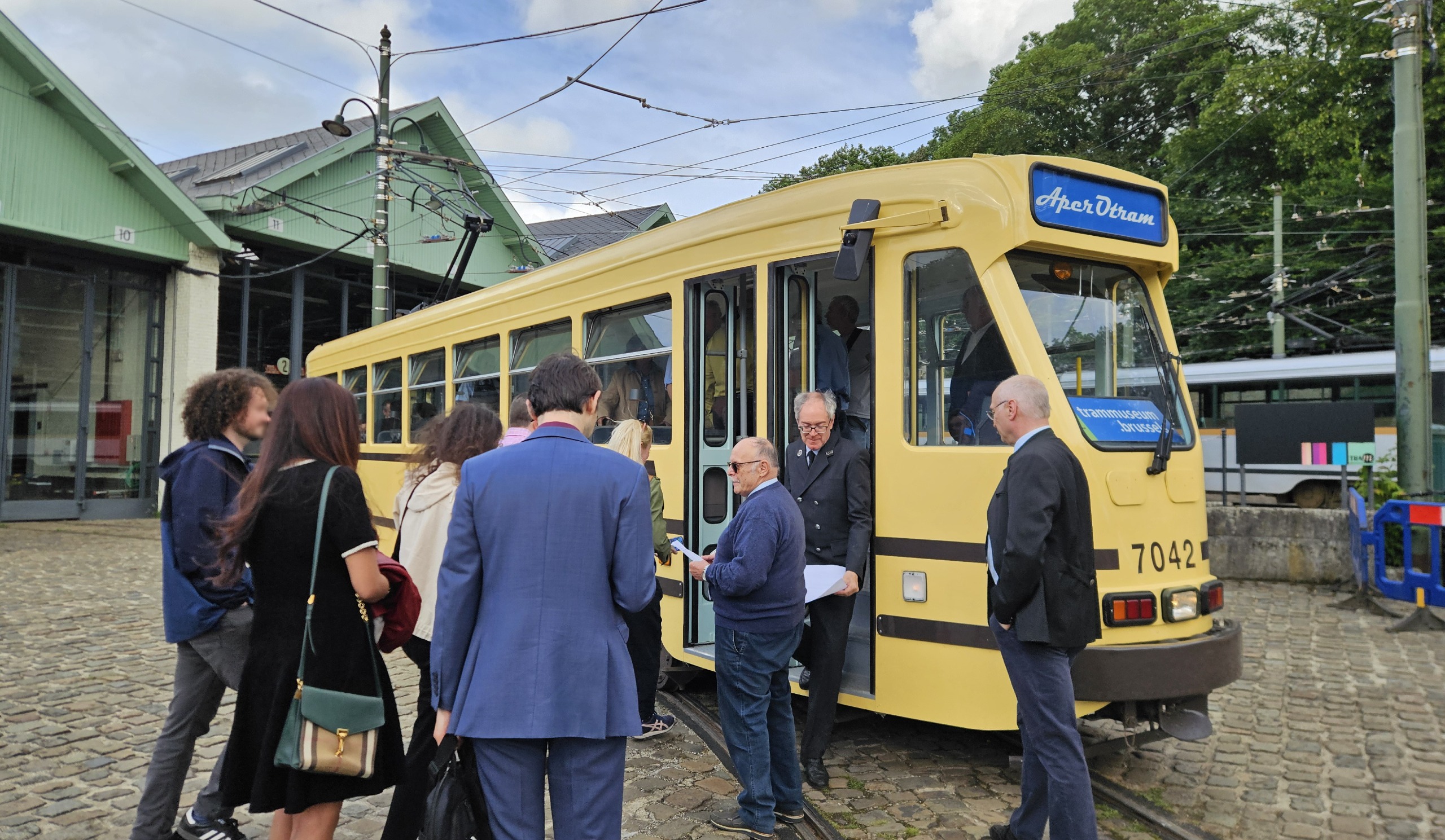
Credit: Brussels Tram Museum
More than a museum
Brussels Tram Museum has had a longstanding tradition of bringing historic vehicles back onto the rails. De Saint Moulin explained how AperOtram follows that tradition.
A striking aspect of the new fleet is that it all depends on volunteers. Drivers, mechanics and restoration specialists give up their free time to work on it unpaid.
"The personnel are not paid, neither for maintenance nor for driving," De Saint Moulin explained. "These are all passionate people."
Many are current or former employees of STIB, while others join specifically to help preserve the city's transport heritage.
The museum's annual operating budget is around €50,000, covering infrastructure, electricity, spare parts, and restoration materials. De Saint Moulin explained that the revenue generated through AperOtram, for instance, is reinvested into the next collection.
"We have an entire fleet of vehicles waiting to be restored and returned to service." For the museum, every ticket sold contributes to preserving a piece of Brussels history.
In practice
The first public AperOtram journey took place this week and, according to the museum, demand has already been strong. "It was a complete success," De Saint Moulin said.
Tickets cost €39.90 and include a first glass of champagne, snacks, unlimited water and non-alcoholic alternatives.
The tram currently operates every other Thursday, although additional dates may be added if bookings continue to grow.
By giving a 74-year-old tram a new lease of life, De Saint Moulin hopes to ensure that Brussels' transport heritage remains rolling and alive.
