
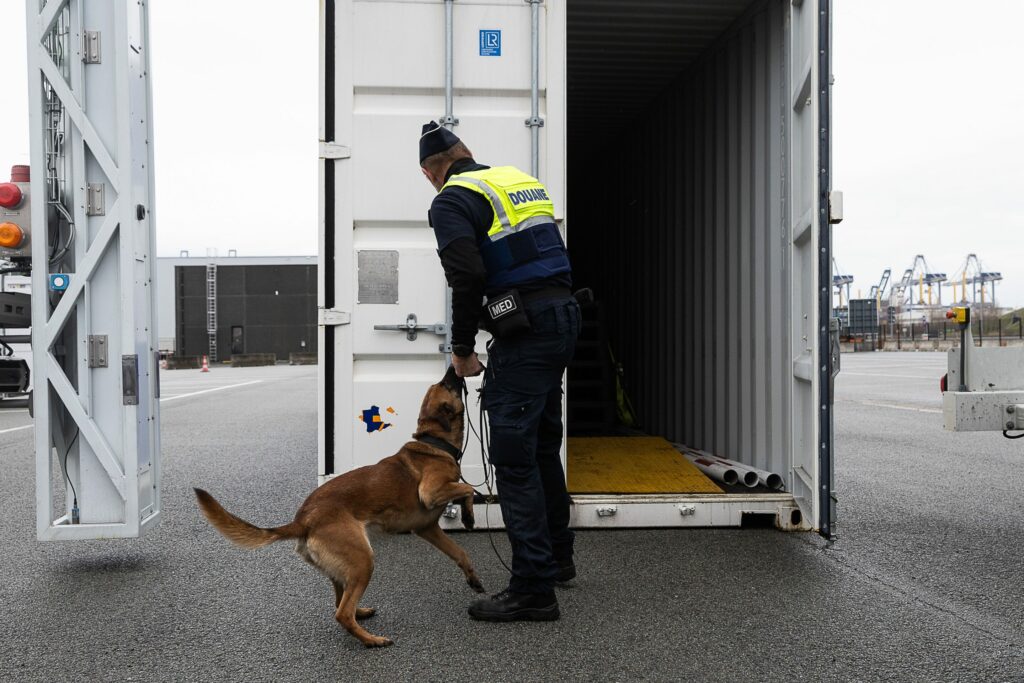
Drug trafficking networks are rapidly changing their tactics to evade law enforcement, forcing European authorities to rethink how they combat organised crime, the European Union Drugs Agency warned on Tuesday.
Speaking at a press conference, agency director Lorraine Nolan said criminal groups are becoming increasingly innovative as police intensify operations at major European ports.
Rather than relying solely on traditional smuggling routes, traffickers are increasingly turning to smaller ports and conducting transfers at sea to avoid detection.
According to the agency, smugglers are also using increasingly sophisticated methods, including high-speed vessels, semi-submersibles and drones.
The warning comes as European authorities continue to face record levels of drug trafficking, particularly through major logistics hubs such as the Port of Antwerp-Bruges.
Officials say the consequences extend beyond public health concerns.
The illegal drug trade is also fuelling intimidation, organised crime and gang violence across Europe.
"There is increasing evidence that criminal groups are actively recruiting young people from vulnerable communities," said Magnus Brunner.
"The criminal networks exploit social vulnerabilities. They contribute to social exclusion, a lack of prospects and create a climate of dependency."
Brunner said authorities must prevent dangerous new substances from flooding European markets and dismantle the economic model underpinning organised crime.
"We must fully enforce the law to take away the business model of illegal traffickers," he said.
To improve detection, the EU relies on its Early Warning System, which alerts authorities across Europe to new drugs and emerging trafficking trends.
The European Commission is also strengthening cooperation between EU member states and countries outside the bloc.
The agency currently maintains 13 international partnerships aimed at combating drug trafficking, including several with countries in South America, a key source region for cocaine entering Europe.
Officials stressed that tackling organised crime requires action across the entire supply chain, from production countries to consumer markets.
