
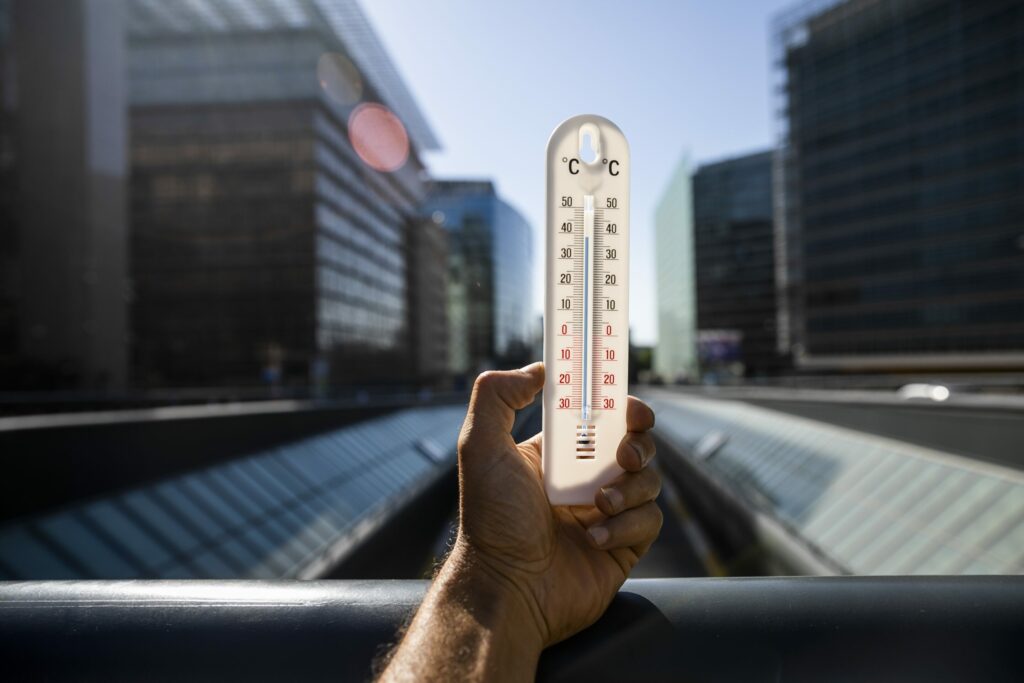
Extreme weather events are becoming "the norm", according to a report by the European climate observatory Copernicus on Wednesday.
May ranks as the second-hottest on record after the record-breaking heatwave of May 2024, the report highlights.
"In Europe, an unusually early and intense heatwave shows how quickly extreme weather events are becoming the norm rather than the exception," said Samantha Burgess, a climatologist at Copernicus.
The month of May set numerous new monthly records across the continent and led to "particularly difficult" conditions in France, the United Kingdom, Ireland and Portugal, according to Copernicus.
"Although remarkable, this phenomenon is part of the rapid warming of Europe and the long-term trend towards more frequent, more intense and earlier-in-the-season heatwaves," said the European institute in its monthly global climate assessment.
Globally, however, May 2026 still lags behind May 2024 in terms of temperatures.
El Niño
Combining land and sea, the average temperature was 15.81°C – which is 1.42°C above the estimated values for the pre-industrial period (1850–1900), before the massive burning of coal, oil and gas began to permanently warm the climate.
The climate has been under pressure from "exceptionally high" water temperatures in the tropical Pacific, while the equatorial Pacific "continues its transition towards El Niño conditions, expected in the coming months," said Copernicus.
El Niño is one of the phases of a natural cycle in the Pacific Ocean, which occurs in certain years and usually begins in spring, gradually affecting temperatures, winds and the climate across the rest of the globe in the following months.
For some regions, this results in droughts, such as in Indonesia. Others, such as Peru, will need to prepare for torrential rains.
The last episode occurred in 2023/2024. There is an 80% probability of it occurring between June and August, the World Meteorological Organisation (WMO) warned in early June.
