
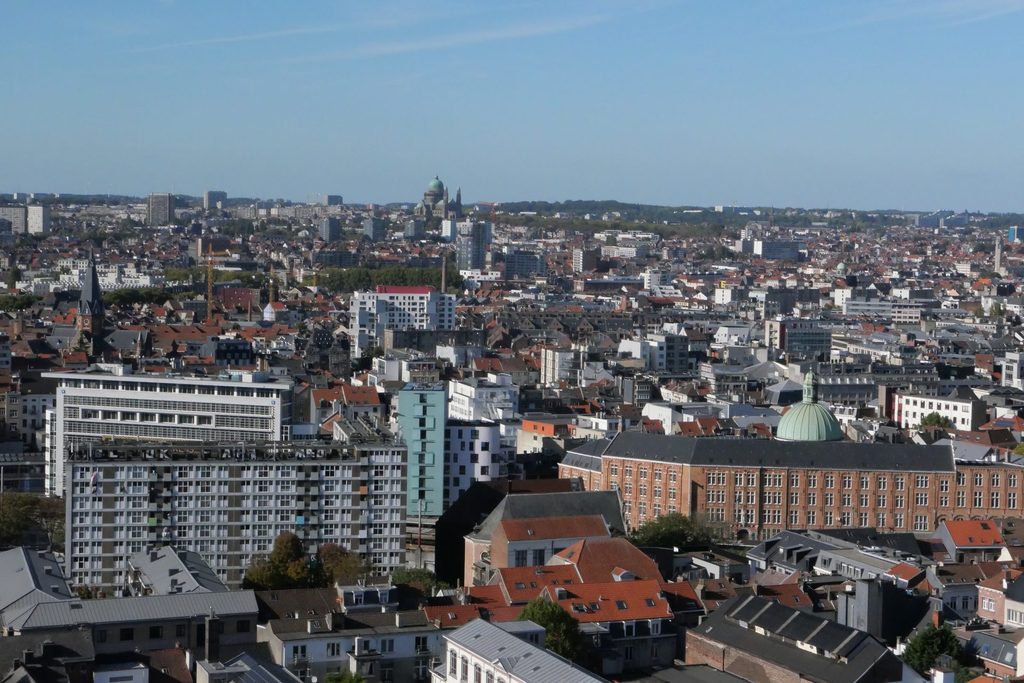
Short-term rentals via online platforms reduce the supply of regular housing and contribute to the housing shortage, with Airbnb alone taking around 3,000 entire properties out of Brussels' regular housing market, according to a study by ING Bank.
The rapidly increasing popularity of online booking platforms such as Airbnb, Booking and Expedia has an impact on the traditional housing market, particularly in certain tourist regions.
"We estimate that in Brussels alone, Airbnb is taking around 3,000 entire properties out of the regular housing supply," said Alissa Lefebre, an economist at ING and author of the study.
"The impact is also clearly visible in Antwerp and Ghent, where a combined total of almost 2,000 properties are no longer available for permanent residence," she said. These regions are already characterised by a structurally tight housing and rental market and are therefore among the more expensive rental markets in the country.
Strain on the housing market
People who occasionally rent out a room in their house or flat via Airbnb are not part of the problem. Instead, the study targets com companies or individuals buying up entire buildings to turn them into short-term rental flats.
Lefebre found that approximately 0.8% of Belgium's rental stock is currently unavailable for permanent residence because it is being used for short-term rentals on Airbnb. This proportion is likely to be higher if other platforms such as Booking.com and Expedia are included as well.
"This shows that short-term rentals contribute to the strain on the housing market," Lefebre said.
Airbnb app interface on a smartphone. Credit: Belga
Renting in Brussels
In Brussels, meanwhile, only one in 10 hosts properly registers their property – making 90% of Airbnbs in the capital technically illegal, according to recent research by Bruzz.
Additionally, several studies have shown that the presence of Airbnb significantly pushes up property prices in Brussels – making it more difficult for part of the population, especially for those with the lowest incomes, to find affordable housing.
While a legislative framework for regulating short-term rentals has been in place for some time, its impact has been limited due to poor compliance. Recently, Brussels and Ghent have stepped up their checks, including through more inspections.
A European regulation that came into force in May facilitates these inspections, by requiring rental platforms to share data in a national registration point.
Structural bottlenecks
However, making some Airbnb properties available again for permanent residence will not be enough to ease the pressure on the rental market, the ING analysis stressed.
"Tackling short-term rentals could be a first step towards easing the pressure on the housing market, but the impact on housing affordability remains limited," said Lefebre. To achieve this, she added, the structural bottlenecks must be addressed.
Above all, the housing supply must respond better to changing demand, including by encouraging and facilitating housing projects with smaller units, she stressed.
To continue supporting construction and renovation, she believes that a stable investment climate is needed. Additionally, she stressed that new regulations on housing quality and energy consumption should be designed so they do not inadvertently put further pressure on supply.
Airbnb told The Brussels Times that it "welcomes ING's contribution to the debate on housing affordability".
The company noted that the study itself concludes that short-term rentals are not the primary cause of Belgium's housing shortage. Its own data supports this: in Antwerp, only 0.03% of the housing stock is rented for more than 90 days per year.
Importantly, this figure only reflects short-term rentals via Airbnb, not through other platforms such as Booking.com or Expedia.

Airbnb app. Credit: Martin Bureau/AFP/Belga
"The real problem lies in the structural factors ING itself identifies: insufficient housing supply, rising construction costs and changing demographics," Airbnb said. "The vast majority of hosts rent out their own home occasionally, properties that were never on the housing market to begin with."
Additionally, they said that Airbnb helps local residents earn additional income and supports local businesses by dispersing tourism benefits across communities.
"For many, this income helps cover their own rent or mortgage. Airbnb does not remove homes from the market, it helps people stay in them," the company said. "We remain committed to working with policymakers to support balanced, data-based solutions that address housing affordability while preserving the economic benefits of tourism."
Since taking office in February 2026, Brussels Minister-President Boris Dilliès (MR), who is responsible for tourism in the Capital Region, has been trying to strike a delicate balance: relaxing the rules for residents renting out a room in their own home to tourists, but making it more difficult to rent out entire properties.
This planned reform also aims to further clarify the distinction between renting out entire properties and renting out a room in the owner's home.
Related News
- Ixelles to put illegal Airbnb listings back onto rental market
- Over 90% of Airbnb rentals in Brussels are illegal
- Brussels residents ask new government to fix 'broken' home-sharing rules
- Companies renting out flats via Airbnb without licence hit with €28,000 fine
- 'Undertourism'? Brussels residents feel city is underrated by visitors
- Tax authorities checked almost 5 times fewer Airbnb's last year despite levels of violations
