
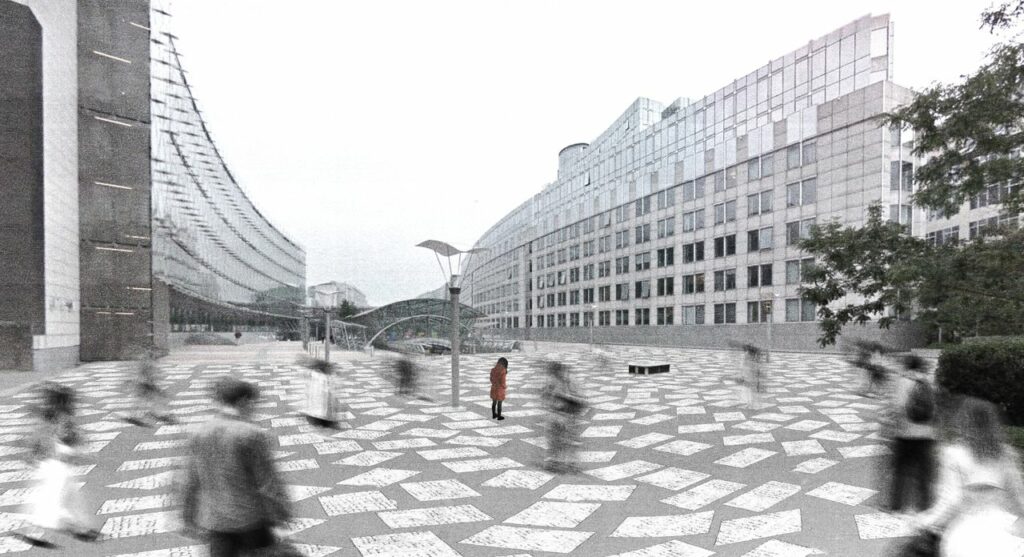
If plans come together as expected, Brussels will host one of the most significant sites of remembrance in the European Union.
The idea has been brewing for 15 years, when the European Parliament first called for a memorial honouring victims of all totalitarian regimes that left a scar on the history of the continent.
Led by Prague-based NGO Platform of European Memory and Conscience, under the auspices of the Parliament, and imagined and crafted by London-based 'emotionalist' architect Tszwai So, An Echo in Time is starting to take shape.
It would consist of hundreds of enlarged reproductions of correspondence by victims of Nazism, Communism and Fascism. Letters will be etched into the paving stones of Esplanade Solidarność, a busy thoroughfare used daily by EU officials, commuters, lobbyists, and tourists. It is designed to become part of everyday life.
"If we build this in Berlin, it will become a German memorial. If we build this in Rome, it will become an Italian memorial. And Brussels is the de facto capital of the European Union. This is the memorial for the EU, and Brussels is the no-brainer, the designated location for it," So told The Brussels Times.
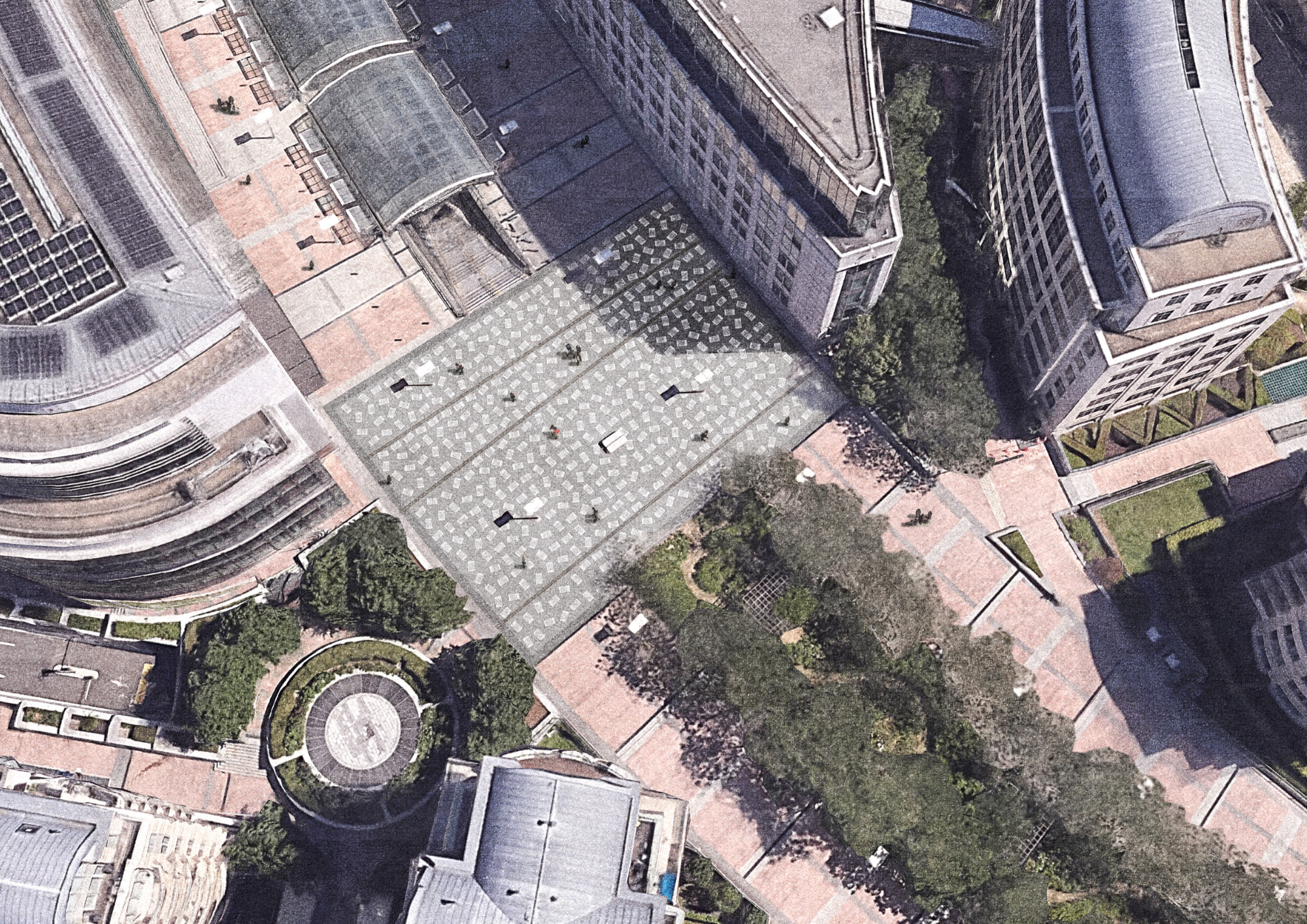
Aerial view of what the memorial might look like. Credit: Handout.
Many of these letters were written by prisoners and deportees. One of the letters featured in the project's catalogue was the last letter written by Valerio Bavassano, a member of The Rebels of Benedicts, from Marassi Prison in Genoa, Italy on 16 May 1944.
"Dear Mama," it begins. "A sad presentiment tells me that we met for the last time today. Dearest Mama, fate keeps on being cruel to you. This life of mine, that together we have contended so many times to death, finally manages to escape me. Please find comfort in the thought that I will be strong until the end. Certainly, I do not feel afraid. The only thorn in my heart is knowing that Milli and you will be alone in this world."
Whose history is represented in Brussels?
Managing director of the NGO, Wojciech Bednarski, told The Brussels Times the project has stemmed from years of open debate following the EU's 2004 eastern enlargement.
Those discussions culminated in a resolution in 2009, which recognised the shared, pan-European nature of the atrocities committed by 20th-century totalitarian regimes and called for the creation of both a memorial and a documentation centre.
"The goal is not to suggest that every country's experience was the same. Albania, Belarus and Estonia, for instance each have their own histories and suffering. Rather, the memorial is a way of bringing Europeans closer together through a better understanding of one another's past." Bednarski added.
The project recently cleared a significant hurdle after a coordination meeting organised by Urban Brussels. According Bednarski, stakeholders agreed upon the designated site. The next step is obtaining the permits necessary to legally secure the location before a larger fundraising campaign can begin.

A mock-up of the proposed memorial. Credit: Platform of European Memory and Conscience and Spheron Architects.
War in Ukraine
Russia's full-scale invasion has made western Europe more receptive to the eastern side of the bloc's historical experiences, said Bednarski.
That sentiment helps explain why countries such as Lithuania, Estonia, Latvia, Croatia and the Czech Republic have publicly backed the project. Lithuania has spearheaded efforts to back An Echo In Time politically and financially, providing early funding to help move it forward.
Sensitive debates
Questions surrounding the memorial inevitably touch on some of the most sensitive debates in European history. Some might say that placing Nazism and Communism within the same commemorative framework risks oversimplifying different historical experiences.
So and Bednarski point to the European Parliament's 2009 resolution on European conscience and totalitarianism, which called for the creation of a pan-European memorial and acknowledged the complexity of Europe's diverse historical experiences.
Both believe that remembering different experiences need not divide Europeans. On the contrary,"it can bring them closer together".
And that is why Brussels occupies such a central place in the soon-to-be memorial.
