
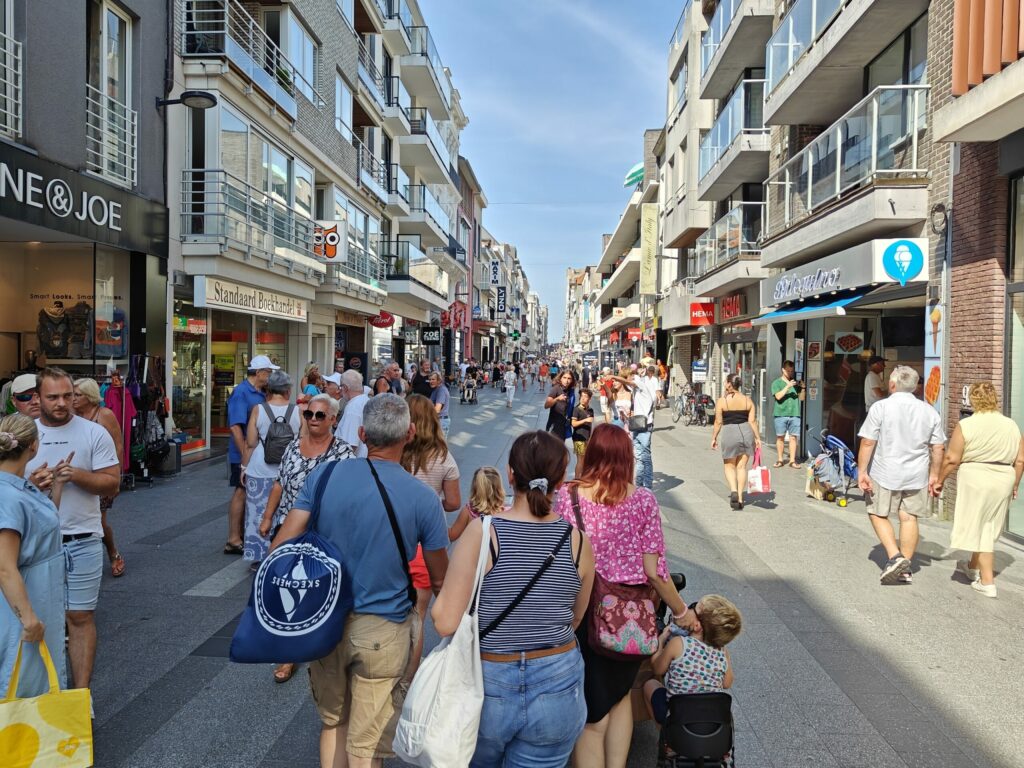
Heatwaves are driving up the cost of living for households, a challenge that will only increase with climate change, according to report by Euronews.
In Belgium, some protections are in place to limit the impact on households. The recent surge in energy prices in the country, which saw the wholesale energy price exceed €1,000 per megawatt-hour (MWh), is just one example of the effect of heatwaves on Belgian households.
The price spike means that consumers with "dynamic" contracts that track market prices every 15 minutes will see the impact in their bills during hotter days.
Euronews notes that energy price rises will have had a further impact during the evenings of a heatwave "when solar generation falls but temperatures and cooling demand remain high."
Impacts beyond energy prices
In addition to increased energy prices, the need to take unpaid leave, lost work, and cancelled public transport all combine during a heatwave to hit Belgians in the pocket.
Across Belgium, train services were cancelled during June's heatwave and some schools closed, impacting parents who will have had to arrange childcare, urgent pickups or stay at home at short notice.
With further heatwaves possible this summer, households – especially those on lower incomes – will be bracing themselves for potential increased costs.
Belga wallet with euro bills. Credit: Belga
Impacts of climate change
"Despite decades of science showing the impacts of continued burning of fossil fuels, Europe remains largely unprepared for the climate impacts its emissions have helped create." according to the Climate Analytics research.
The impact will further widen income inequality as it will be felt most starkly by those on low and precarious incomes.
“The poorest 20% will be affected the most, with incomes dropping 2% more than the rest of the population (4% vs 1.1-1.8%), further widening income inequality,” Jessie Schleypen, Senior Climate Change and Development Economist at Climate Analytics said.
A recent study by the European Trade Union Institute (ETUI) found that the most "climate-exposed sectors often include seasonal, migrant and self-employed workers with weaker protection and representation."
Workers facing such precarious employment are often the ones who have to choose between remaining exposed to heat-stress conditions, or protecting themselves, according to the ETUI study. For these workers, lost hours translate directly into lost income, layering onto the energy costs already squeezing Belgian households.
This choice is a result of the nature of their pay, which is often "piece-rate or task-based pay" - if they don't work, they do not get paid. Workers may also fear dismissal if they raise concerns about working conditions.
Euronews notes that in France, some areas have banned working in fields to prevent workers from being exposed to wild fires caused by dry crop fields, "a measure that reduces daily earnings for workers, many of whom are seasonal migrants."
Does Belgium need a new Adaptation Plan to protect workers?
Bert Engelaar, president of the ABVV-FGTB trade union, told The Brussels Times that companies are expected to be prepared ahead of time for extreme weather. "Structural emergency plans must be drawn up in advance within companies," he said, noting that the plans should consider all the risks posed by climate change and "take into account workers' commutes and social circumstances".
"We are seeing today that employees are also affected outside of work, as parents, when childcare facilities or schools are forced to close," said Engelaar. "We must be mindful of this too; we want to give social dialogue on this issue a fresh impetus. The approach of special leave, as currently practised in Spain, is an interesting one, as it gives employees the chance to keep their lives on track in extreme circumstances."
In 2024, Spain passed a 'climate leave' law in response to the Valencia floods. It allows workers to take four full-time days off, without losing pay, when severe weather affects their ability to commute. The leave is triggered automatically with an official weather warning, and temporary workers are also legally protected under the law.
In Belgium, workers who are unable to do their jobs because of heat-stress may be made temporarily unemployed (with unemployment benefits received) if their employer cannot arrange heat preventative measures, or if their work takes place outdoors.
Households on lower incomes also benefit from social energy tariffs which will cushion the effect of energy price spikes during heatwaves. Around half a million Belgians are eligible for these tariffs which see them paying lower gas and electricity prices than the average bill – around 30% lower than the cheapest commercial price available.
Engelaar claims Belgium's protections were designed for a different climate and need to be adapted for a new reality. He argues that Belgium needs to go back to the drawing board to consider comprehensive protections for workers in a world of more extreme weather.
"We are calling for the drafting of a new (inter-federal) National Climate Adaptation Plan, which, based on research, must clearly set out how families – particularly vulnerable families (those on low incomes, families in flood-prone areas, older people, etc.) can be protected against the impacts of climate disruption."
