

The Belgian Ministry for the Economy will publish a report on trade between Belgium and the United States on its website, which will be updated every six months.
The website now also features information on customs duties, as announced on Thursday in a press release by the Minister for the Economy (MR) David Clarinval and the Minister for SMEs, Eléonore Simonet (MR).
In particular, the website features the European Access2Markets tool, which allows users to check the customs duty applicable to a given product.
The United States ranks fourth among Belgium’s trading partners in terms of both exports and imports. According to the first report published on the website, data for 2025 highlights a year-on-year decline in the value of exports for most sectors.
This includes the pharmaceutical sector (-3.9%), the automotive sector (-22%) and base metals such as steel, iron, copper and aluminium (-30.3%).
However, some sectors saw their exports increase in 2025, such as the chemical and food industries, though not enough to offset the declines in other sectors.
Belgian exports to the United States also fell in 2025, against a backdrop of geopolitical and trade tensions, confirming a downward trend observed for several years.
The government’s aim is to provide "valuable resources for Belgian businesses and SMEs that need to assess whether to start or continue exporting to the United States."
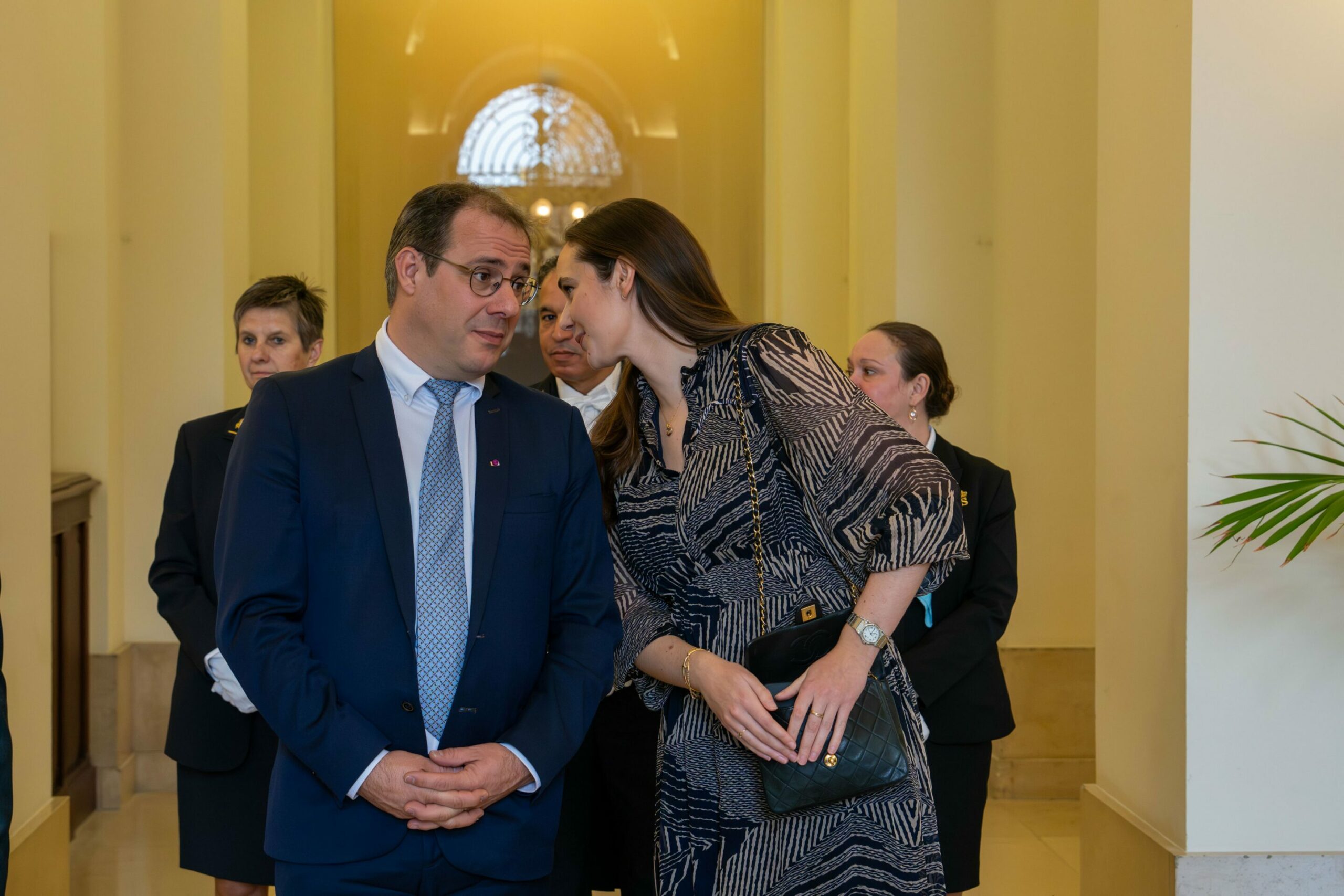
Minister of Economy David Clarinval and Minister of SMEs Eleonore Simonet pictured during the celebration of the King's Feast, at the federal parliament in Brussels, Saturday 15 November 2025. Credit: Belga
According to Clarinval, the United States and Belgium have always enjoyed "excellent" transatlantic and trade relations.
"Today, these relations are evolving against a backdrop of strategic and economic differences that are creating greater uncertainty," the minister said.
"What I want above all is an open market, where competition is fair, and the rules of the game are equitable. (...) It is our responsibility to provide our businesses with the best possible support through tools such as these, which offer economic data, analyses and up-to-date information on customs duties."
According to Simonet (MR), "clear, objective and centralised information on changes to customs tariffs enables our SMEs and self-employed people to assess both risks and opportunities, and thus to be better protected against volatile trade policies."
