
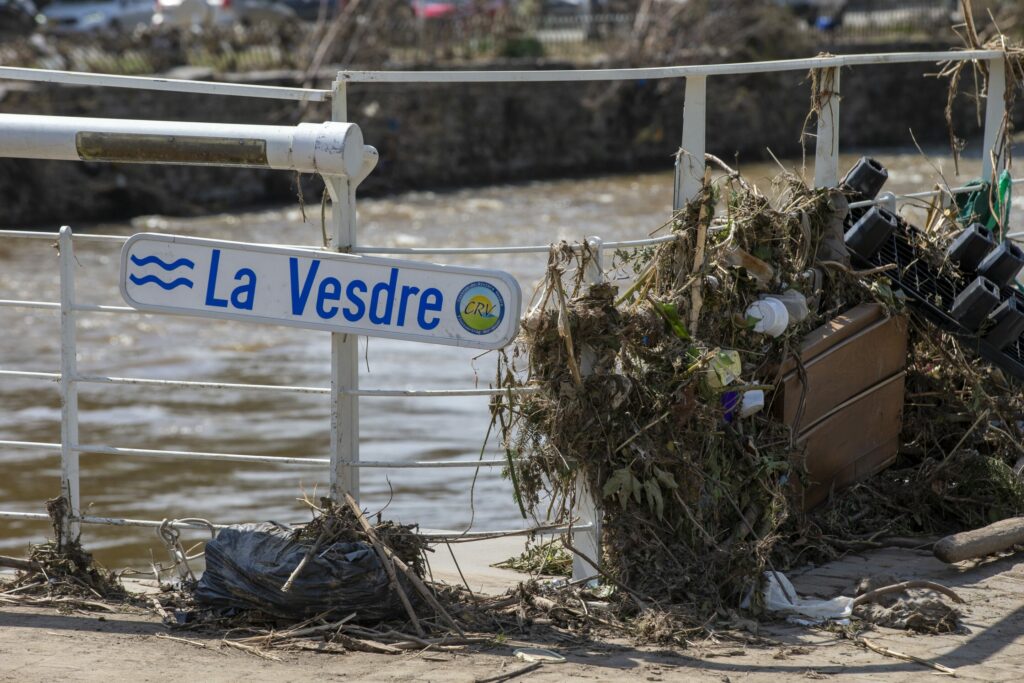
In 2021, Belgium suffered one of its worst natural disasters as the south-eastern part of the country was hit by floods caused by extreme rainfall.
In the span of three days, multiple rivers burst their banks, causing damage and chaos across multiple provinces. A total of 39 people died.
The floods were caused by a stationary rain front hanging over eastern and southern Belgium, Luxembourg and parts of Germany. Measuring stations in the town of Jalhay registered 271.5 millimetres of rain falling over 48 hours – almost triple the average monthly rainfall for July. The Royal Meteorological Institute (RMI) described it as a "once in a century event".
The heavy rainfall caused several rivers in the province of Liège to burst their banks, with the River Vesdre most seriously affected. The river, a tributary of the Meuse, burst its banks in Eupen, Verviers, Pepinster and Chaudfontaine, causing damage along its flow.
Other rivers such as the Lesse and the Sambre also caused flooding but not to the extent of the Vesdre.
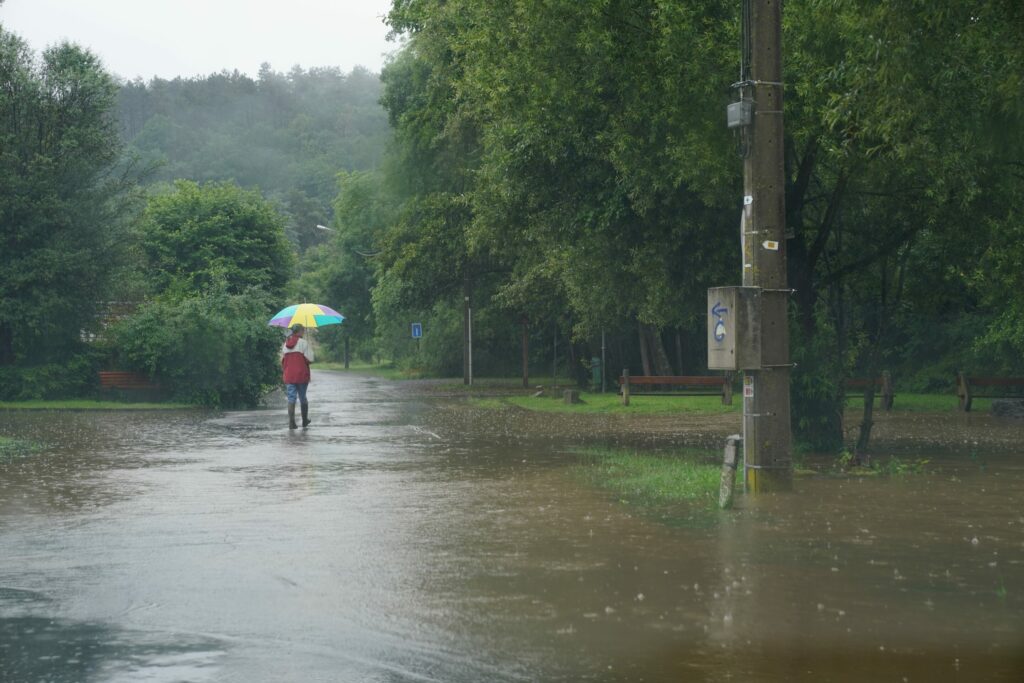
A flooded road near Rochefort on July 14 2021. Credit: Belga/Anthony Dehez
How the floods happened
The first reports of flooding came in the evening of 13 July, with local waterways overflowing and roads cut off. Over the next night, rain intensified, and reports of more severe flooding became widespread across the east and south of Belgium.
Public transport was disrupted across the region. By the morning, several rivers reached dangerous levels, and there was concern about the River Meuse causing floods in major cities like Liège and Maastricht.
Evacuation orders were issued in several places in the provinces of Liege, Limburg and Luxembourg.
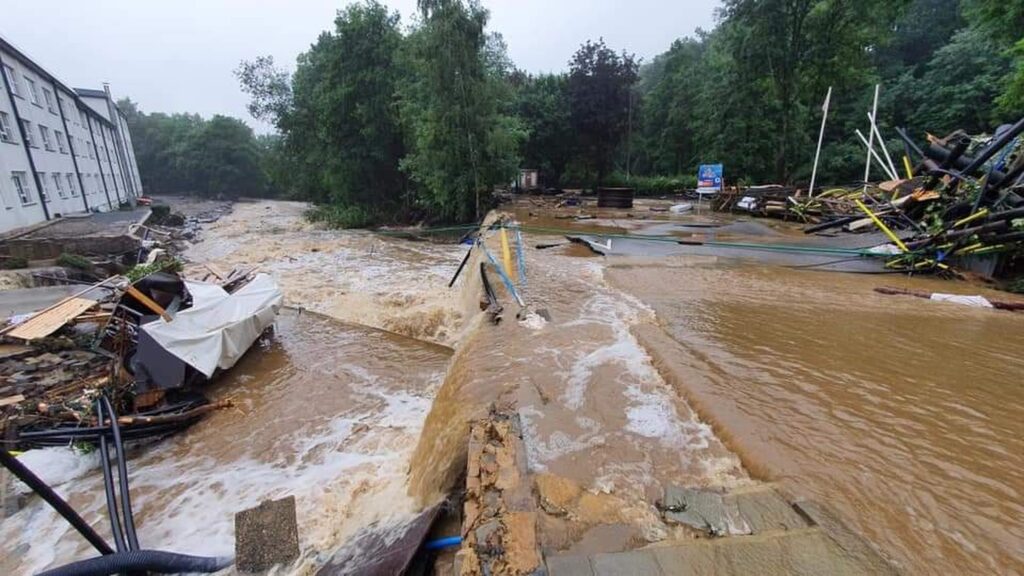
Flooding in Eupen on July 15 2021. Credit: Belga/Francoise Pfeiffer
As the summer holidays had just started, many youth camps were being held in Belgium. Across the country, dozens were evacuated as campsites flooded.
As the day went on, multiple major rivers burst their banks. The province of Liège was hit the hardest, as both the Vesdre and Ourthe Valleys suffered major flooding. Villages like Aywalle, Eupen, Chaudfontaine, Trooz, Esneux, and Hamoir suffered extensive destruction and loss of life.
But Pepinster was hit the hardest. Located at the confluence of the Vesdre and Hoegne rivers, the village bore the full force of two rivers overflowing. Rushing water and mudslides caused multiple buildings to collapse; seven people died in the water and under the debris.
During the rescue operation in Pepinster, a rubber dinghy lost its steering and crashed into a bridge. The eight people in the boat – five firefighters and three local residents – fell into the water. The firefighters made it out of the water, but the three locals were found further downstream the next day. All three drowned.
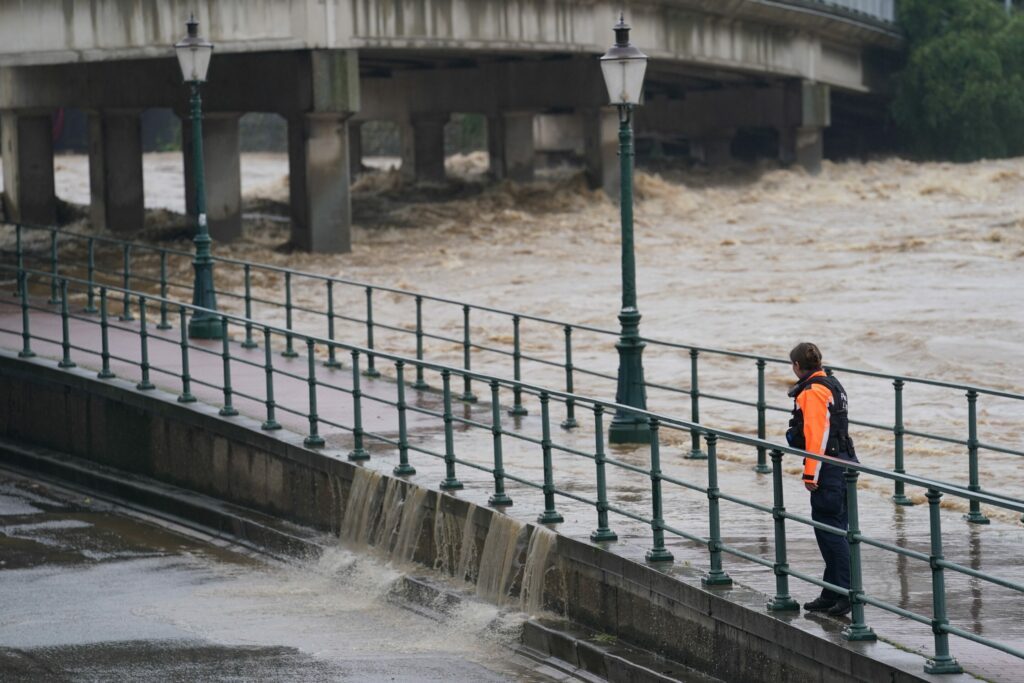
The high tide of the Meuse river in Liege on July 15. Credit: Belga/Anthony Dehez
During the night, large surges of water were witnessed in the Vesdre valley. As the dams on the Vesdre and Gileppe reached their maximum capacity, they started releasing more water.
Local residents described seeing waves of water crashing through their villages.
'Double Tsunami'
The centre of the rain front moved westward on 15 July, towards the centre of Belgium. Once the water receded, the extent of the damage became clear. Across Wallonia, villages and cities were flooded, cut off from main roads, and left without electricity.
Between 45,000 and 55,000 houses were damaged, and more than 10,000 vehicles were destroyed.
Many pointed to the opening of the dams as the cause of the severity of the floods. Residents gathered in the organisation People Against Flows and decided to sue the Walloon regional government.
According to them, the agency managing the dams panicked during the night and released massive amounts of water as the reservoirs were close to overflowing. People Against Flows claimed this caused a "Double Tsunami" in the valley.
An independent investigation later cleared the agency of wrongdoing. According to the report, the proper procedures were followed, and the floods were solely caused by extreme weather.
Climate change an underlying cause
A combination of factors caused the floods and the extent of the human and material damage. Predictive weather models failed to forecast the amount of rainfall, with the RMI predicting 100 millimetres of rain as the upper limit. Records show that multiple measuring stations recorded well over 200 millimetres in 48 hours.
A study into the meteorological phenomenon that caused the rain front to be stationary for as long as it did found that climate change was an underlying cause, and that Europe should expect similar extreme weather to become more frequent.
Dams on the affected rivers were not designed to manage flooding and did not have the capacity to deal with massive amounts of rainfall, as their primary task is to provide drinking water for the region.
In many places, evacuation orders were given too late. Weather warnings were scaled up to the highest category when the flooding had already started. The RMI created a central body to bring its experts in direct contact with local governments to coordinate future extreme weather events.
Furthermore, infrastructure in the region was not designed with flooding in mind, and many rivers were not given natural floodplains to deal with heavy rainfall. In rebuilding the Vesdre valley, steps were taken to account for future flooding of the river, introducing wider riverbeds, flood-resistant infrastructure and other measures intended to reduce the impact of future floods.
