
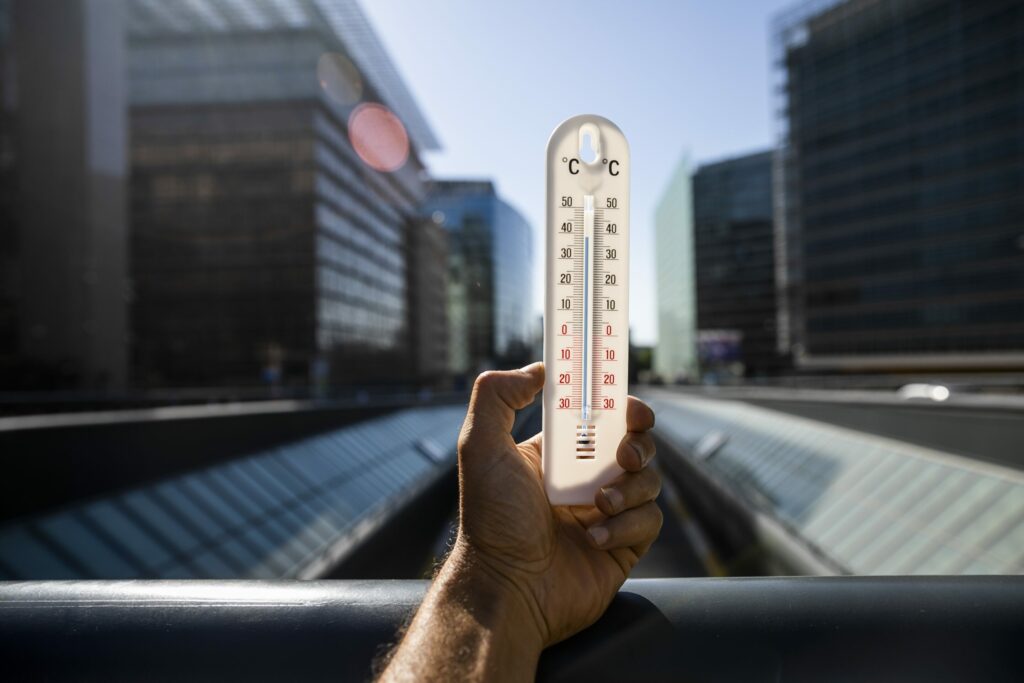
With many people in Belgium already struggling to handle the current heatwave, how should the country cope with summer temperatures rising to over 40°C in the near future?
A new recently-launched Belgian pilot project aims to help cities prepare for increased future spells of intense heat, while drawing up a clear picture of the future risks.
The 'Tales of Future Weather' project wants to translate climate science into vivid (fictional) scenarios about the impact of extreme weather conditions in Belgium, and how to prepare for them.
"We have these climate models that we use to look into the future, but what comes out of them are all statistics: predictions, increases, percentages – and there is still uncertainty attached to that," climatologist Steven Caluwaerts (RMI and UGent) told The Brussels Times.
"That is all very important information, and for some people, that is a format they can work with. But at the same time, we have noticed that many people find it difficult to make sense of those abstract figures," he added.
'Massive impact'
Therefore, the Royal Meteorological Institute (RMI), the Centre for Climate Change Risk Assessment (CERAC) and the Belgian Climate Centre (BCC) launched the project with fictional stories to bring the potential consequences of extreme weather to life.
The aim is to identify future risks in concrete terms, so that the country can prepare itself more effectively.
"Extreme weather has a massive human and economic impact on our society," said Caluwaerts. "Take the 2021 floods in the Vesder Valley, for example. It is not easy to prepare for that because, by definition, something is happening that we have never seen before. It’s very difficult to make the right decisions."
"And we actually want to start that thought process now, by bringing realistic weather extremes from the near future to life," he said.
And they are indeed extreme. Recent models predict temperatures of up to 50°C in Paris by 2050 – should Brussels be preparing for similar situations?
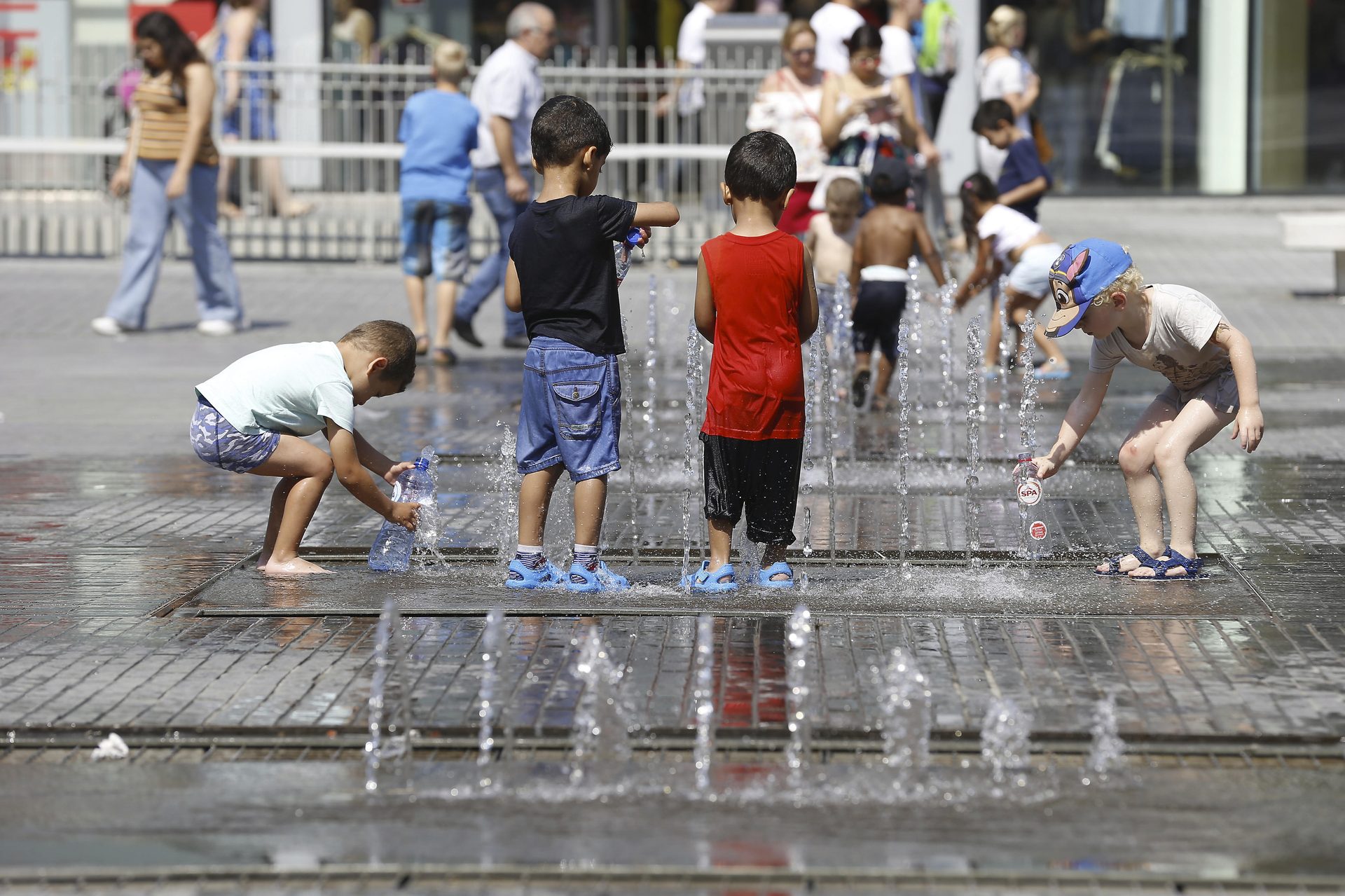
Credit: Belga/Nicolas Maeterlinck
Not quite yet, according to Caluwaerts. "Paris is a bit further south, so climatologically speaking, it is slightly warmer there than here in Brussels."
For the pilot project, a heatwave was selected from climate simulations using a scientifically sound approach. "The selected heatwave is representative of an extremely hot summer, like the one in 1976, but in a world that has warmed by 2°C."
This would not be an extreme scenario, he explained. The planet has warmed by around 1.5°C compared to the pre-industrial period, but it is heading towards 2°C and beyond, depending on how quickly the world can reduce emissions in the (near) future.
As a result, predicting possible maximum temperatures in Brussels is "difficult", he says, as the researchers did not look into that. Instead, they focused on the impact of lengthy heatwaves.
Wide-ranging impact
"In the heatwave we selected, there were several days with temperatures just above 40°C. This could perhaps be even higher, but it was not our intention to pick the most extreme example," Caluwaerts said.
To a greater or lesser extent, many sectors can organise themselves to cope with a few hot days, according to him. "But if it stays warm for weeks on end and buildings start to heat up more and more, you risk running into problems."
Therefore, the impact of such a long-lasting heatwave, Caluwaerts explains, ranges from hospitals, care homes and schools to police, the fire services and businesses. But it also hits the economy, the energy sector and the population itself.
"The tricky thing about heatwaves is actually that they have such a wide-ranging impact. Everything is affected by the heat," he said. "In Etterbeek, schools are closing. Infrastructure, railways, the metro, roads, bridges and so on – these areas can all be impacted."
Credit: Belga
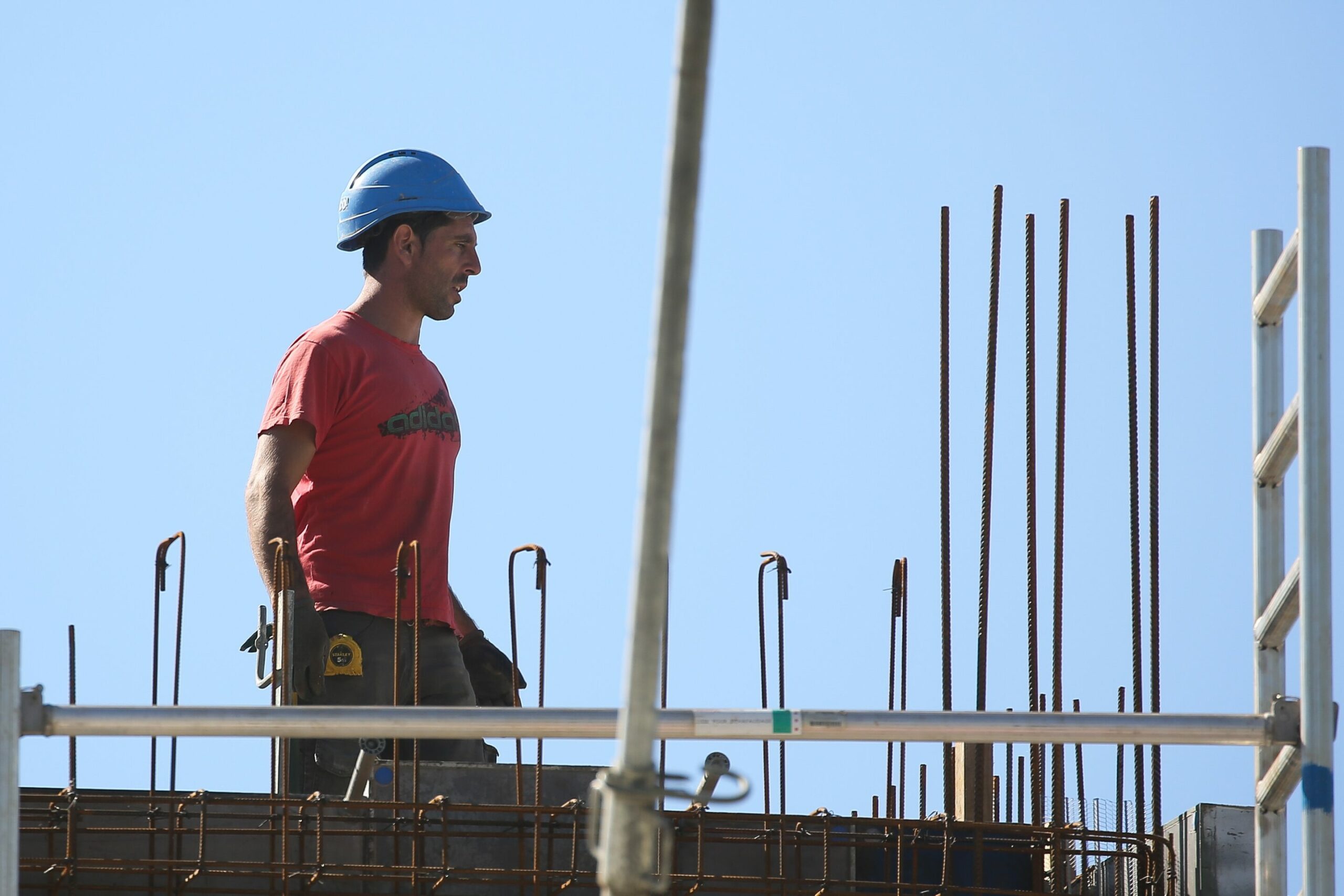
The economy, especially people who work outdoors, will face difficulties, but the energy sector – which, for example, relies on cooling water – may ultimately run into problems too.
"All of this combined means that you could ultimately end up in a very complex situation, also due to potential cascade effects," Caluwaerts said.
If schools close, several parents – including some who will work in a hospital – will suddenly have to stay at home and will therefore be unable to go to work. If there is a problem with the energy supply, there will definitely be cascade effects in other areas.
"So this is all about preparing for those situations. We know we will be facing more heatwaves in the future, that is very clear," he said. "So let's bring such a future heatwave to life in our minds, and that thought experiment, so that, when it actually happens, we have already thought through a number of issues."
Fake scenarios, real science
While the stories in this pilot project are fictional, they are grounded in science, stressed Kobe Vandelanotte, a climate scientist at the BCC.
"The key is to select, from tens of thousands of simulated years, a summer that is both extreme and plausible, and representative of what Belgium might experience in the near future," he said.
The city of Mechelen has recently carried out such an exercise. The emergency planning coordinator for the city, Steven Vermeeren, told VRT that they held a major brainstorming session on how to deal with heat.
"We tried to simulate the impact of a prolonged heatwave on the city and its residents. A wide range of services were directly involved in the exercise, from the emergency services and the police to the communications department and hospitals," he said.
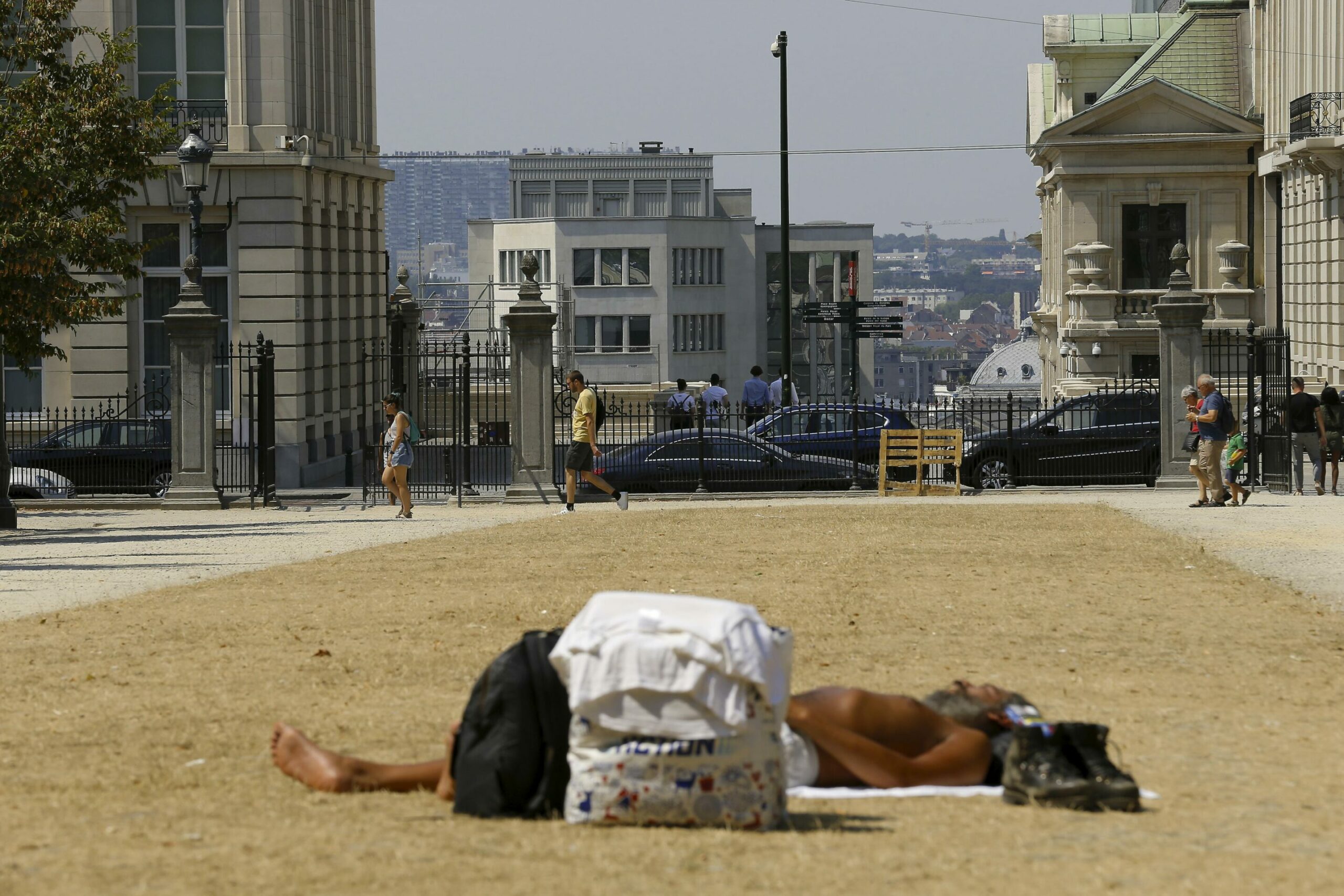
Homeless man pictured sleeping at the Parc de Bruxelles as temperatures reach 33°C in Brussels on July 2018. Credit: Belga/Nicolas Maeterlinck
The city soon had a list of 20 issues – which included the emergency services being overwhelmed, movable bridges that could no longer be opened or closed, and overcrowding at leisure areas – that they narrowed down to a shortlist of five priorities.
For Vermeeren, the exercise proved very useful. "There is a lot that you need to take into account all at once, because the impact is so wide-ranging. We were actually quite surprised by it ourselves."
The exercise in Mechelen is only one part of the wider project. In the longer term, the RMI, CERAC and BCC aim to produce detailed, concrete narratives, including in the form of detailed fictional news articles.
"By making the risks tangible, it becomes clear that an extreme climate event acts as a trigger for society," said CERAC Director Luc Bas. "They enable us to test our collective adaptive capacity and identify the areas where more work is needed to strengthen our resilience."
