As a concept, united leagues of nations have been around for years and seem relatively straightforward: a common agreement between states to adhere to certain principles and regulations. Yet defining the limits of these partnerships is a little more tricky and raises questions about the autonomy of individual states from the group itself.
As the most cohesive international project in the world, these questions are particularly pertinent to the European Union, not least as the bloc faces literal threats (most obviously from Russia) and ideological ones (with populist movements promoting Euro-scepticism). And though support for the Union remains high, the bloc's leaders would overlook these challenges at their own peril.
This is precisely what the Conference on the Future of Europe has been trying to lay out, in robust terms that will coalesce pro-European sentiment and bring tangible benefits to the bloc's approximately 450 million citizens. Now, after a year of deliberation, civilians and lawmakers have drawn up 49 proposals that should set the EU agenda for the coming years.
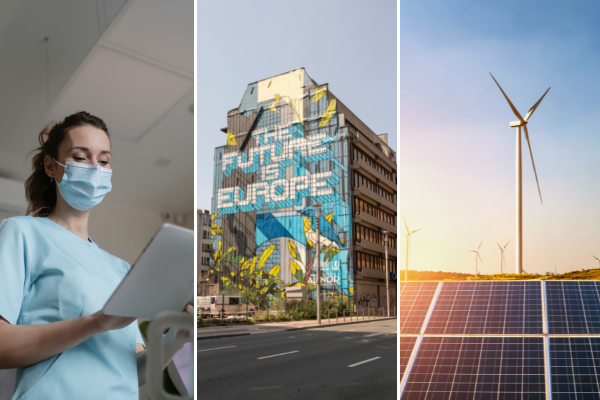
Key concerns outline measures the Union can take to address major challenges felt at a national level, among them the green transition, growing inequality, and international security. Of course, EU leaders still have to decide how these rather nebulous ideals will be realised on the ground but all the same, a clear vision for the future is essential to directing future policies and galvanising public support.
What do you think are the EU's biggest challenges? Let @Orlando_tbt know.
Belgium in Brief is a free daily roundup of the top stories to get you through your lunch break conversations. To receive it straight to your inbox every day, sign up below:
1. Belgian Federal Government launches new Covid-19 app
The Belgian Federal Government launched a new IOS and Android app on 1 May intended to help in the fight against Covid-19 infection, according to a press release following a Inter-Ministerial Conference (CIM) of Public Health Ministers. Read more.
2. Brussels: Outdoor summer events to check out in May

May marks the return of sunny days, festivals and aperitifs. Here’s a quick guide to what’s going on in Brussels this glorious month. Read more.
3. Future of Europe conference: Strong healthcare, less inequality and climate action
What should the future of Europe look like? It is a perennial question, but now EU citizens and lawmakers have been trying to answer it for the past year through discussions at the Conference on the Future of Europe. Read more.
4. Brussels Airlines to drop face mask requirement
From 3 May, wearing a face mask inside the cabin of planes of Belgium’s airline Brussels Airlines will no longer be mandatory, according to a corporate press release. Read more.
5. ‘Radar bins’: Police mount hidden speed radars on Belgian roads
Besides the visibly bulky speed radars spread out over roads and highways, police now have more discreet tools at their disposal to record speeding cars, Sud Presse reports. Read more.
6. Despite conviction for sexual assault, Jan Fabre’s art will remain in Flemish Parliament
Despite calls to remove sculptures by Belgian artist Jan Fabre from the Flemish Parliament following a conviction for sexual assault, the art installation will remain, albeit with a note of explanation. Read more.
7. Hidden Belgium: Vilvoorde by Waterbus
The Waterbus has just relaunched regular trips on the canal that runs from Brussels to Vilvoorde. The ferries pick up passengers and bikes on the quayside next to Kanal art centre and drop them off on Vilvoorde’s new waterfront. Read more.
