
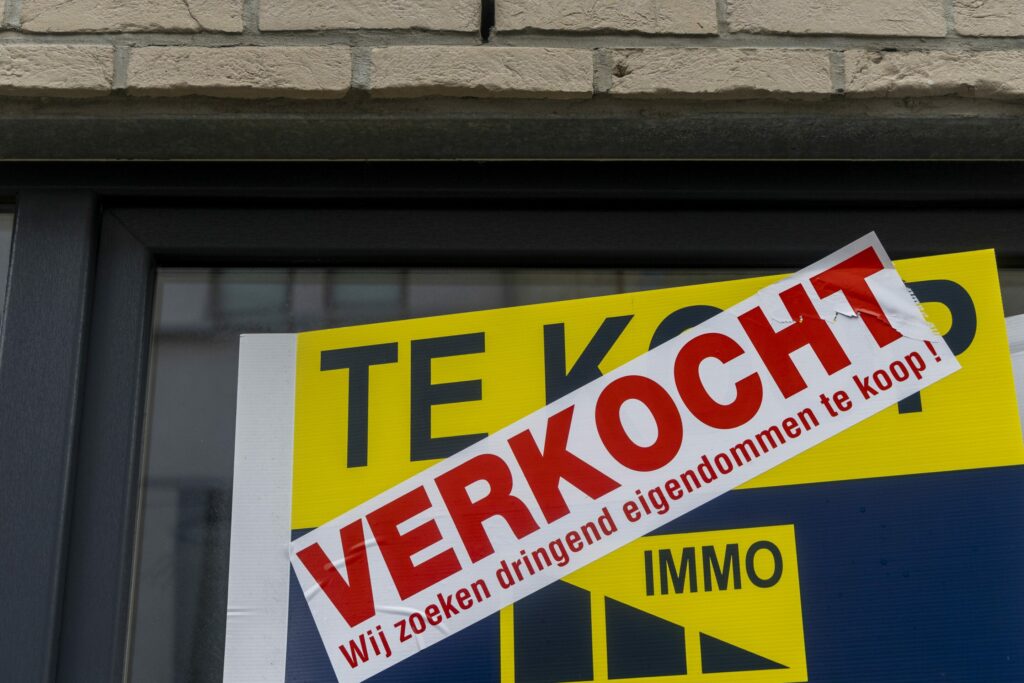
Despite increasing mortgage costs, more homes were sold in Belgium in the past three months compared to the same period a year ago. Flats, in particular, were in high demand, according to the Federation of Notaries (Fednot).
In the second quarter of 2026 (April, May, June), 1.5% more homes were sold in Belgium compared with the second quarter of 2025. Apartment sales went up by 4.8%, while the trend for houses remained stable (+0.3%).
"This increase was almost entirely attributable to the flat market," said Notary Bart Van Opstal, spokesperson for Notaris.be.
Houses vs flats
In the first half of 2026, a house in Belgium cost an average of €356,774 – a 1.9% price increase compared with the annual average in 2025. The price for a flat was an average of €286,183, a price increase of 1.5%.
In the first half of 2026, a house in Belgium cost an average of €356,774, a price increase of 1.9% compared with the annual average in 2025.
In Brussels, the price increase was sharper, at 5.2%. As a result, the average cost of a house in the Capital Region rose to €611,873.
Flanders also saw an increase in the average house price (2.5%), rising to €394,209. Wallonia is the only region where the price fell slightly (-0.9%), to an average price of €266,036.
Credit: Belga/
For flats, prices rose as well: in the first half of this year, a flat in Belgium cost an average of €286,183 – a price increase of 1.5% compared with 2025.
In Flanders, the average price of a flat rose by 1.3% to €298,860. In Wallonia, the increase was 2.3%, with an average price of €216,856.
For Brussels, a 1% price increase was registered, bringing the average price to €299,501.
Demographic trends
Anyone who bought a property in Belgium in the first half of this year was, on average, 40 years old. For a flat, the average buyer was 45 years old; for a house, the average age was 39 years.
"At the same time, buyers aged 30 or under remained particularly active in the second quarter," Van Opstal said.
Looking more closely at who bought a property in Belgium during the first six months of 2026, buyers aged 26 to 30 were the most active – accounting for 19% of the total. They were closely followed by buyers aged 31 to 35, who accounted for 18% of purchases.
For both flats and houses in Belgium, buyers aged 26 to 30 accounted for the largest share. For flats, this was 15%; for houses, 21%.
Credit: Belga
