
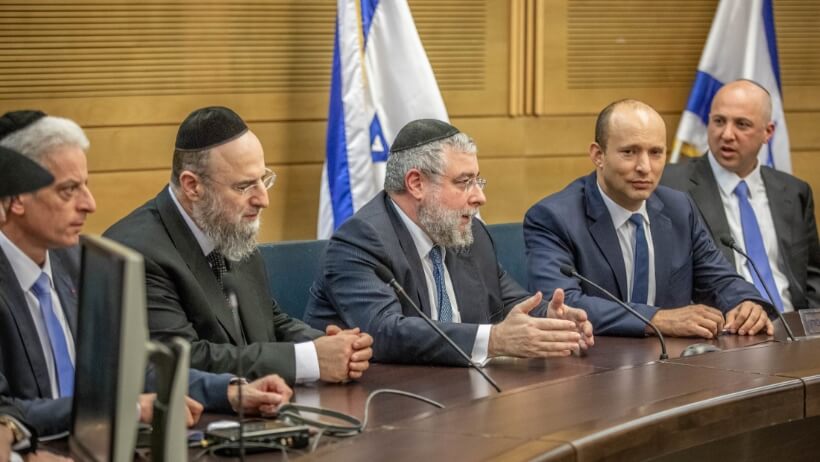
Europe's leading Jewish figure, Chief Rabbi Pinchas Goldschmidt, has accused Belgian Health Minister Frank Vandenbroucke of refusing to engage with Jewish representatives over the long-running dispute surrounding religious circumcision, claiming the minister has sought confrontation to appease Muslim voters – an allegation that prompted an angry rebuttal.
Belgian prosecutors are pursuing charges against Jewish ritual circumcisers over allegations that they carried out procedures without the medical qualifications required under Belgian law.
Speaking to The Brussels Times, Goldschmidt, president of the Conference of European Rabbis, said Vandenbroucke's refusal to discuss regulation of religious circumcision with Jewish leaders reflected a political choice rather than a legal necessity.
“In many European countries the age-old practice of circumcision was revisited by government officials and the local Jewish representatives and arrangements have been made to the satisfaction of all sides,” he said.
“The fact that in Belgium the Belgian Health Minister Frank Vandenbrouke chose a confrontation with the Jewish community by not sitting with the Jewish community gives credence to the theory that a confrontation has been sought to appease his Muslim voters upset at him, for not allowing them to be reimbursed from insurances for the act of circumcision.”
'Better get his facts straight'
Vandenbroucke firmly rejected the accusation, stressing that the issue stems from an independent judicial investigation rather than any government campaign against Jewish religious practice.
"The Rabbi better get his facts straight. It was the Public Prosecutor's Office in Antwerp that started a judicial investigation,” Vandenbroucke told The Brussels Times.
Vandenbroucke said he had several meetings with the Centraal Israëlitisch Consistorie van België (CICB), the official central body representing Judaism in Belgium. “And to be clear: We, as a government, will never interfere with ongoing legal proceedings,” he added.
The judicial investigation has nevertheless sparked months of diplomatic tension with Israel and the United States, both of which have accused Belgium of undermining Jewish religious life.
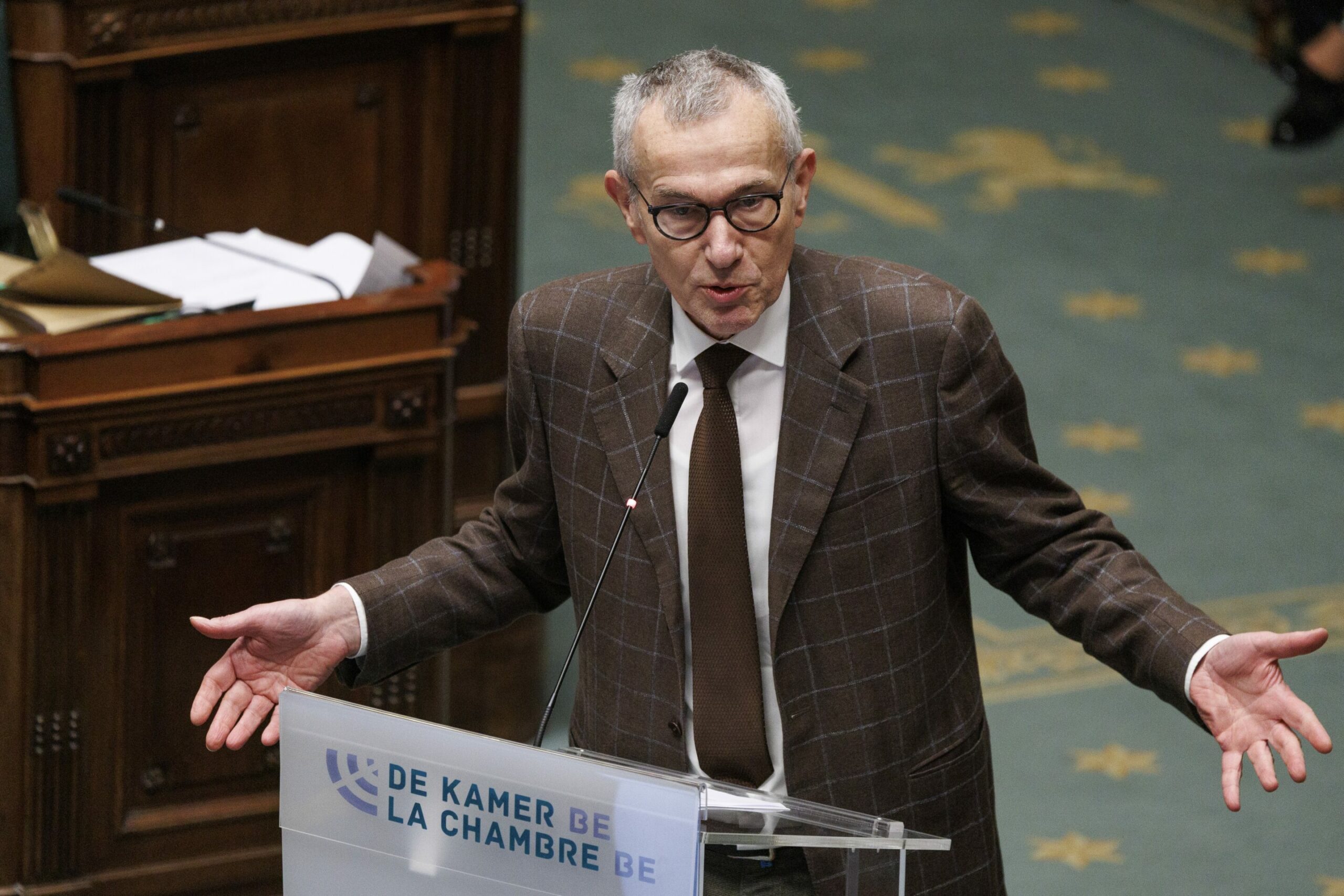
Deputy Prime Minister and Minister of Social Affairs and Public Health Frank Vandenbroucke at a plenary session of the Chamber at the Federal Parliament, in Brussels, Thursday 11 December 2025. Credit: Belga / Nicolas Maeterlinck
'No less challenging to Jewish life than attacks on people in the streets'
Goldschmidt argued that the prosecution of Jewish mohels had become about far more than medical standards, describing it as a broader test of Belgium's commitment to religious freedom. Rather than allowing the dispute to escalate through the courts, he said ministers should immediately open discussions with Jewish and Muslim leaders on a regulatory framework for religious circumcision.
"The government has to sit down with the community, and this has not happened," he said. "There has been no conversation."
Goldschmidt said Belgium should learn from other European countries that had already reconciled public health requirements with religious practice.
"We should not reinvent the wheel," he said. "Circumcision has been practiced by Jews and Muslims for thousands of years. Governments elsewhere have sat down with communities and agreed that certain practices should not be performed, or that particular safeguards have to be present. That is how you deal with this."
He repeatedly questioned why ministers had failed to pursue dialogue despite the absence of any legal ban on the practice.
"The investigation is one issue, but there is no law against circumcision," he said. "The question is which practices are acceptable and how they should be regulated."
Asked whether the investigation reflected broader political considerations rather than purely medical concerns, Goldschmidt suggested it did. "I think it is about much more than a medical practice,” he said.
He said that many Jews viewed the controversy as "no less challenging to Jewish life than attacks on people in the streets."
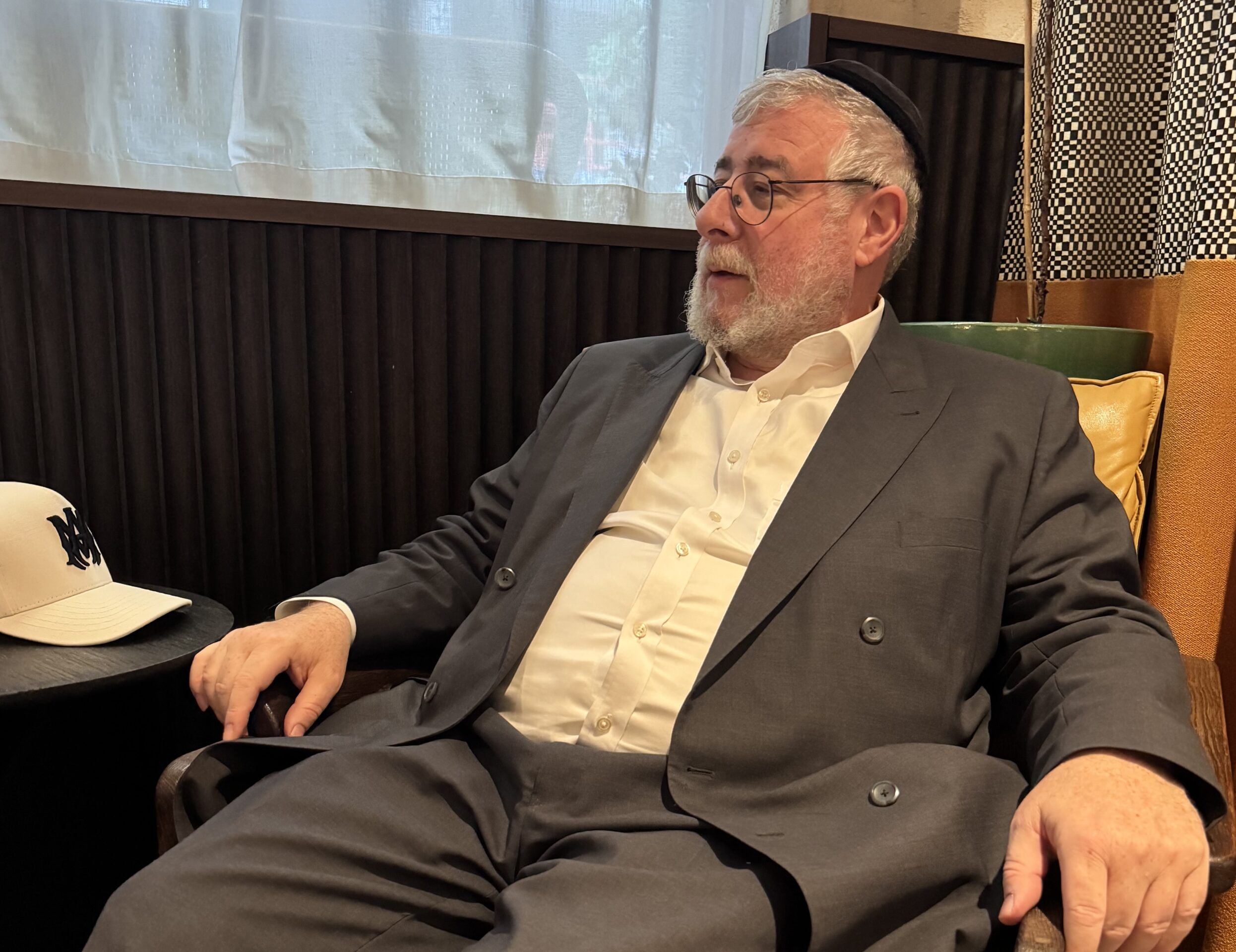
Chief Rabbi Pinchas Goldschmidt pictured in Brussels. Credit: Leo Cendrowicz/The Brussels Times
Negotiation, not confrontation
While in Brussels, Goldschmidt met European Commissioner Olivér Várhelyi and the Commission's coordinator on antisemitism, Katharina von Schnurbein, who he said were keen to see the dispute resolved. He noted that similar controversies elsewhere in Europe had ultimately been settled through negotiation rather than confrontation.
His comments also hinted at unease over the role played by US Ambassador Bill White, whose repeated attacks on Belgium have intensified the diplomatic dispute. Although Goldschmidt acknowledged that White had drawn international attention to the issue, he stopped short of saying the intervention had been beneficial.
"He has definitely given the issue a lot of publicity,” Goldschmidt said. “Is the intervention helpful? I don't know. I don't know if it is counterproductive."
His comments come after White has repeatedly accused Belgium of antisemitism and called on prosecutors to abandon the case, prompting a sharp public rebuke from Belgian ministers and Prime Minister Bart De Wever.
