
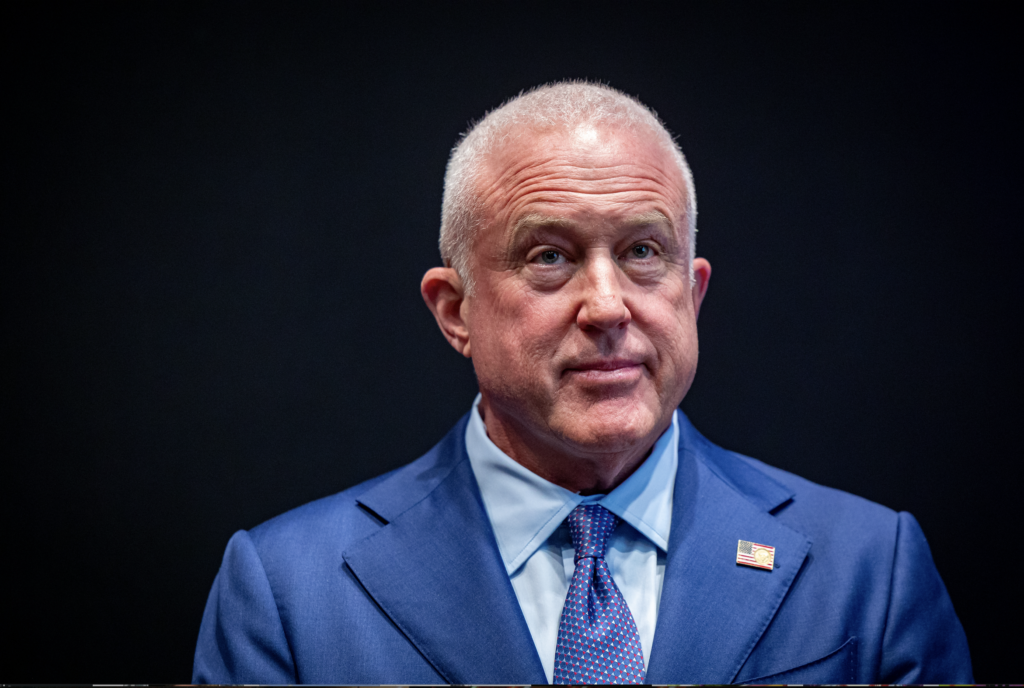
Earlier this week, the US Ambassador to Belgium, Bill White, triggered a diplomatic row after calling on Belgium to drop what he termed "the ridiculous and antisemitic" prosecution of three Jewish ritual circumcisers.
White was referring to a case dating from last May, when Antwerp police conducted searches at the homes of three mohels (circumcisers) suspected of performing circumcisions without the involvement of a doctor.
In the days following White's intervention, a diplomatic dispute rapidly escalated between the US and Belgium. On Monday, Flemish socialist leader Conner Rousseau released a statement saying the US ambassador "shouldn’t interfere with our legal process".
The following day, White was summoned to a meeting at the Belgian Foreign Ministry to discuss his allegations. The ambassador subsequently threatened to sanction Rousseau for a social media post about the US Immigration and Customs Enforcement agency (ICE).
Here, we take a look at the context of White's intervention, answer key questions on why the controversy erupted and what the rules are on circumcision in Belgium.
Is circumcision legal in Belgium?
Circumcision of male children for religious (ie non-medical) reasons is authorised in Belgium and is entirely reimbursable through health insurance.
In Judaism, circumcisions are performed by specially-trained practitioners who do not necessarily have to be physicians. However, Belgian law specifies that anyone performing the circumcision must be a licensed practitioner.
Figures are uncertain, but according to a report by the Consultative Committee on Bioethics, some 25,000 circumcisions were performed in Belgium in 2014 (including medical and non-medical procedures), with approximately 57% of these procedures being performed on children aged 0 to 4.
What were the circumstances of the police raids in Antwerp in May?
In September 2024, the Antwerp public prosecutor’s office opened an investigation into whether newborn babies are being illegally circumcised in the Jewish community.
The investigation was reportedly sparked by a complaint that some mohels were performing metzitzah b’peh, a ritual in which they orally suck the blood from the penis during circumcision. Apart from the ethical issues, there are medical concerns: the herpes virus can be transferred during such rites.
In May 2025, as part of this ongoing investigation, local police conducted house searches in three properties in Antwerp, home to the majority of Belgium's Jewish community.
The raids were conducted by the environmental department of the local police, at the request of the investigating judge. No arrests were made, and only some items were seized.
Three individuals are alleged to have performed circumcisions within the community without the required medical qualifications.
"The investigation focuses on medical procedures performed by men without medical training," the public prosecutor's office stated at the time of the raids. "In other words, the circumcisions were not performed by a doctor."
Why did the US ambassador to Belgium get involved in the issue?
White claims that it is only natural that he should defend the interests of the three Jewish circumcisers. “One of the fine mohels was born in America, and I am the US ambassador to Belgium. It is my duty to defend religious freedom,” the ambassador said earlier this week.
However, there have been suggestions that White's interest in the matter might have been spurred by an intervention from a Belgian politician.
Michael Freilich (N-VA), a member of the federal parliament, acknowledged that, during a parliamentary mission to Washington, he had raised the Antwerp circumcision case with US contacts and asked them to help think about possible legal solutions.
However, Freilich denies asking the US to put pressure on Belgium or to intervene in the judicial process.
He says his aim was to seek a framework that respects both freedom of religion and high medical standards. Opposition parties, including the Greens, have called for an ethics inquiry to examine whether he overstepped his mandate by discussing an ongoing Belgian investigation abroad.
How has the Jewish community responded to the Antwerp raids?
The European Jewish Association (EJA), an umbrella organisation representing Jewish communities and organisations throughout Europe, condemned the raids in its initial response last May.
"After the ban on ritual slaughter, the harassment of mohels is a new border crossing and a clear warning signal for Belgian Jews and the Belgian government," it stated.
"Police services, policymakers, the government, and members of parliament must urgently adopt legislation explicitly guaranteeing that circumcision is recognised as a protected element of religious freedom."
Freilich, the only Jewish member of the federal parliament, told The Brussels Times shortly after the raids that the allegations that boys were being illegally circumcised were “patently absurd.”
He added: “We are law-abiding citizens and want to follow the laws of the country. We are just asking to be partners in the process and believe now we are being heard.”
On Tuesday, in the wake of the US ambassador’s comments, Chief Rabbi Pinchas Goldschmidt, President of the Conference of European Rabbis, issued the following statement: "Circumcision and kosher slaughter are not optional customs; they are core obligations, absolutely central to Jewish life."
"Efforts to restrict them in Belgium are not fair regulatory processes, but are direct attacks on Jewish religious rights. A country that cannot allow Jews the right to live fully Jewish lives is oppressing its Jewish citizens and violating its democratic principles."
What is circumcision and why is it controversial?
In Judaism, circumcision, known as brit milah, is a religious ritual where a male infant's foreskin is removed on the eighth day after birth. It is an ancient religious commandment and covenant according to Judaism. The ritual can be postponed for health reasons.
Circumcision at an early age is considered safe and reduces the risk for complications when performed at a later age.
However, the practice is controversial because it is generally performed without medical necessity, and because the boys undergoing cannot give their consent due to their age.
Which other religions practise circumcision?
Circumcision also plays an important role in other religions and cultures.
In Islam, circumcision is considered a sign of belonging to the Muslim community and is usually performed by trained medical practitioners at hospitals but there is no fixed age for it to be performed.
"Circumcision in the Muslim community in Belgium is carried out by physicians at hospitals," Dr Michael Privot, board member of the Muslim Council of Belgium (CMB), previously told The Brussels Times. "Muslims are satisfied with this arrangement."
The practice is not compulsory in Christianity, but it is relatively prevalent in Western countries such as the US for preventive health reasons.
